
Quick answer
The Uyuni mirror effect needs a thin, still layer of rain on the salt, so it runs from about mid-January to early March. Satellite data put the peak in late February. This season is less certain than usual: NOAA expects a strong to very strong El Niño through March 2027, and SENAMHI forecast drought in Bolivia's west. Aim for February 10-March 5, book with free cancellation and keep one spare day in Uyuni.
On this page
- When does the Uyuni mirror effect happen?
- Will there be a mirror in 2026-27? What El Niño means
- Where on the salt flats tours find the water
- Rainy-season rules: night tours, Incahuasi and closures
- Which tour to book for the mirror
- Getting to Uyuni in February
- What to pack and how to shoot the reflection
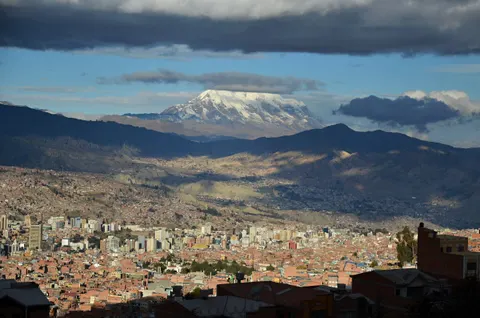
- Before or after Uyuni: acclimatize in La Paz
- Frequently asked questions
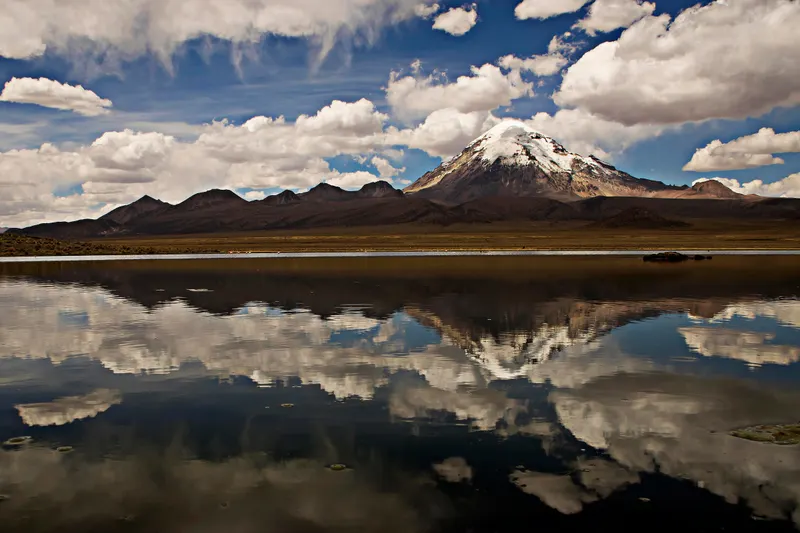
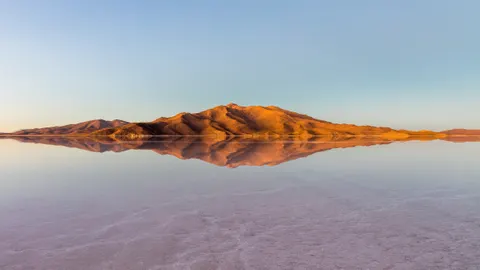
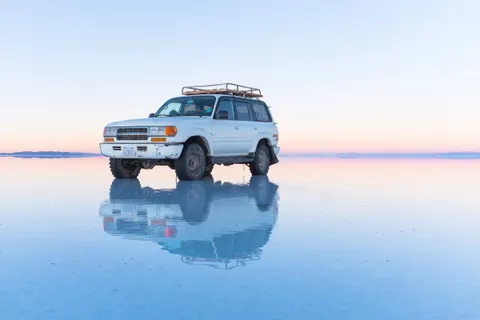
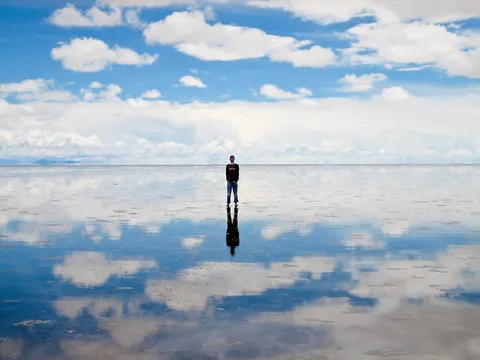
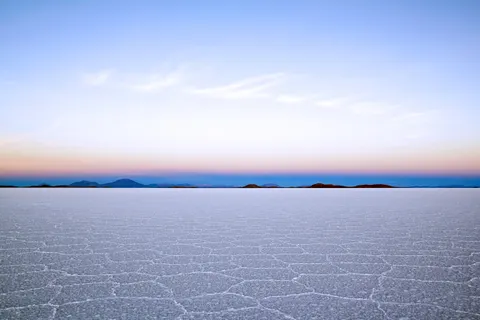
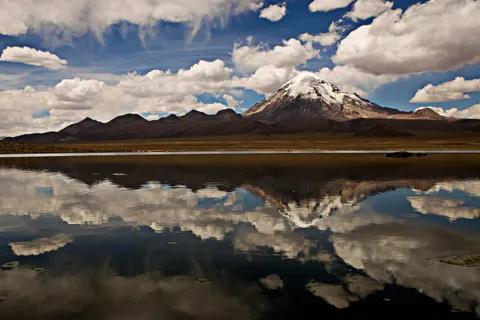
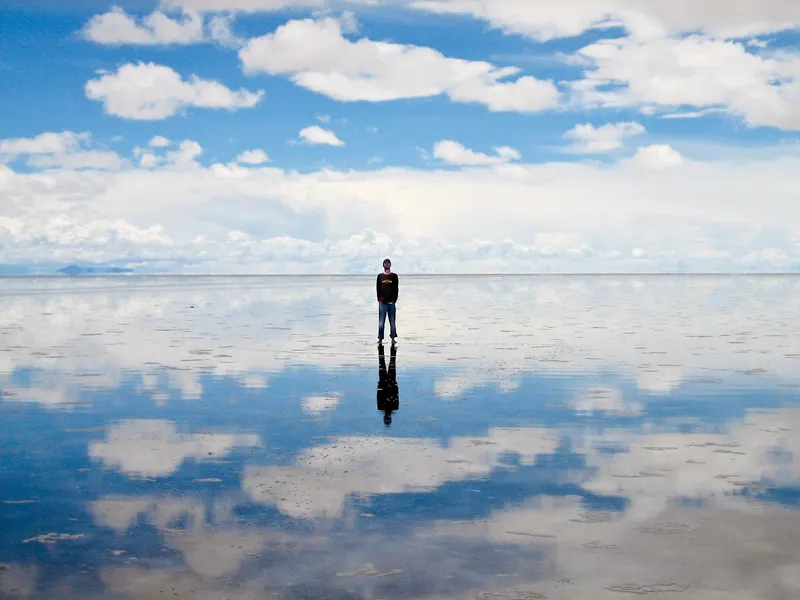
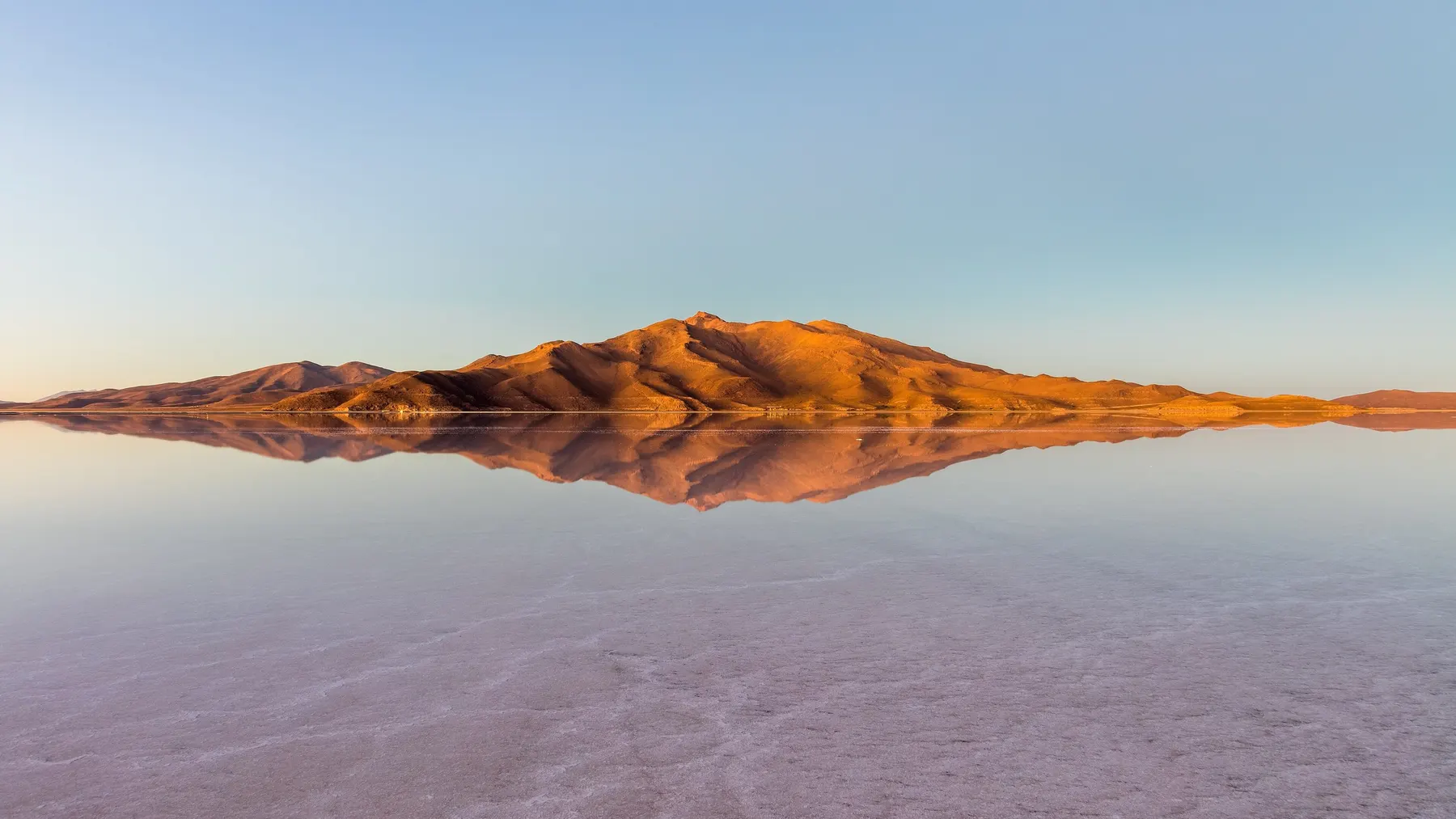
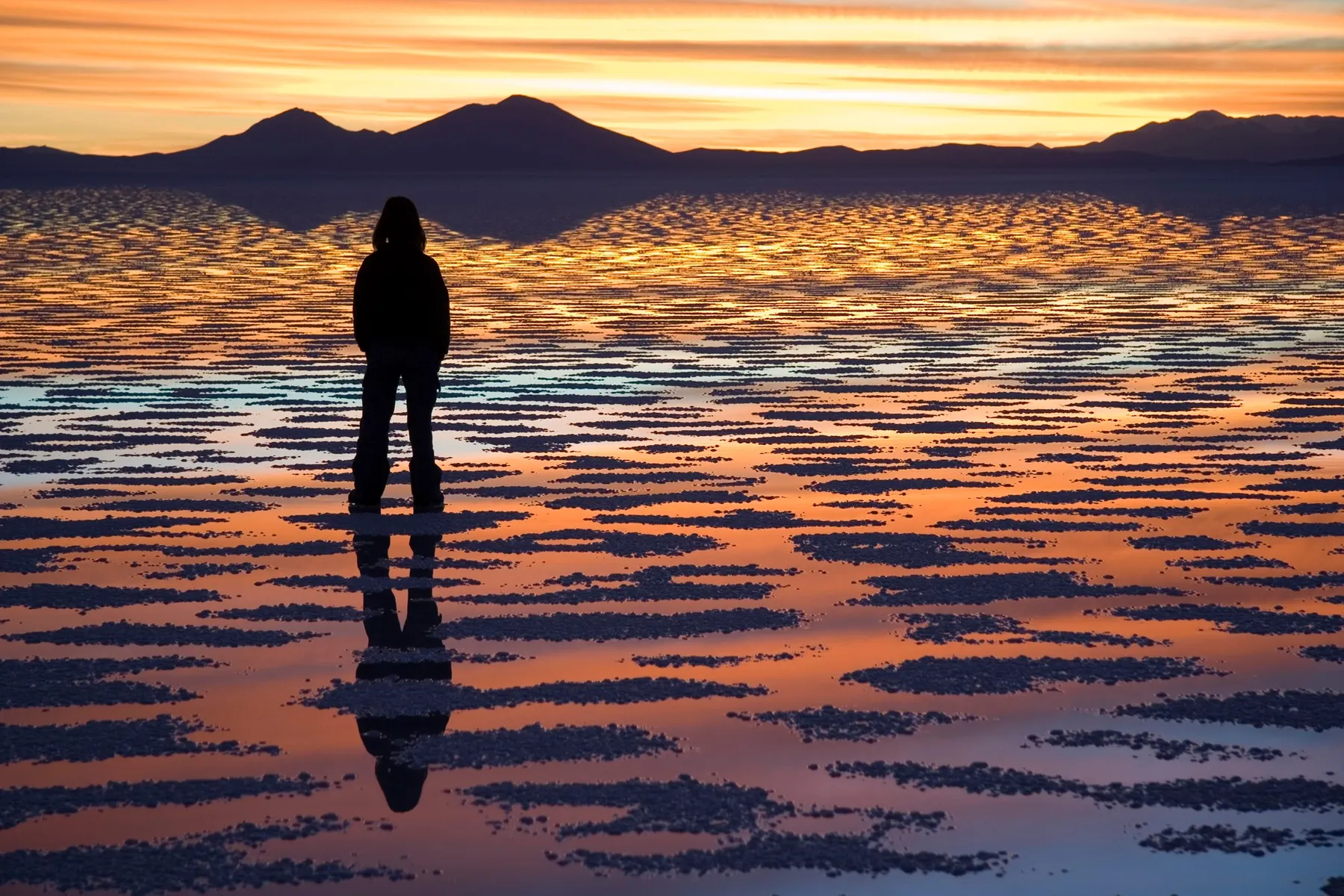
The Uyuni mirror effect is the reason February is the busiest month for Bolivia’s salt flats. A few centimeters of rain sit still on the salt, and the sky, the clouds and your jeep show up twice. It needs rain first and then calm, so it comes and goes week by week. This page covers when it shows up, what the strong El Niño forecast for 2026-27 could change, where tours find the water and how to book a trip that still works if the salt stays dry. We checked forecasts, rules and prices between September and November 21, 2026.
- Best window
- Mid-January to early March
- Peak
- Late February (satellite data)
- Water depth
- About 2 cm on a good day
- 1-day tour with sunset
- From about US$80 (Sep 2026)
- Incahuasi entry
- Bs 30, if open
- 2026-27 outlook
- Strong El Niño, drier than normal
When does the Uyuni mirror effect happen?
Uyuni is a desert town. Its weather station records about 190 mm of rain a year, and more than 90% falls from December to March: 26 mm in December, 79 mm in January, 38 mm in February and 29 mm in March (SENAMHI averages for 1981-2010, via Wikipedia). The mirror forms once that rain has spread across the salt and settled.
The best data comes from space. In 2025, Stefano Vignudelli and three co-authors published eight years of Sentinel-3 radar readings of the salar in Communications Earth & Environment. According to the authors’ summary and the Copernicus write-up, smooth water usually appears about a month after sustained rain. It peaks from late January to early March, and late February is best, when about half of the radar readings come back smooth. From late April to November the surface is rarely smooth.
| Period | Chance of a mirror | What else you get |
|---|---|---|
| December | Low; a few patches after storms | Full route, warm days |
| Early to mid-January | Building | Incahuasi often still reachable |
| Late January to early March | Highest; late February best | Shorter routes, Incahuasi often closed |
| Late March to April | Falling; patchy in wet years | Some water and more of the route |
| May to November | Almost none | Dry hexagons, Incahuasi, the lagoon loop |
The team measured about 1.8 cm of water in February 2024, which is all it takes. They also suggest that a layer that thin resists waves. Even so, a gusty afternoon can still break up the image, so a day tour that stays for sunset gives you two chances in one day.
Will there be a mirror in 2026-27? What El Niño means
This is the question for this season. On November 12, 2026, NOAA’s Climate Prediction Center kept its El Niño Advisory in force. It reported weekly Niño-3.4 sea temperatures 2.5 °C above normal and put the chance of a strong to very strong El Niño through January-March 2027 above 79%. It gave about a 60% chance of a historic-strength event this northern autumn and winter.
In Bolivia’s west, El Niño usually means a drier, warmer rainy season. In July, SENAMHI forecaster Verónica Quisbert told Los Tiempos that she expected drought in the Altiplano at the end of the year. On November 1, Bolivia declared a national emergency over drought and El Niño, covering 63 municipalities in six departments (PAHO, November 2). We found no seasonal forecast specific to Potosí department, home to the salar.
The satellite study gives the link to the mirror. Copernicus reports that smooth periods tend to coincide with La Niña years and shorten during El Niño, “though not always consistent”. So the most likely outcome is a shorter or patchier mirror season, not none at all.
How we'd plan this season
- Go between February 10 and March 5, the part of the window that most often holds water even in drier years.
- Book tours and flights with free cancellation, and decide in late January when you can see how the rains are going.
- Spend two nights in Uyuni, so you can try a second sunset if the first is windy or dry.
- If the mirror is your only reason to go, a dry year is a real risk. If you’d be happy with the salt flats either way, go.
Where on the salt flats tours find the water
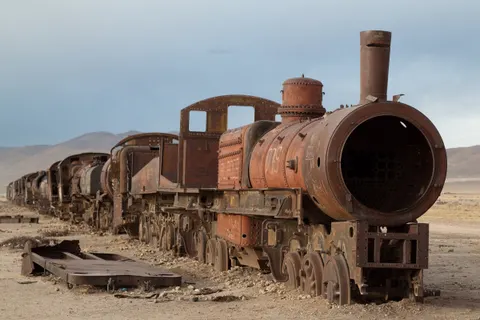
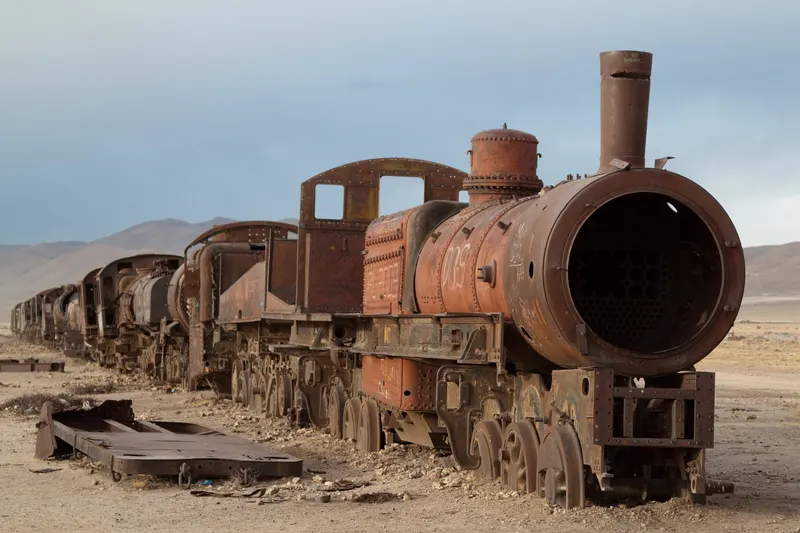
Water collects first in the lower parts of the salar near Colchani, the salt-workers’ village on the eastern edge, about 20 km from Uyuni. That’s where 1-day tours from town head. Andes Salt Expeditions’ 1-day itinerary, for example, stops at the train cemetery and Colchani, hands out rubber boots at its base and then spends about four hours on the salt. It visits the ojos de sal (springs where salty water bubbles up), the Flags of the World and the Dakar monument, then waits for sunset in the water.
The Flags and the old Playa Blanca salt hotel are the usual mirror spots, a short drive onto the flat. In March 2025, when water reached about 30 cm at Playa Blanca and Incahuasi and 50 cm near the edges, Potosí’s government restricted tours to those areas (Correo del Sur). Isla Incahuasi, the cactus island about 80 km in, is the first stop to go when the water is deep.
Ask before you pay
In the rainy season, ask the agency where it found water that week and whether it will drive farther to find it. Good operators in Uyuni know the day’s conditions; a vague “yes, mirror” isn’t an answer.
Rainy-season rules: night tours, Incahuasi and closures
Potosí’s departmental government sets the rules when the water rises, and it has changed them from year to year:
- January 2022: crossing the salar and visiting Isla Incahuasi were banned because of flooding (Correo del Sur).
- March 2025: entry was allowed only from 07:00 to 17:00, with a tourist police checkpoint, and vehicles weren’t allowed on the edges.
We found no circular for the 2026-27 season yet. If a rule like 2025’s returns, night stargazing and sunrise tours stop running until the water drops, and a “sunset” tour has to leave the salt before dark. Check the day before with your agency.
Canada’s travel advice for Bolivia warns that the salt flats become dangerous to visit in the rainy season. The real risk is vehicles stuck or lost in deep water, so the operator matters more than the price.
Which tour to book for the mirror
In the rainy season, the 1-day tour from Uyuni is the safest way to see the mirror, because it spends its afternoon on the part of the salar most likely to be wet. Longer tours cross more ground, so the water matters more to them.
| Tour | From (Viator, Sep 2026) | Reviews | Best for |
|---|---|---|---|
| 1-day tour with sunset in the water | About US$80 | 4.83 (506) | Most mirror-hunters |
| 1-day tour with sunset | About US$95 | 4.99 (85) | A smaller, higher-rated group |
| 5-hour sunset and stars | About US$45 | 4.92 (40) | A second try at the mirror |
| 3-day loop with the lagoons | About US$290 | 4.75 (857) | The full route, if roads allow |
Uyuni tours that stay for the mirror at sunset
Book on Viator From $80Uyuni Salt Flat 1 Day Tour +Sunset in the Salt Water Region with Mirror Effect
- Price
- From $80 per person
- Duration
- 9 h
- Rating
- Cancellation
- Free
 From $95Salar de Uyuni Tour 1 day with Sunset
- Price
- From $95 per person
- Duration
- 9 h
- Rating
- Cancellation
- Free
 From $455-Hour Uyuni Salt Flat Tour Stargazing and Sunset/Sunrise In Group
- Price
- From $45 per person
- Duration
- 5 h
- Rating
- Cancellation
- Free
Prices in US$ per person from Viator as of Sep 30, 2026. They change; you see the final price before paying.
Which one is for you?
- If you have one day in Uyuni: the 1-day tour with sunset in the water, from about US$80, rubber boots included.
- If you want a second chance at the reflection: add the 5-hour sunset and stars tour, from about US$45, on another evening.
- If you want the lagoons too: the 3-day loop, from about US$290, but expect a changed route while the water is high.
Budget Bs 30 (about US$2.50) for Isla Incahuasi when it’s open and Bs 150 (about US$13) for the Eduardo Avaroa reserve on the 3-day loop. Both are paid in cash and usually not included (Nomades, updated November 2026). For red flags when choosing an operator, see Uyuni tours compared. Our main Salar de Uyuni guide covers the dry-season route.
Getting to Uyuni in February
February is the busiest and priciest month for flights. BoA’s one-hour morning flight from La Paz started at about US$100-130 one way in September searches, and it lands in time for a 10:00 tour. The overnight bus takes 9-11 hours. Every option, with fares, is in La Paz to Uyuni.
Leave slack on both sides. In January 2026, the tourism ministry sent two charter flights to Uyuni to bring out tourists stranded by road blockades. For roads, fuel and protests before you go, check Bolivia travel status.
What to pack and how to shoot the reflection
Tours lend rubber boots, but salt water gets into everything. Bring:
- Sandals or old shoes for the van, and a bag for wet boots.
- Sunglasses and strong sunscreen. The reflection doubles the glare at about 3,660 m.
- A warm layer for sunset. January lows in Uyuni average about 6 °C (42 °F).
- A rain jacket, since afternoon storms are what make the mirror.
- A dry bag or zip bag for phones. Salt water ruins electronics.
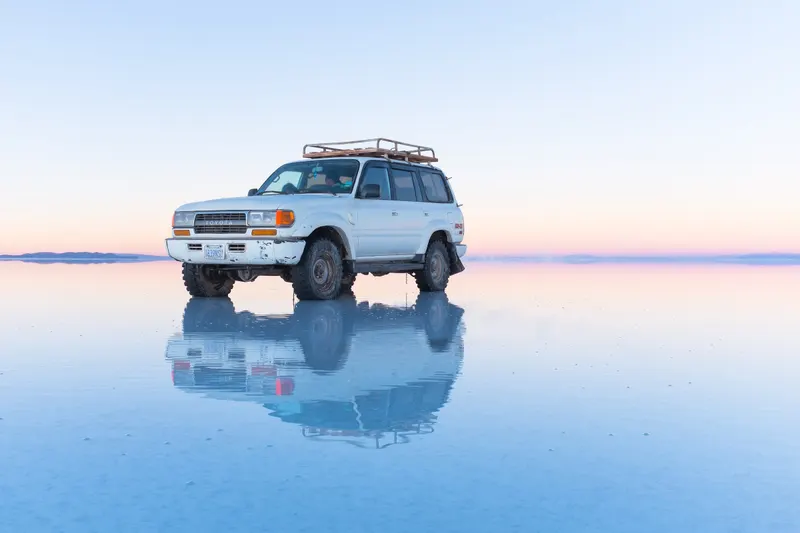
For photos, get low. Hold the phone close to the water so the horizon sits in the middle of the frame, and wait for the wind to drop. Perspective shots work best on dry salt, so do them before you reach the water. Sunset tours usually stop the jeep in the water for the classic reflected-car shot.

Before or after Uyuni: acclimatize in La Paz
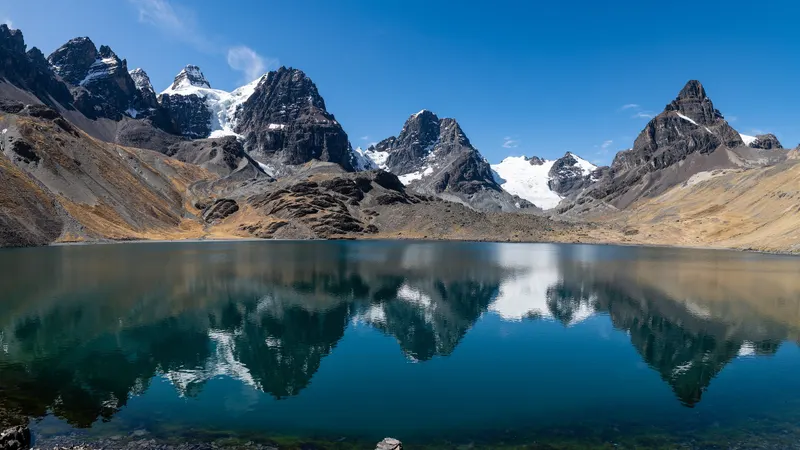
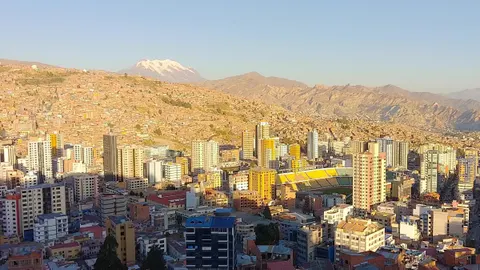
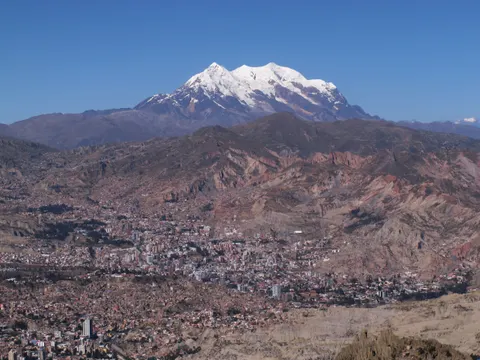
Most visitors fly in from La Paz, and Uyuni’s 3,660 m is about the same altitude as the city. If you have a few days in La Paz first, rainy-season afternoons are stormy, so plan mornings outdoors. Fit, acclimatized hikers can try the Ventanani glacier hike, a day trip to glacier lagoons in the Cordillera Real at about 4,700-5,080 m. It’s a hard day and guides advise against it at the height of the rains, so save it for a dry-season trip. Our La Paz altitude sickness guide explains how to build up, and the best time to visit Bolivia covers the rest of the country month by month.
Current conditions (November 21, 2026)
We found no reports yet of water on the salar this season, which is normal for November. In early November the Manuel García Capriles tourism foundation was promoting dry-season stargazing tours and estimated about 260,000 visitors a year in Uyuni (ABI, November 8). We’ll update this page when the rains start.
Frequently asked questions
When is the Uyuni mirror effect?
From about mid-January to early March, in most years. Uyuni gets more than 90% of its rain from December to March. A 2025 study of eight years of Sentinel-3 satellite data found smooth water about a month after sustained rain, with the peak from late January to early March and late February best. From late April to November the salt is almost never covered.
Will there be a mirror in Uyuni in 2027?
Probably, but nobody can promise it. On November 12, 2026 NOAA put the odds of a strong to very strong El Niño through January-March 2027 above 79%. SENAMHI expected drought in western Bolivia at the end of 2026, and Bolivia declared a national drought emergency on November 1. The same satellite study found the mirror tends to shrink in El Niño years, though not every time.
Can you see the mirror effect in December?
Rarely. Uyuni averages 26 mm of rain in December against 79 mm in January, and the smooth layer forms about a month after steady rain starts. Some day tours drive to a low patch that holds water from earlier storms and hand out rubber boots, so you may get a small reflection. Don't plan a December trip around it.
Can you see the mirror and Isla Incahuasi on the same trip?
Usually not. Incahuasi sits in the middle of the salt, and when the water is deep tours can't reach it. In January 2022 Potosí's departmental government banned crossing the salar and visits to Incahuasi because of flooding. In March 2025 it limited tours to the Flags, Playa Blanca and nearby spots. April is the month you might get some water and the island.
How much does a mirror effect tour cost?
Shared 1-day tours with a sunset in the water started at about US$80, and a 5-hour sunset and stars tour at about US$45 (Viator, September 2026). The 3-day loop to the lagoons started at about US$290. Add Bs 30 (about US$2.50) for Isla Incahuasi if it's open and Bs 150 (about US$13) for the Eduardo Avaroa reserve, in cash.
Is the Salar de Uyuni safe in the rainy season?
With an established operator, yes. Canada's travel advice warns the flats become dangerous in the rainy season, mainly from vehicles getting stuck or lost in deep water. In March 2025 Potosí only allowed entry from 07:00 to 17:00, with a tourist police checkpoint, so night tours may be cancelled when water is high. Pick a company with a 4x4 and a radio.
Keep planning