

Quick answer
Bolivia's currency is the boliviano (Bs, ISO code BOB), divided into 100 centavos. The central bank let it float in June 2026, so ignore any guide that still says a dollar buys Bs 6.96. On September 30, 2026, US$1 bought Bs 12.02 at the official rate (one boliviano is about 8 US cents), and the street rate was almost identical. In La Paz, pay in bolivianos, carry small notes and withdraw from ATMs inside banks.
On this page
- What currency does Bolivia use?
- Boliviano to USD: the exchange rate in 2026
- What happened to the blue dollar?
- Does Bolivia accept US dollars?
- ATMs and cards in La Paz
- Bolivia currency exchange: where to change money in La Paz
- Bolivian money: notes and coins
- What things cost in La Paz (September 2026)
- Tipping in Bolivia
- Cash checklist by route
- Frequently asked questions
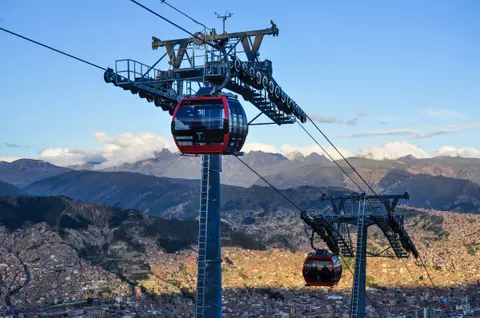
The boliviano was pegged at Bs 6.96 per US dollar from November 2011 until June 2026. On June 26 the Banco Central de Bolivia (BCB) approved a flexible rate, and by September 30 a dollar bought Bs 12.02, about 73% more bolivianos than under the peg. Fares set in bolivianos stayed put, so the Bs 3 cable-car ride that older guides price at US$0.43 now costs about US$0.25. This Bolivia currency guide is for travelers to La Paz, Bolivia (not La Paz in Mexico’s Baja California Sur).
Last checked: September 30, 2026. The rate changes daily, and the BCB home page posts each day’s figure.
- Currency
- Boliviano (Bs, ISO code BOB)
- Official rate
- Bs 12.02 per US$ (Sep 30, 2026)
- Until June 2026
- Pegged at Bs 6.96
- Notes
- Bs 10, 20, 50, 100, 200
- Coins
- 10, 20, 50 centavos and Bs 1, 2, 5
- Declare cash
- From US$10,000
What currency does Bolivia use?
Bolivia uses the boliviano, written Bs before the amount (Bs 50), coded BOB and split into 100 centavos. Some converters, XE among them, show the symbol as “$b”, but Bolivians write Bs.
Today’s boliviano entered circulation on January 1, 1987, replacing the peso boliviano, which hyperinflation had wrecked, at one boliviano per million pesos. Anyone quoting prices in “Bolivian pesos” is about 40 years behind.
US dollars work in some hotels and agencies, but daily spending runs on bolivianos.
Boliviano to USD: the exchange rate in 2026
On September 30, 2026, the official rate was Bs 12.02 per US dollar, so one boliviano was worth about 8.3 US cents.
Quick conversions (BCB, September 30, 2026)
| Currency | Bs per unit | 100 units buy | Bs 100 is worth |
|---|---|---|---|
| US dollar | 12.02 | Bs 1,202 | US$8.32 |
| Euro | 13.63 | Bs 1,363 | €7.34 |
| British pound | 15.90 | Bs 1,590 | £6.29 |
| Canadian dollar | 8.48 | Bs 848 | C$11.80 |
| Australian dollar | 8.40 | Bs 840 | A$11.91 |
Only the dollar rate is official; the BCB calls the rest indicative, and Spain’s foreign ministry warns that other currencies almost always change at a poor rate.
Bolivia’s official dollar rate in 2026
| Date the rate applied | Bs per US$ | What happened |
|---|---|---|
| Nov 2011 to June 2026 | 6.96 | Fixed peg |
| June 27-29 | 9.73 | First flexible rate |
| July 31 | 12.15 | Up 25% since the float |
| August 22-24 | 11.50 | Late-August dip |
| September 9 | 12.64 | Highest since the float |
| September 17 | 9.83 | Low after BCB intervention |
| September 24 | 12.26 | Rebound |
| September 30 | 12.02 | Rate used on this page |
Source: Banco Central de Bolivia daily series.
How the rate is set now
Banks report what they paid customers for dollars each business day, and the BCB publishes the amount-weighted average at 23:30 as the next day’s official rate; Friday’s figure covers the weekend and Monday. Jonathan Fortun, an economist at the Institute of International Finance, warned in Bloomberg Línea against calling it a clean float. Since September 24, 2026, banks set their own selling price for dollars (the cap had been Bs 0.10 above official).
Why the rate swung 20% in September
From September 7 to 9, the BCB stopped buying new dollars once reserves passed US$1 billion and began supplying dollars directly to banks. The rate slid from 12.64 on September 9 to 9.83 on September 17, then climbed Bs 2.23 in six days (Correo del Sur). We’d change or withdraw money every few days rather than convert a whole trip’s budget on arrival.
If a guide says Bs 6.96, it's out of date
Google’s AI summary for La Paz travel tips has priced the Bs 3 cable-car ride at US$0.43, and Wikivoyage’s Bolivia page still says to avoid ATMs because they pay “about 30% less” than cash dollars (a January 2025 note). Both figures come from the peg.
What happened to the blue dollar?
Bolivia ran short of physical dollars from early 2023, and for about three years a parallel (“blue”) market paid well above 6.96. Sources disagree on how high it went, so we won’t quote a peak.
The float erased that premium. On September 29, 2026, the parallel rate closed at Bs 11.96-11.98 (dolarboliviahoy.com, via Red Uno), a few centavos under the official 12.02. Spain’s foreign ministry advises against street changers anyway, because of counterfeit notes.
Does Bolivia accept US dollars?
Some businesses do. Hotels, tour agencies and a few shops aimed at visitors take dollars, at a rate they set themselves. Markets, minibuses, the cable car and park fees such as Tiwanaku’s want bolivianos in cash.
Watch for dual prices tied to the old rate. On September 30, 2026, a La Paz hostel’s website listed a room at Bs 373.75 or US$54; at Bs 12.02 the boliviano price is about US$31, so pay in bolivianos.
Bring US dollars as your backup cash. Canada’s travel advice says Canadian dollars are hard to exchange in Bolivia, and travelers report that exchange houses want clean, untorn bills and take larger notes most easily.
Americans have entered visa-free since December 1, 2025, so drop the US$160 visa fee from older budgets. Declare cash of US$10,000 or more on customs Form 250; the Bolivia visa guide has the rest of the entry rules.
ATMs and cards in La Paz
The old rule to avoid Bolivian ATMs dates from the peg, when your bank converted at 6.96 while cash dollars fetched far more on the street. On September 29-30, 2026, the official, parallel and Google mid-market rates sat within about 1% of each other, and card networks now convert at a rate that tracks the market. A debit card and a bank ATM are the simplest way to get bolivianos.
Using ATMs in Bolivia
- Currency: Most machines give bolivianos only, and rural ones can run empty, so withdraw in La Paz before heading out.
- Limits and fees: Expect about Bs 2,000 (US$165) per withdrawal. Sources disagree on fees: WanderWallet (June 2026) says Banco Mercantil Santa Cruz, BNB, Banco FIE, BCP and Banco Ganadero charge none, while atmfeesaver reports Bs 20-75 at some banks. The screen shows any fee before you confirm, and your home bank may add its own.
- Conversion: If the machine offers to charge you in your home currency, decline and take bolivianos.
- Safety: Use ATMs inside a bank or a business, in daylight. Canada and the UK warn of express kidnappings, in which criminals, often using fake taxis, force victims to withdraw cash. Ride back in a radio taxi or an app car (is La Paz safe?).
Banks in Bolivia
For travelers, the banks that matter are the ones with ATMs and dollar desks in La Paz. WanderWallet (June 2026) lists Banco Mercantil Santa Cruz, BNB, Banco FIE, BCP and Banco Ganadero as charging no ATM operator fee. Since September 24, 2026, banks set their own selling price for dollars, and the Banco Central de Bolivia publishes the official rate from what banks paid the previous business day. Withdraw from ATMs inside a bank branch in daylight.
Credit and debit cards
Larger hotels and restaurants take cards, but Canada’s advisory says they’re not widely accepted outside cities. Carry two cards on different networks, ideally with no foreign transaction fees, and choose to pay in bolivianos when the terminal asks.
QR codes
Every Mi Teleférico ticket booth has taken QR payments since April 1, 2026, but only through a Bolivian bank app, so visitors pay the Bs 3 fare (plus Bs 2 per transfer) in cash. Lines and hours are in our La Paz cable car guide.
Bolivia currency exchange: where to change money in La Paz
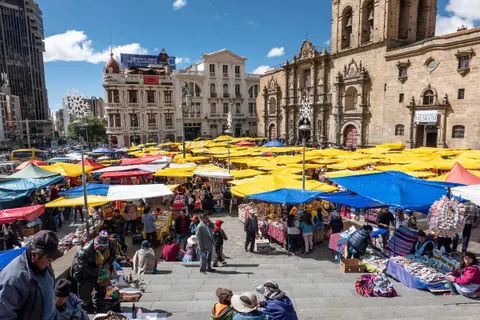
Exchange houses (casas de cambio) cluster in the Casco Viejo on Calle Colón, Calle Ayacucho, Avenida Camacho and Avenida Mariscal Santa Cruz, with more on El Prado and Calle México and a group in Zona Sur around Calles 18 and 21 in San Miguel. Our source is OpenStreetMap, mostly mapped in 2016, so we name streets instead of shops. Compare the rate boards at two or three.
Expect a spread. When Brújula Digital surveyed four La Paz exchange houses on August 3, 2026 (official rate Bs 12.13), they bought dollars at Bs 11.60-11.70, up to Bs 0.53 (about 4%) below official (El Día). On US$100, that gap comes to about Bs 50, the same as the Death Road fee. One house had no dollars to sell and another wasn’t buying.
We couldn’t confirm a working exchange desk or ATM at El Alto airport in 2026, so land with some bolivianos or small dollar bills (El Alto airport guide).
What we'd skip
- Street changers. Their rates now sit at or below the official one, so the fake-note risk buys you nothing.
- Changing your whole budget on day one. The rate moved more than 20% each way in September 2026.
- Changing bolivianos back into dollars. Exchange houses sometimes run out, and banks now price dollars freely. Spend your last bolivianos before you fly out.
Bolivian money: notes and coins
Five notes circulate: Bs 10, 20, 50, 100 and 200. The current family came out in 2018 and 2019, and the 1987-2017 notes still circulate alongside it.
| Note | Color | Reverse shows | Issued |
|---|---|---|---|
| Bs 10 | Blue | Isla del Pescado (Salar de Uyuni), giant hummingbird | Apr 2018 |
| Bs 20 | Orange | Laguna Bay, black caiman, toborochi tree | Jul 2018 |
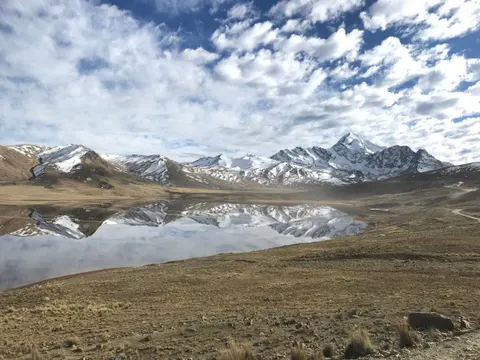
| Bs 50 | Violet | Nevado Sajama, Andean flamingo, quinoa | Oct 2018 |
| Bs 100 | Red | Arco Iris waterfall, blue macaw | Jan 2019 |
| Bs 200 | Brown | Tiwanaku, Andean cat, kantuta flower | Apr 2019 |
Coins come in 10, 20 and 50 centavos and Bs 1, 2 and 5. The Bs 5 is bimetallic, and the Bs 2 has 11 sides and comes in two legal sizes, so check the edge before you hand over what you think is a Bs 1. Market stalls and minibus drivers often can’t change a Bs 100 or Bs 200 note; break big notes at supermarkets, pharmacies or your hotel.
The “Serie B” notes
On February 27, 2026, a Bolivian Air Force C-130 carrying new Serie B Bs 10, 20 and 50 notes crashed at El Alto. The BCB voided only the serial numbers it published from that shipment (BCB statement); other Serie B notes are legal tender, and since March 16 banks swap them for Serie A on request. If a vendor hesitates over a Serie B note, that’s why.
What things cost in La Paz (September 2026)
Typical prices at Bs 12.02 per US$ (September 30, 2026)
| Item | Bs | ≈ US$ |
|---|---|---|
| Mi Teleférico ride (plus Bs 2 per transfer) | 3 | 0.25 |
| City minibus, daytime | 3-3.50 | 0.25-0.29 |
| Set lunch (almuerzo), average (March 2026) | about 18 | 1.50 |
| Taxi, El Alto airport to the center | 70-150 | 6-12.50 |
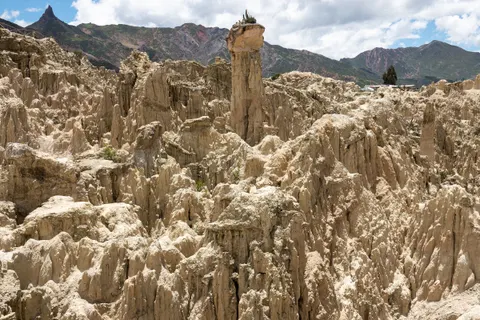
| Valle de la Luna, foreigners | 15 | 1.25 |
| Tiwanaku entry, foreigners (cash only) | 100 | 8.30 |
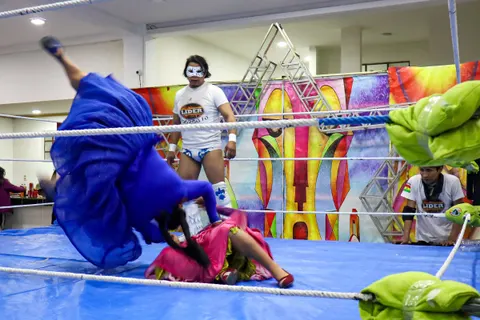
| Cholitas wrestling at the door | 50-100 | 4-8.30 |
| Death Road municipal fee | 50 | 4.15 |
| Bus La Paz to Uyuni, normal to cama (sleeper) | 133-386 | 11-32 |
The Uyuni fares are a temporary tariff set after diesel rose from Bs 9.80 to Bs 17.95 a liter on September 18, 2026. Consumer prices rose 5.02% in the 12 months to August, so expect buses and tours to creep up.
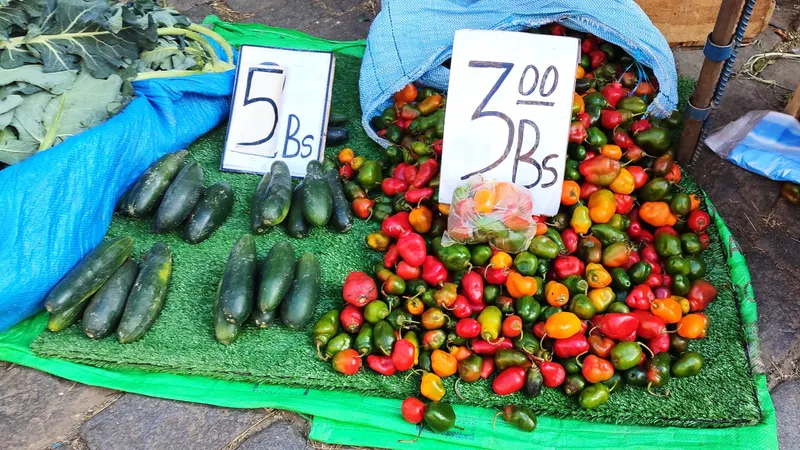
Is Bolivia expensive to visit?
Not for anything priced in bolivianos, which costs about 42% less in dollars than a guide converting at 6.96 claims. Lodging is the main daily cost: dorm beds from about US$6-11, budget private rooms US$19-40 and mid-range hotels US$55-90 a night in September 2026 (where to stay in La Paz). From North America, Europe or Australia, the airfare will likely be your biggest expense (flights to La Paz).
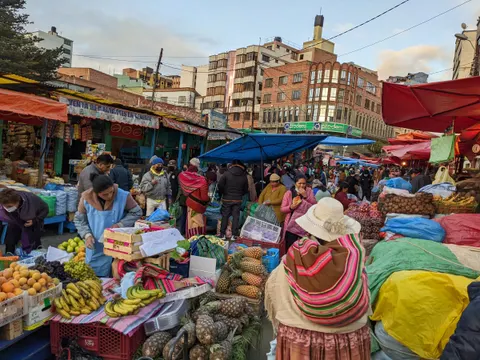
For a local’s walk through the markets, the La Paz City Walking Tour (from about US$5) stops at a food market and the Witches’ Market. The evening Food and Beer Tour (from about US$37) includes the food and drinks, so you pay once, by card, in advance.
Two market tours you can prepay by card
Book on Viator From $5La Paz City Walking Tour Including Historical StreetsFree cancellationCheck availability
 From $37La Paz Food and Beer TourFree cancellationCheck availability
Prices in US$ per person from Viator as of Sep 30, 2026. They change; you see the final price before paying.
Tipping in Bolivia
Tips are voluntary. The amounts below come from UK operator Andean Trails (October 2024); we redid its old-rate dollar figures at Bs 12.02.
- Restaurants: Check the bill first, since some add a 10-15% service charge. Where none is added, 10% is plenty; Andean Trails suggests 10-15%, Wikivoyage about 5%.
- Group-tour guides: Bs 80-160 (US$7-13) a day, pooled by the group.
- Group-tour and Uyuni 4x4 drivers: Bs 50-90 (US$4-7.50) a day, also pooled.
- Porters: Bs 5-7 a bag.
- Housekeeping: Bs 6-10 a night.
- Taxis: Round up.
Both tours above exclude gratuities, so carry small bolivianos for the guide. For day trips, compare La Paz tours.
Cash checklist by route
Which one is for you?
- If you land at El Alto at night: Have Bs 70-150 for a taxi, or book a prepaid private transfer from about US$28 a person (only nine reviews so far).
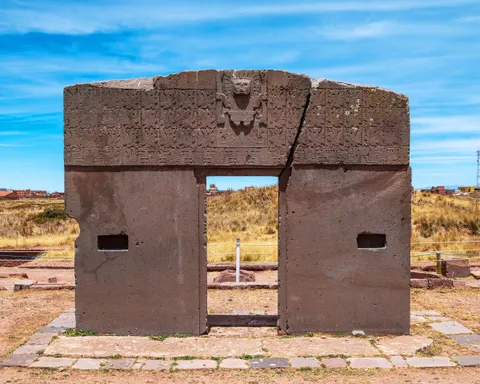
- If you’re going to Tiwanaku: Bring Bs 100 per person for the ticket plus the minibus fare (from Bs 7); the site takes no cards (Tiwanaku guide).
- If you’re heading to Lake Titicaca: Withdraw in La Paz. Isla del Sol’s community fees (about Bs 10, plus possible Bs 10-20 checkpoints) are cash (Isla del Sol guide).
- If you’re doing the Uyuni tour: Keep Bs 150 (about US$12.50, a 2021 figure) in cash for the Eduardo Avaroa reserve fee, usually charged on top of the tour price (Uyuni tours compared; La Paz to Uyuni).
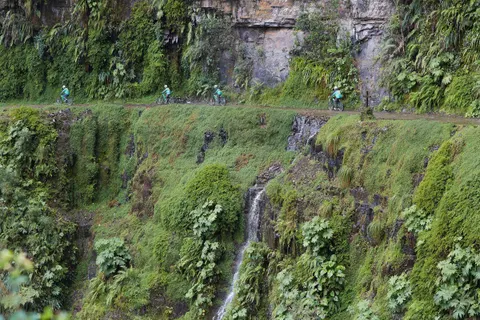
- If you’re riding the Death Road: The Bs 50 municipal fee is usually not in the tour price (Death Road guide).
- If your card charges foreign fees: Bring clean US dollars as your main reserve and change them in batches.
Road blockades in May and June 2026 (about 53 days) caused food and fuel shortages in La Paz, and a state of exception runs to about mid-December 2026. Keep a few days’ spending in bolivianos plus some clean dollars in case roads close again; our La Paz travel tips track the situation.
Frequently asked questions
What is the main currency in Bolivia?
The boliviano (Bs, ISO code BOB), divided into 100 centavos and issued by the Banco Central de Bolivia. It replaced the peso boliviano on January 1, 1987, at one boliviano per million pesos, so “Bolivian pesos” is almost 40 years out of date. Notes run from Bs 10 to Bs 200. Some hotels and agencies take US dollars, but daily spending happens in bolivianos.
How much is $100 US in Bolivia?
About Bs 1,202 at the official rate of Bs 12.02 per dollar on September 30, 2026. The rate has floated since June 2026 and changes daily, so check the Banco Central de Bolivia before you change money. Exchange houses pay a little less. In an August 2026 survey of four in La Paz, they paid up to Bs 0.53 per dollar below the official rate.
Does Bolivia accept US dollars?
Partly. Some hotels, tour agencies and shops aimed at visitors take dollars, at a rate they set themselves. Markets, minibuses, the cable car and park fees such as Tiwanaku's run on bolivianos. A few businesses still convert at the old peg of about 7 per dollar, so when a price appears in both currencies, pay the boliviano figure. Bring clean, untorn US bills to exchange.
Is there still a blue dollar in Bolivia?
Not in any useful sense. The parallel market that paid well above the fixed Bs 6.96 from 2023 lost its premium after the June 2026 float. On September 29, 2026, the parallel rate closed at Bs 11.96-11.98 per dollar against an official 12.02. Street changers now pay no more than a bank and carry counterfeit risk, so use an exchange house, a bank or an ATM.
Can I use my credit card in La Paz?
Yes, at larger hotels and restaurants, but not at markets, on minibuses or at Tiwanaku's ticket office, and seldom outside cities. Since the June 2026 float, card payments convert at a rate that tracks the market, so the roughly 30% penalty cards carried under the peg is gone. Use a card with no foreign transaction fee and choose to pay in bolivianos when the terminal asks.
Are ATMs in Bolivia free for foreign cards?
At some banks. WanderWallet (June 2026) lists Banco Mercantil Santa Cruz, BNB, Banco FIE, BCP and Banco Ganadero as charging no operator fee, while atmfeesaver reports Bs 20-75 at some banks. The screen shows any fee before you confirm, and your home bank may charge its own. Expect about Bs 2,000 per withdrawal and decline the machine's offer to convert the amount.
Is La Paz expensive for tourists?
No. At Bs 12.02 per dollar (September 30, 2026), a cable-car ride costs Bs 3 (US$0.25), a set lunch about Bs 18 (US$1.50), Valle de la Luna Bs 15 (US$1.25) and Tiwanaku Bs 100 (US$8.30). Dorm beds start around US$6 and budget private rooms around US$19. Guided tours and your flight are where most of the money goes.
How much cash can I bring into Bolivia?
Amounts under US$10,000 need no paperwork. Declare US$10,000 to US$50,000 on customs Form 250 when you arrive; larger sums must come in through a regulated financial institution. When you leave, declare US$10,000 to US$20,000. Undeclared cash draws a 30% penalty. Our Bolivia visa guide covers the rest of the entry paperwork.
Keep planning