











Quick answer
The Alasitas festival in La Paz, Bolivia, opens every 24 January; in 2027 that is a Sunday. By tradition, at noon that day people have their miniature houses, cars, banknotes or diplomas blessed (ch'alla) by a yatiri or a priest, so the Ekeko, the Aymara god of abundance, will make them real. The main fair fills the Campo Ferial del Bicentenario (Parque Urbano Central) and in 2026 closed on 15 March.
On this page
- When is the Alasitas festival 2027? Dates and programme
- What is Alasitas and why is it held on 24 January?
- Who is the Ekeko and where can you see the original?
- What to buy at Alasitas: miniatures and what they ask for
- How does the noon ch’alla work?
- How to get to the Alasitas fair in La Paz, and tips
- Alasitas in other Bolivian cities and abroad
- Tours and hotels for Alasitas
- Frequently asked questions
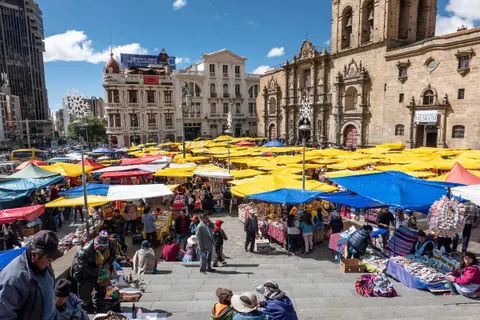
Alasitas (also called la Alasita) is the miniature fair of La Paz, Bolivia. You buy a small version of what you want in full size this year (a house, a car, a degree, a plane ticket) and have it blessed with an offering, a rite called ch’alla. The fair opens every 24 January, the feast of Our Lady of La Paz, and in 2027 that date is a Sunday. Its ritual circuits have been on UNESCO’s intangible heritage list since 2017. If you are drawing up a list of things to do in La Paz between January and March, the fairground is less than 1 km from Plaza Murillo.
Key takeaways
- Opening: Sunday 24 January 2027; the date is fixed every year.
- Blessing: noon on the 24th, by a yatiri or a Catholic priest (UNESCO records both).
- Venue: Campo Ferial del Bicentenario, used in 2023 and 2026; 2027 to be confirmed in January.
- Length: the 2026 fair closed on 15 March, about seven weeks.
- UNESCO: the ritual circuits were inscribed in 2017.
- Prices: we found no official La Paz list; at Santa Cruz’s 2026 fair miniatures started at Bs 10.
Checked on 9 October 2026. Dollar conversions use the Banco Central de Bolivia rate of that day, Bs 11.85 per US$.
- Opens
- 24 January (2027: Sunday)
- Ch'alla
- Noon on the 24th
- Usual venue
- Campo Ferial del Bicentenario
- 2026 closing
- 15 March (remate)
- UNESCO
- Intangible heritage, 2017
La Paz city tours for Alasitas week
Book on Viator From $8Be a Local - La Paz Walking Tour
- Price
- From $8 per person
- Duration
- 2-3 h
- Rating
- Cancellation
- Free
 From $10City Tour plus Cable Car La Paz
- Price
- From $10 per person
- Duration
- 3 h
- Rating
- Cancellation
- Free
 From $5La Paz City Walking Tour Including Historical Streets
- Price
- From $5 per person
- Duration
- 2.5 h
- Rating
- Cancellation
- Free
Prices in US$ per person from Viator as of Sep 30, 2026. They change; you see the final price before paying.
When is the Alasitas festival 2027? Dates and programme
The Alasitas fair 2027 opens on Sunday 24 January. If the Friday 22 national holiday (Plurinational State Day) stays in place, visitors from Santa Cruz or Cochabamba get a long weekend. The 2027 holiday decree is not out yet, and in 2026 that holiday moved to Friday 23.
City hall publishes the programme in January. The 2026 one is a useful guide:
| Date in 2026 | What happened | In 2027 |
|---|---|---|
| 16 to 23 January | Wholesale pre-fair on Avenida Simón Bolívar (100+ artisans) | To be confirmed |
| 23 January | Procession of Our Lady of La Paz; Ekeko ch’alla at night | Saturday 23, to be confirmed |
| 24 January | Opening with mass and procession | Sunday 24 |
| 4 February | Chiti fair of crafts and food | To be confirmed |
| 11 and 12 February | Election of the Ekeko and Chiti Ekeko; Ekeko games | To be confirmed |
| 2 March | Pre-closing sale starts | To be confirmed |
| 15 March | Closing sale (gran remate) and music night | To be confirmed |
UNESCO speaks of “about two or three weeks” of ritual circuits, but the municipal fair runs more than twice that. In 2023 it was extended to 12 March at the artisans’ request; in 2026 it closed on 15 March because it overlapped with Carnival. Prices drop in the pre-closing and closing sales.
What is Alasitas and why is it held on 24 January?
“Alasita” is an Aymara word usually translated as “buy me”. Spanish-language Wikipedia links it to the verb alasitha (to buy), which Ludovico Bertonio recorded in his 1612 Aymara vocabulary.
Miniature offerings predate the Spanish. In 1918 Arthur Posnansky described miniature ceremonies near Tiwanaku around 22 December, close to the solstice (other sources say the 21st). In colonial La Paz the fair was held around 20 October, the city’s founding anniversary. After the 1781 siege led by Túpac Katari, governor Sebastián de Segurola moved it to 24 January, the feast of Our Lady of La Paz, which is why the opening has a mass and a procession.
In December 2017 UNESCO inscribed the Ritual journeys in La Paz city during Alasita on its Representative List of the Intangible Cultural Heritage. The entry describes miniatures exchanged to settle debts symbolically. The periodiquitos, miniature satirical newspapers printed in La Paz since at least 1846, have been on UNESCO’s regional Memory of the World register since 2012.
Who is the Ekeko and where can you see the original?
For UNESCO, the Ekeko (iqiqu in Aymara) is the Aymara god of abundance and protector of the city. The fair version is a small, pot-bellied, smiling man with a moustache, a poncho and a ch’ullu (an Andean hat with ear flaps), loaded with bags of food and banknotes. He is almost always plaster, with an open mouth for a lit cigarette. According to vendors quoted by the anthropologist Gerardo Fernández Juárez, you should offer him alcohol, coca and a cigarette every Tuesday and Friday. Outside January he is sold at the Witches’ Market.
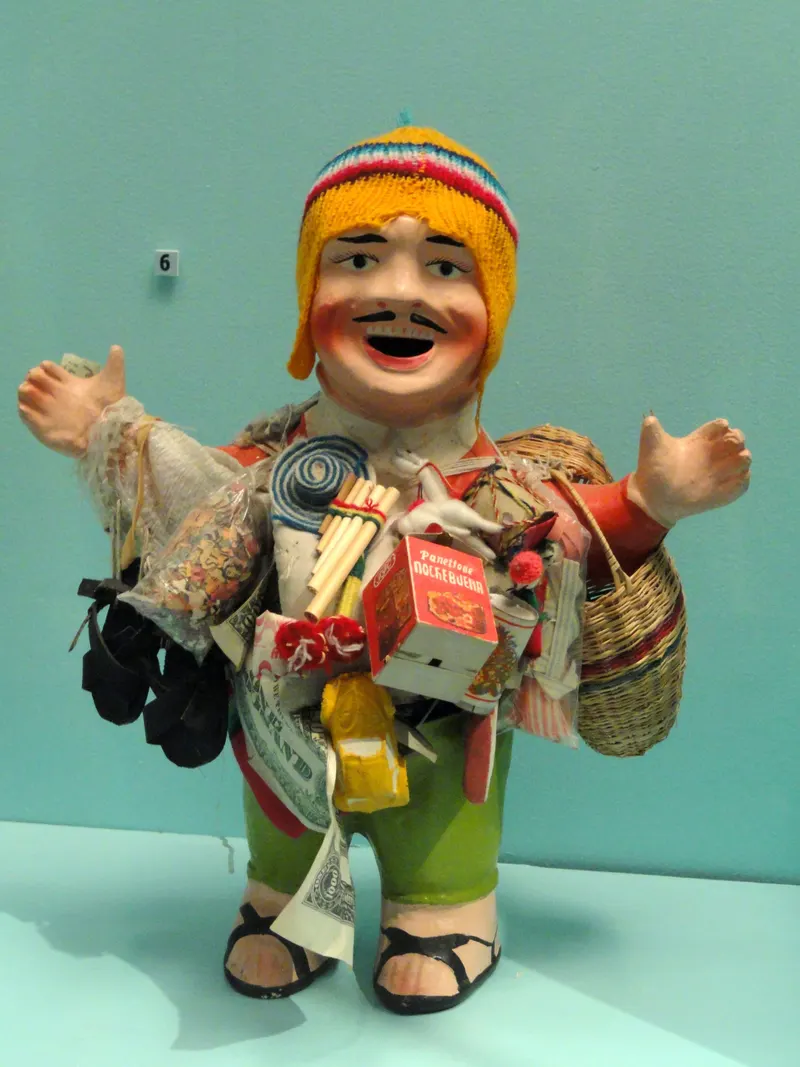
The Ekeko illa, 130 metres from the fair
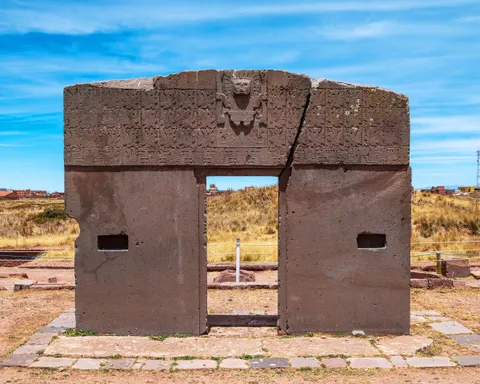
The Ekeko illa is a 15.5 cm stone figure, more than 2,000 years old, from Tiwanaku. It is now at the National Archaeology Museum (MUNARQ), Calle Tiahuanacu 93, about 130 m in a straight line from the fairground. The Swiss naturalist Johann Jakob von Tschudi took it in 1858; according to MUNARQ and the Swiss National Museum, villagers handed it over under the influence of cognac and pressure from his escort. It spent 85 years in Bern’s Historical Museum and came back in late 2014 (October according to MUNARQ, November according to the Swiss museum).
According to MUNARQ’s website, it opens Tuesday to Friday, 8:30 to 12:30 and 14:30 to 19:00. Entry costs Bs 30 for foreigners (about US$2.50), Bs 10 for nationals and Bs 5 for students.
Our pick
Pair the fair with MUNARQ on a weekday between Tuesday and Friday, and you will see the original illa a block from the plaster Ekekos. Don’t count on the museum on Sunday 24, because its website lists no weekend hours.
What to buy at Alasitas: miniatures and what they ask for
What each miniature asks for, according to La Paz city hall and Spanish-language Wikipedia:
| Miniature | What it asks for |
|---|---|
| Little house | A home of your own |
| Car | A vehicle |
| Alasitas banknotes (dollars or bolivianos) | Money |
| Degree certificate | Graduating |
| Plane ticket | Travel |
| Shop or business | A business of your own |
| Building materials | Building or extending a house |
| Food | Never going hungry |
| Plaster rooster and hen | A partner (given to someone looking for one) |
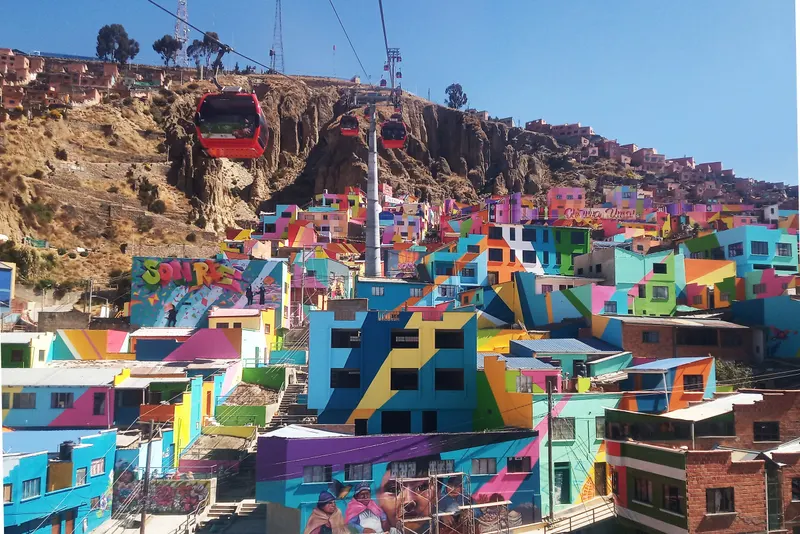
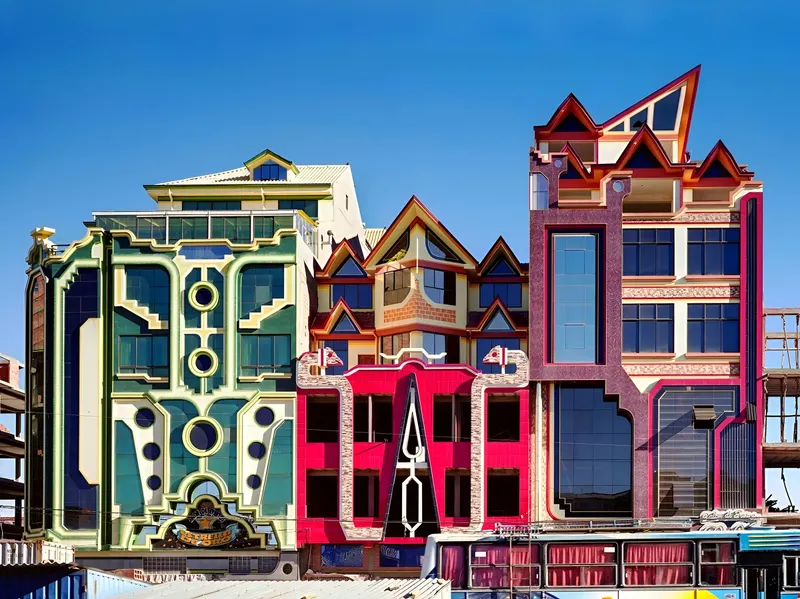
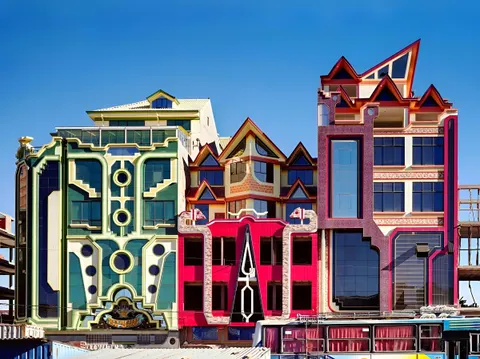
There are also miniature cholets, copies of El Alto’s colourful buildings.
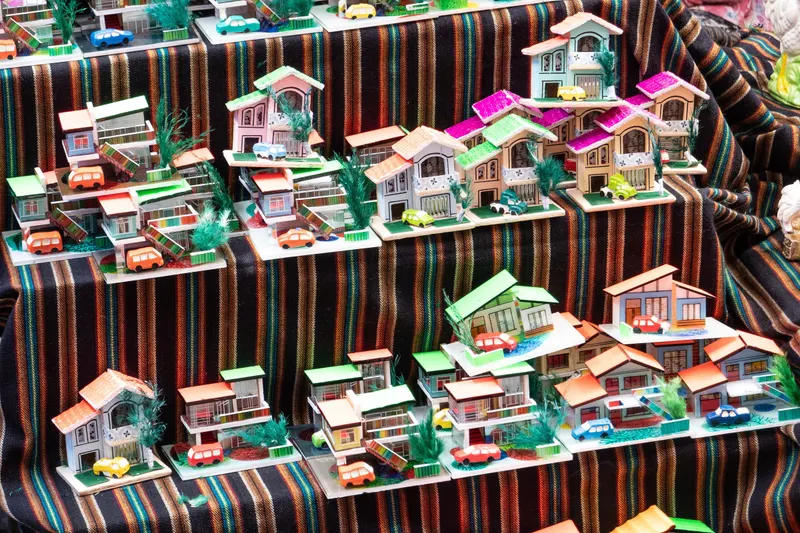
We found no official price list for La Paz. As a reference, at Santa Cruz’s September 2026 fair miniatures started at Bs 10 (about US$0.85) and a little house cost about Bs 30 (about US$2.50); at El Alto’s 2026 closing sale, piggy banks started at Bs 5 (about US$0.40). Carry small boliviano notes, because the exchange rate has moved daily since the June 2026 float (see Bolivian currency). With at least 5,000 exhibitors in 2026, allow three hours to walk part of it, have your purchases blessed and eat something.
What to skip
If you are flying home, leave the big plaster Ekeko, which breaks easily; a small one wrapped in clothes arrives in one piece. If crowds bother you, avoid Sunday 24 and go on a Tuesday or Wednesday in February.
How does the noon ch’alla work?
To ch’allar is to sprinkle alcohol or another drink as an offering to the Pachamama. By tradition the miniatures are blessed at noon on 24 January with incense, alcohol or wine, flower petals and prayers that mix Andean and Catholic elements. UNESCO records two routes, consecration by an Andean ritual specialist (usually a yatiri) and a priest’s blessing, and both happen at the fair.
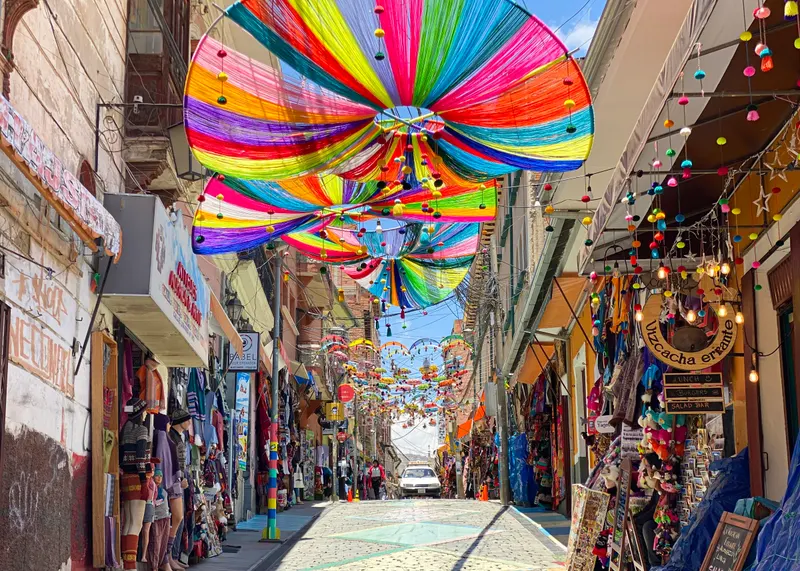
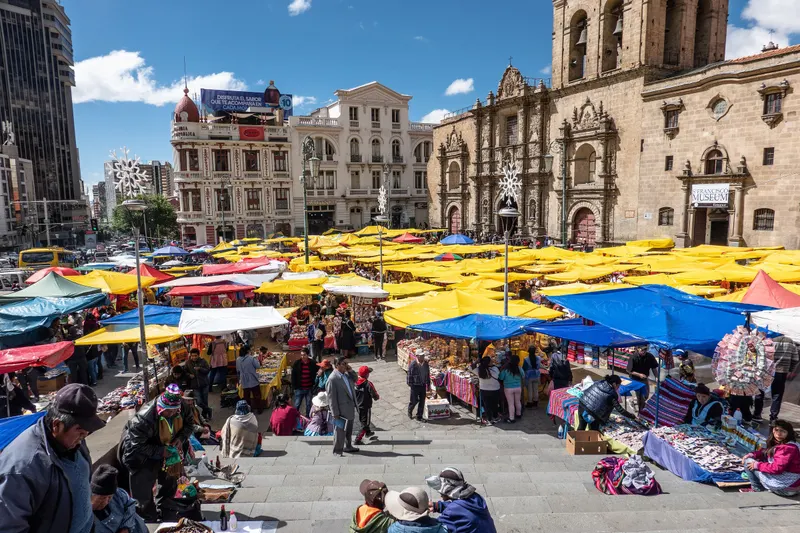
In 2019 the sale on the 24th spread into the centre. According to dated photos on Wikimedia Commons, at 9:53 miniature stalls already covered Plaza San Francisco (the cover photo) and at 13:25 little houses were on sale near the Cathedral. If you go that day, add the historic centre around Plaza Murillo to your route.
Ch'alla etiquette
Ask before photographing a yatiri or another family’s ch’alla, and agree the price before the rite. Buy the miniature first and have it blessed afterwards. Fernández Juárez notes that rural yatiris call some urban practitioners paqpaqos (“charlatans”), so take your time choosing who blesses your little house.
Search hotels and flights
Compare Expedia prices without leaving the guide.
How to get to the Alasitas fair in La Paz, and tips
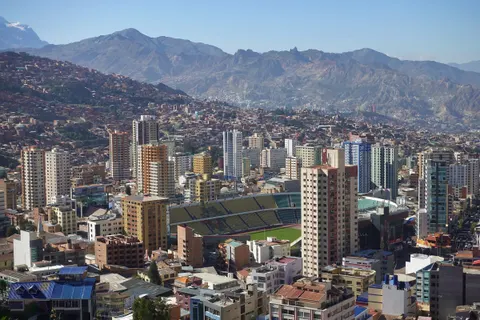
The usual venue is the Campo Ferial del Bicentenario, a municipal ground in Parque Urbano Central by Avenida del Ejército and Calle Federico Zuazo; the fair was held there in 2023 and 2026. On 22 September 2026 city hall presented a five-year plan worth about Bs 360 million for the park, promising to strengthen Alasitas and the Christmas fair. The 2027 venue is confirmed in January.
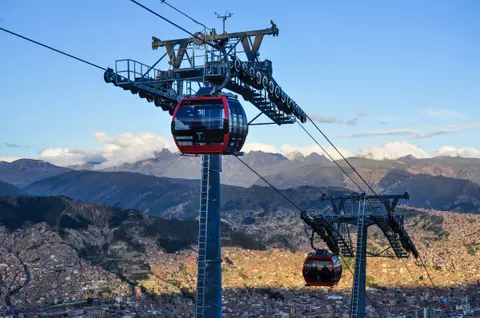
The nearest cable car station is Prado (Light Blue Line), about 400 m in a straight line, followed by San José (Purple Line), about 650 m. A ride costs Bs 3 (about US$0.25) plus Bs 2 per transfer, and on Sundays and holidays the service runs 7:00 to 21:00 (Ministry of Public Works).
- Rain. January is La Paz’s wettest month, with 125.5 mm, about 21 rainy days and average highs of 18.5 °C (SENAMHI). Bring a rain jacket.
- Altitude. The centre is at about 3,640 m. If you fly in from sea level, spend the first day acclimatising (altitude sickness in La Paz).
- Theft. In February 2026, at the fair, a teenager and a friend had a phone and wallet stolen after being sprayed with “a kind of powder”; she ended up in intensive care, according to the state news agency ABI. Phone in a front pocket, backpack on your front (is La Paz safe?).
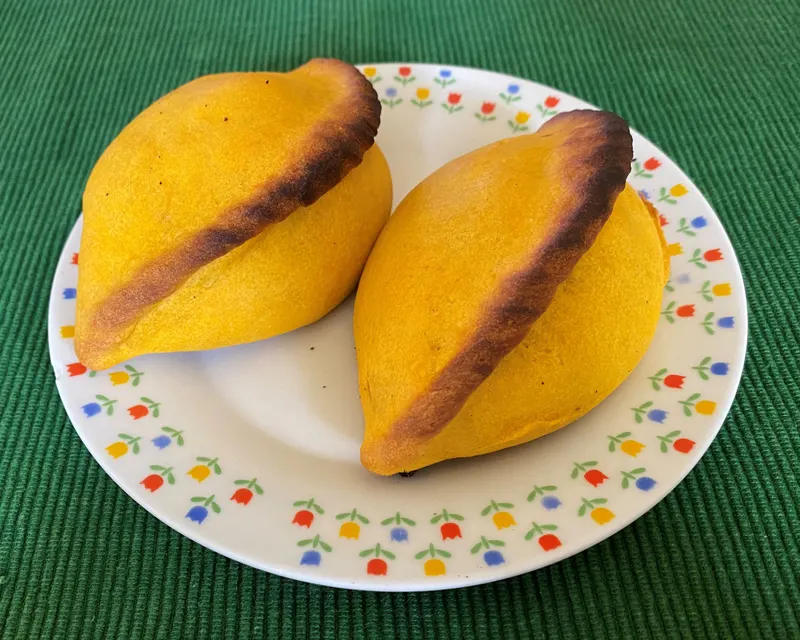
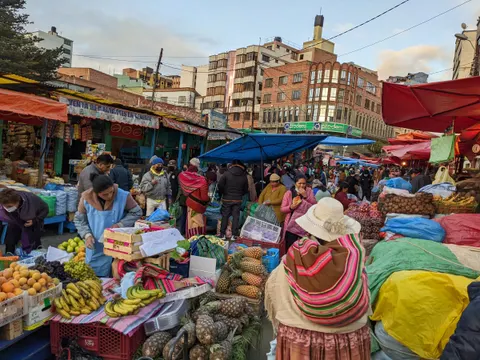
- Food. Look for api (a hot purple-corn drink) with buñuelos, anticuchos and plato paceño. More in Bolivian food.
Before you travel (October 2026)
Bolivia has been under a state of exception since 20 June 2026, extended to mid-December, and fuel-price protests have been called (US Embassy alert, 9 September). Between May and June about 53 days of road blockades cut off La Paz; the 2026 fair had already ended. Check the news in January and our La Paz travel tips.
Alasitas in other Bolivian cities and abroad
| City | When | Recent detail |
|---|---|---|
| El Alto | From 24 January | 2026: Villa Dolores, until mid-February |
| Oruro and Buenos Aires | 24 January | Usual date |
| Quillacollo (Cochabamba) | August | 2026: 17 to 30 August, 2,000+ exhibitors |
| Cochabamba | October to December | 2024: 29 October to 1 December |
| Santa Cruz de la Sierra | September and October | 2026: Cambódromo, from 12 September to 18 or 24 October (sources differ) |
| Potosí and Sucre | June (Potosí), July (Sucre) | Usual dates |
| Puno and Juliaca (Peru) | 3 May | In Puno, Machallata hill; Peruvian cultural heritage since 2016 |
Tours and hotels for Alasitas
Viator has no Alasitas tour, and you don’t need a guide to walk the fair. Outside January, the walking tour of the centre (from about US$5) explains the offerings at the Witches’ Market; more options in La Paz tours.
Outside January: tours that explain La Paz rituals
Book on Viator- From $5La Paz City Walking Tour Including Historical Streets
- Price
- From $5 per person
- Duration
- 2.5 h
- Rating
- Cancellation
- Free
 From $22Cable Car, Cementery, Shaman and El Alto Adventure in La Paz
- Price
- From $22 per person
- Duration
- 3 h
- Rating
- Cancellation
- Free
Prices in US$ per person from Viator as of Sep 30, 2026. They change; you see the final price before paying.
For the 22 to 24 January long weekend, book early. The historic centre is less than 1 km from the fair and MUNARQ; compare areas in where to stay in La Paz or see La Paz hotels on Expedia.
Two weeks later comes the Oruro Carnival, on 6 February 2027. For each month’s weather, see the best time to visit Bolivia.
Frequently asked questions
When does Alasitas start in 2027?
On Sunday 24 January 2027. The date has not moved since governor Sebastián de Segurola set the fair on that day after the 1781 siege of La Paz. Unless the holiday decree changes it, Friday 22 January is a national holiday (Plurinational State Day), so the opening falls on a long weekend. La Paz city hall has not published the 2027 programme yet; the 2026 one came out in mid-January.
What does 'alasita' mean?
It is an Aymara word usually translated as 'buy me'. Spanish-language Wikipedia links it to the verb alasitha, 'to buy', recorded in the Jesuit Ludovico Bertonio's Aymara vocabulary printed in 1612 at Juli, on Lake Titicaca. Everything at the fair is for sale in miniature, to ask for the full-size version.
What time are the miniatures blessed at Alasitas?
By tradition, at noon on 24 January. Yatiris (Aymara ritual specialists) cense the miniatures and sprinkle them with alcohol or wine and flower petals; some people prefer a Catholic priest's blessing, and UNESCO records both practices. UNESCO also describes two to three weeks of ritual circuits, so blessings are not limited to the 24th.
Where is the Alasitas fair in La Paz?
At the Campo Ferial del Bicentenario, inside Parque Urbano Central, by Avenida del Ejército and Calle Federico Zuazo. It was the venue in 2023 and 2026; the 2027 venue is confirmed with the city's January programme. The Prado station of the Light Blue cable car line is about 400 m away in a straight line, and San José (Purple Line) about 650 m.
How long does Alasitas last?
UNESCO speaks of two to three weeks of ritual circuits, but the municipal fair runs about seven. In 2026 it closed on Sunday 15 March with a big closing sale (remate), extended because it overlapped with Carnival. In 2023 it was extended to 12 March at the artisans' request. The 2027 closing date has not been announced.
What is sold at Alasitas?
Miniatures of whatever you want that year: little houses, cars, bundles of dollars and bolivianos, degree certificates, plane tickets, shops, building materials and food. Also plaster roosters and hens, given to people looking for a partner, Ekeko figures and periodiquitos, tiny satirical newspapers. Between stalls there is api with buñuelos, anticuchos and plato paceño.
When is Alasitas in Santa Cruz?
In September and October, at the Cambódromo in Santa Cruz de la Sierra. The 2026 edition opened on Saturday 12 September with about 1,500 artisans. El Deber gave the closing date as 18 October and Unitel as the 24th, so confirm before you go. The La Paz fair always starts on 24 January.
Keep planning