





Quick answer
Isla del Sol is on the Bolivian side of Lake Titicaca, 1.5 hours by boat from Copacabana (four hours by bus from La Paz). Boats leave Copacabana around 8:30 a.m. and 1:30 p.m. and cost Bs 30-50 (US$2.50-4) each way, and each community charges Bs 10-20 in cash. Sleep at least one night, since the La Paz day tour leaves you under two hours there.
On this page
- Where is Isla del Sol, Bolivia?
- Is Isla del Sol worth visiting?
- How to get to Isla del Sol
- How much does Isla del Sol cost in 2026?
- What to see and do on Isla del Sol
- Hiking Isla del Sol north to south: is the north open?
- Where to stay on Isla del Sol: hotels and hostels
- Isla del Sol altitude and acclimatization
- Isla de la Luna (Island of the Moon)
- Best time to visit Isla del Sol: weather by season
- Frequently asked questions
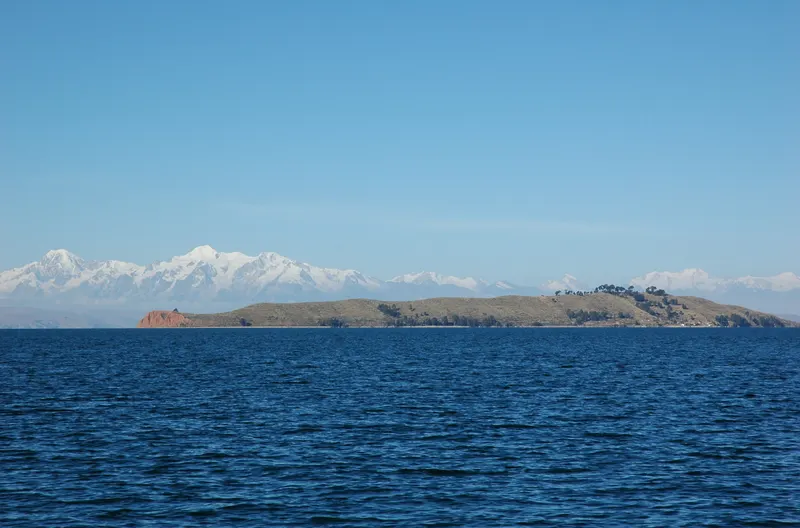
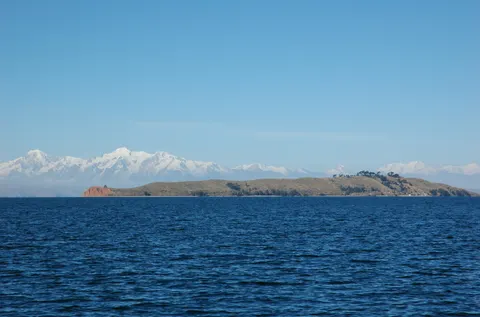
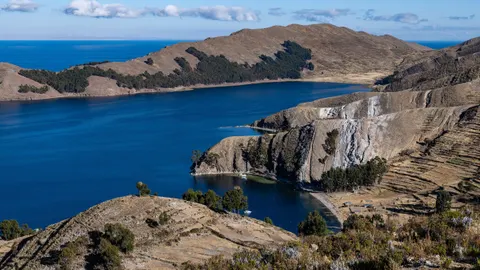
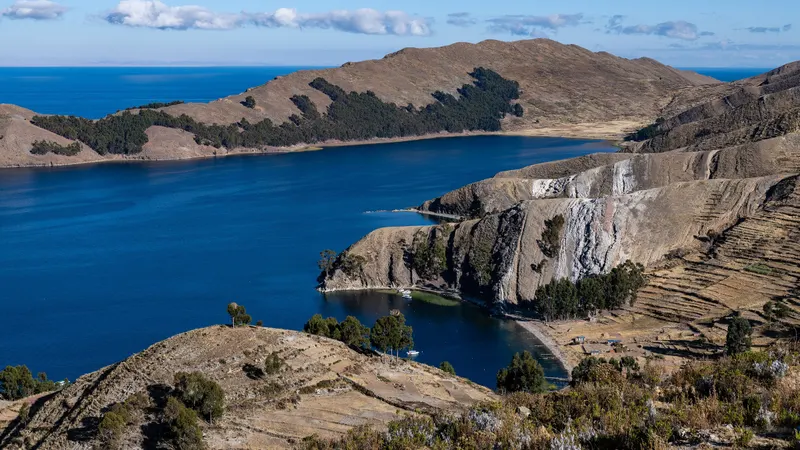
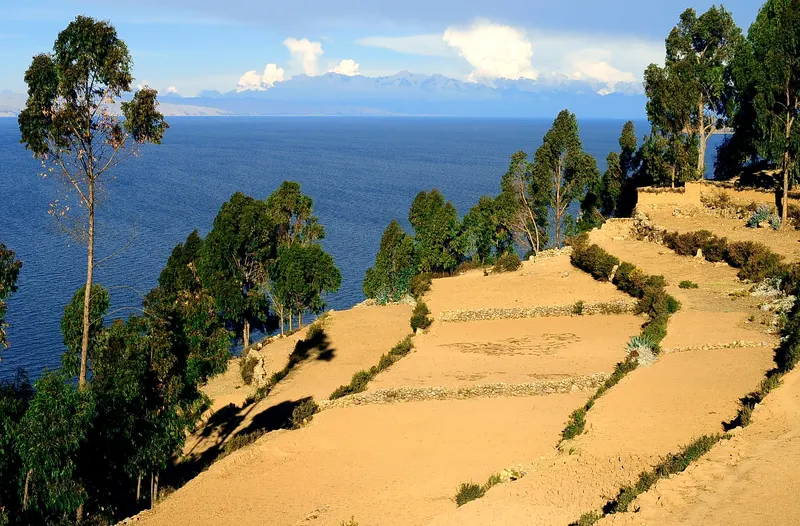
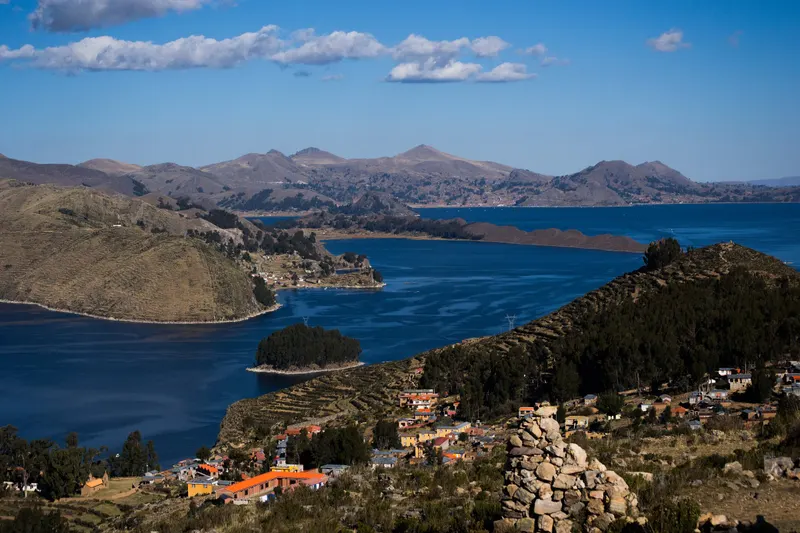
Isla del Sol, Bolivia’s Island of the Sun, is the largest island in Lake Titicaca, about 1.5 hours by boat from Copacabana. Inca legend says Manco Cápac and Mama Ocllo, children of the sun god Inti, emerged from a rock at its north end and went on to found Cusco. The island has no roads and no cars. You walk everywhere, between farming terraces at 3,800 to a little over 4,000 m, and pay a small cash fee to each community whose land you cross.
- Altitude
- 3,812 m (lake) to about 4,070 m
- From Copacabana
- About 1.5 h by boat
- Boat
- Bs 30-50 each way (Sep 2026)
- Community fees
- Bs 10-20 each, cash
- ATMs
- None on the island
Current conditions (September 2026)
Road blockades cut Copacabana off twice in 2026. In January more than 200 tourists were stranded there (Brújula Digital), and in May and June the road from La Paz stayed blocked for 51 days until police and soldiers cleared it on June 23 (ABI). Bolivia’s state of exception runs to about mid-December, and unions have threatened new protests over the September 18 diesel price rise. Check our La Paz safety and blockades guide before you set out.
Where is Isla del Sol, Bolivia?
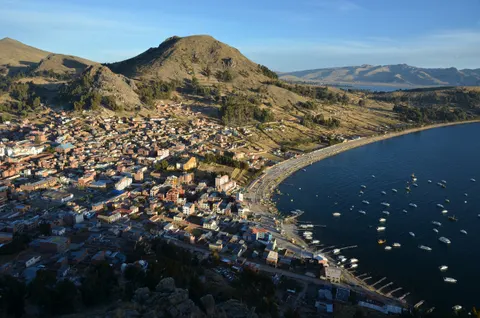
Isla del Sol belongs to the municipality of Copacabana, in Bolivia’s La Paz department. It is 9.6 km long and up to 4.6 km wide (14.3 km²), and its south tip lies about 14 km north-west of Copacabana in a straight line. Its Aymara name is Titi’kaka, and the lake’s name probably comes from the Sacred Rock at the island’s north end.
About 800 Aymara families live here, in three communities that each charge their own entry fee:
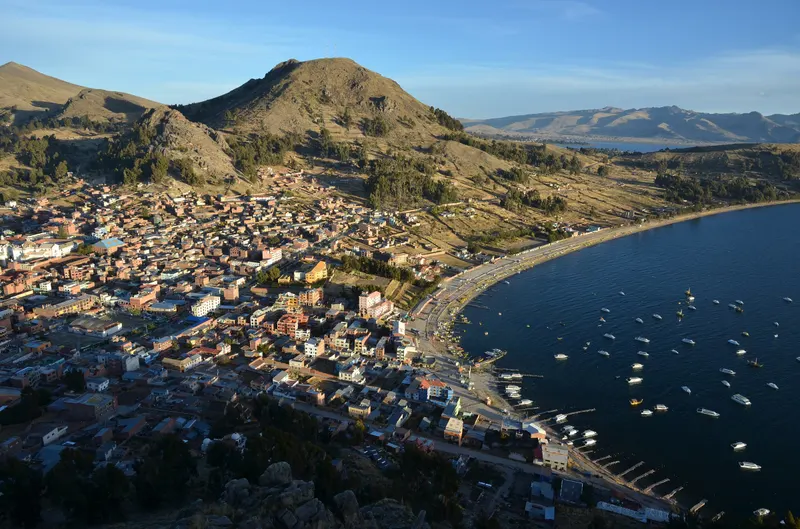
- Yumani (south): the main village, at 3,989 m, above the Inca Steps and with most of the beds.
- Challa (center): on the east coast, halfway along the hike.
- Challapampa (north): a beach village near the Chincana ruins and the Sacred Rock.
The Uros reed islands and Taquile are on the Peruvian side, reached from Puno. Our Lake Titicaca guide compares the two shores.
| Place | What it is | Coordinates |
|---|---|---|
| Copacabana | Mainland port for the boats | -16.1656, -69.0856 |
| Yumani | Main village and south landing | -16.0357, -69.1484 |
| Pilko Kaina | Inca ruin on the south shore | -16.0486, -69.1443 |
| Challapampa | North village and landing | -15.9975, -69.1831 |
| Isla de la Luna | Smaller island to the east | -16.0403, -69.0708 |
Is Isla del Sol worth visiting?
Our verdict
Yes, if you sleep there at least one night. You get a car-free ridge walk, Inca ruins at both ends, the snowcapped Cordillera Real across the water, and the sunset and sunrise that day-trippers miss. The best-reviewed day tour from La Paz takes about 15 hours door to door for 1 hour 40 minutes on the island, so book it only if it’s your one chance to see Lake Titicaca.
Which one is for you?
- If you have one day from La Paz: the full-day tour on Viator, with under two hours at the south end.
- If you have two days: a night in Yumani, on your own or on the 2-day tour on Viator.
- If you want to walk the whole island: the morning boat to Challapampa, a 3-4 hour hike south and a bed in Yumani.
- If you’re coming from Puno: the day tour from Puno on Viator, or a bus to Copacabana and the public boat.
How to get to Isla del Sol
Every route runs through Copacabana. An early bus from La Paz makes the 1:30 p.m. boat, and the 8:30 a.m. boat is realistic only if you sleep in Copacabana the night before.
La Paz to Copacabana
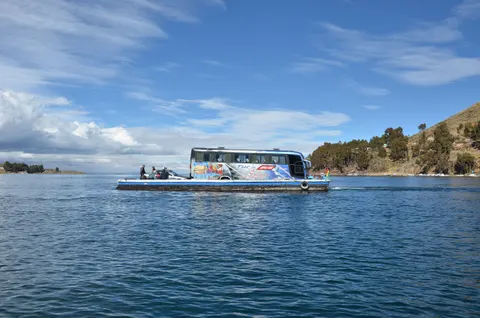
Buses and minibuses leave from the streets around La Paz’s Cementerio General and take 3.5-4 hours to cover about 155 km. Reported fares range from Bs 40 when service restarted after the June 2026 blockade (ABI) to Bs 60 on the big buses in December 2025 (Unitel), so budget Bs 40-60 (US$3.30-5) each way. At the Strait of Tiquina you ride a launch (Bs 2-5; sources differ) while the bus crosses on a wooden barge.
The UK Foreign Office reports express kidnappings around the Cementerio General and advises a direct bus from Copacabana back to La Paz. Our Copacabana guide covers the bus companies and the crossing in detail.
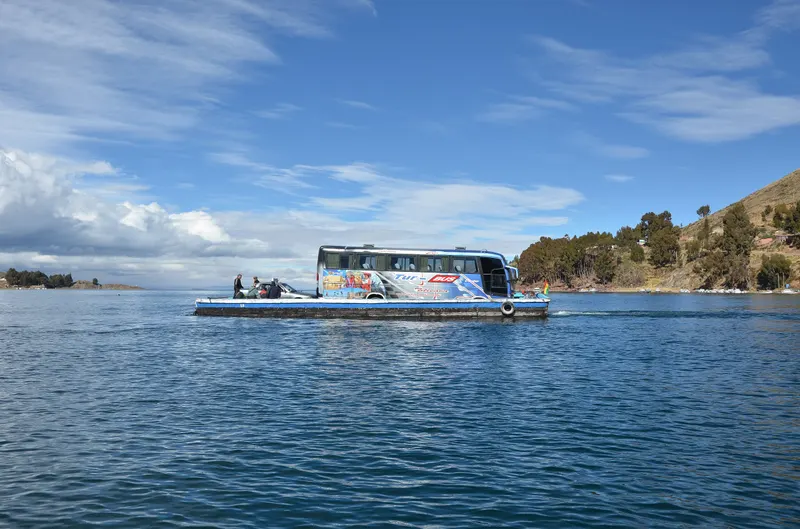
Boats from Copacabana to Isla del Sol: times and prices
You buy tickets at kiosks on Copacabana’s main pier. We found no published timetable, so these times come from 2024-2026 travel guides.
| Route | Departs | Crossing | Fare |
|---|---|---|---|
| Copacabana → Yumani (south) | Around 8:30 a.m. and 1:30 p.m. | About 1.5 h | Bs 30-50 (US$2.50-4.20) each way |
| Copacabana → Challapampa (north) | Mornings only, around 8:30 a.m. (some sources say 9:30) | About 2 h | Similar; confirm at the kiosk |
| Yumani → Copacabana | Mid-morning and mid-afternoon; last boat around 3:30 p.m. | About 1.5 h | Bs 30-50 each way |
Published 2026 fares run from Bs 30-40 return (Bushop, June) to Bs 60-100 return (Journey by Backpack, January), and diesel went from Bs 9.80 to Bs 17.95 a liter on September 18, so budget for the high end. Hikers should buy a ticket out to Challapampa and back from Yumani. If you have an onward bus the same day, take the mid-morning boat back. The same Foreign Office page calls Titicaca boats “often very basic” and says to check that life jackets are provided.
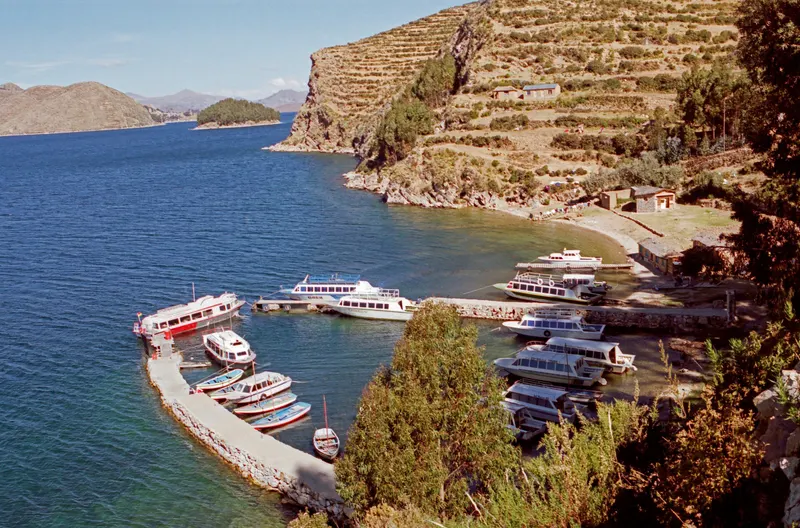
From Puno or Cusco to Isla del Sol
From Peru you cross the border at Kasani, about 8 km from Copacabana, and the bus from Puno takes 3-4 hours including the crossing. Set your watch an hour ahead in Bolivia, since the boats run on Bolivian time. US citizens have not needed a Bolivian visa since December 1, 2025; other passports are covered in our Bolivia visa guide. Puno sits at 3,830 m, so a few days there leave you adjusted to the island. Schedules and both border crossings are in our Cusco to La Paz guide.
Isla del Sol tours from La Paz and Puno
Viator’s Isla del Sol listings are thin, and two Bolivia Hop tours from La Paz hold almost all the reviews. Both land at Yumani, at the south end.
- Full day from La Paz (from about US$59): 7 a.m. departure, 1:40 to 3:20 p.m. on the island, back around 10-10:30 p.m. Food and the Bs 20 community fee are extra.
- Two days from La Paz (from about US$69): the same bus, a 1 p.m. boat, a night on the island and the 3:30 p.m. boat back. Food, the Bs 10 Yumani fee and your bed are extra, and the guide can arrange the bed on the bus.
- Full day from Puno (from about US$130): run by the Puno agency Titicaca Tours from 7 a.m. to 8:30 p.m., with guide, lunch, boat and island entry included and the option to end in La Paz.
We’d pick the 2-day tour or go on our own. The private day trip below (from about US$290) had only five reviews in September 2026. Our La Paz tours guide compares the other big trips out of the city.
Isla del Sol tours worth a look
Book on Viator From $692 Day Trip From La Paz: Copacabana & Isla del Sol (Night in Isla del Sol)Free cancellationCheck availability
 From $59Full Day Guided Tour in Copacabana and Isla del SolFree cancellationCheck availability
 From $130Copacabana and Isla del Sol Tour from Puno (Whole Day)Free cancellationCheck availability
 From $288Private Tour to Copacabana and Sun Island from La PazFree cancellationCheck availability
Prices in US$ per person from Viator as of Sep 30, 2026. They change; you see the final price before paying.
How much does Isla del Sol cost in 2026?
The table prices two days and one night from La Paz, per person, on public transport, at about Bs 12 per US dollar. Bolivia floated the boliviano in June 2026, so ignore any guide that still converts at 6.96. Food is left out, since we found no reliable 2026 meal prices.
| Item (estimate, September 2026) | US$ | Bs |
|---|---|---|
| Bus La Paz ↔ Copacabana (Bs 40-60 each way) | 6.70-10 | 80-120 |
| Tiquina launch, both ways | 0.33-0.83 | 4-10 |
| Boat Copacabana ↔ Isla del Sol | 5-8.30 | 60-100 |
| Community fees (1-3) plus the Chincana | 0.83-5.80 | 10-70 |
| Half a double room (Bs 180-860 a room) | 7.50-36 | 90-430 |
| Total without food | about 20-61 | about 245-730 |
Community fees are the murkiest line. Bolivia Hop lists Bs 20 on its day tour and Bs 10 for Yumani on its 2-day tour, while other guides give Bs 5 to 15 depending on the community. Budget Bs 10-20 per community, up to three if you cross the island, plus Bs 10 for the Chincana (a 2024 price).
The island has no ATMs and cards are almost never accepted. Rural ATMs can run dry, so withdraw bolivianos in La Paz. Our Bolivia currency guide explains the new exchange rate.
Bring small notes
Carry Bs 10 and Bs 20 notes for the community fees, and keep each receipt until you leave the island.
What to see and do on Isla del Sol
People have lived on the island since at least 2200 BC. Wikipedia counts more than 80 ruins, mostly from the 15th century, though its Lake Titicaca article says over 180. The Tiwanaku state ran a major ritual site at Chucaripupata, above the Sacred Rock, and the Incas built a temple at the rock that the 10th Inca, Túpac Inca Yupanqui, expanded.
Yumani, the Inca Steps and the Inca Fountain
From the south landing, the Escalera del Inca climbs to Yumani in about 200 stone steps (counts range from 206 to 222). At close to 4,000 m they are hard work with a full backpack. The steps lead to the Fuente del Inca, a spring with three spouts that is billed as a fountain of youth.
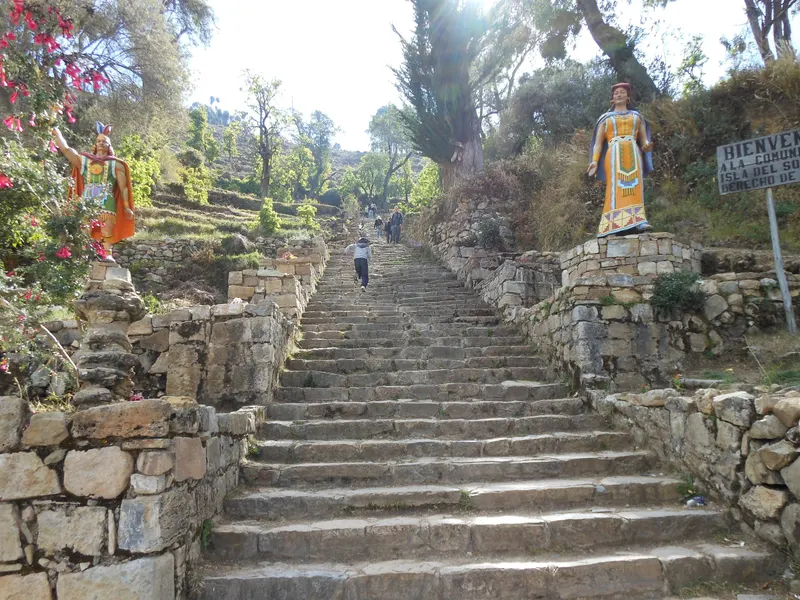
Pilko Kaina, the “Temple of the Sun”
A path along the shore south of Yumani leads to Pilko Kaina, a two-level Inca building about 15.5 by 13.4 m, with stone vaults and a partly collapsed upper floor. It is attributed to Túpac Inca Yupanqui, who ruled from 1471 to 1493, and tour itineraries call it the sun temple. It’s the one ruin the day tour reaches. We couldn’t confirm a 2026 entry price.
The north: Challapampa, the Chincana and the Sacred Rock
Challapampa has a white-sand beach and a small site museum of Inca and Tiwanaku objects recovered in underwater surveys off the island in 1989-1992 (Bolivia Hop calls it the Gold Museum). Near the village, the Chincana (Quechua for “labyrinth”) is a maze of rooms and passages thought to have housed the women who served the shrine; entry was Bs 10 in 2024. About 300 m away stands the Sacred Rock, Titi Qala, where the Manco Cápac legend begins.
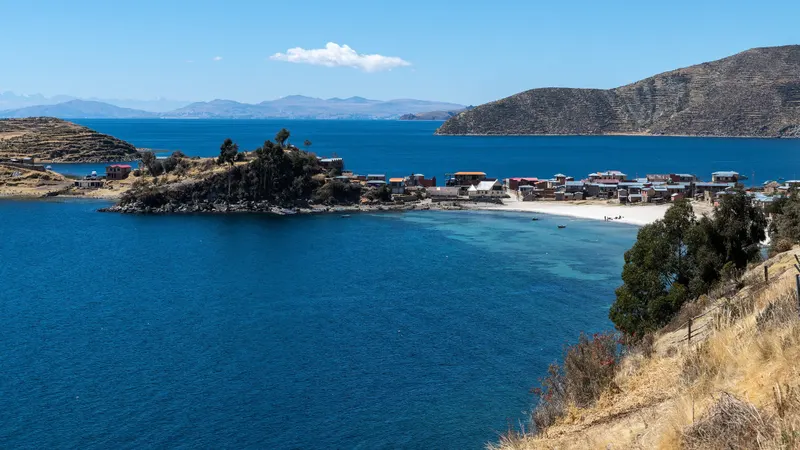
What to skip
On the day tour, forget the north. You get 1 hour 40 minutes at Yumani, and Challapampa is a 3-4 hour walk away. Don’t set aside extra time for the Inca Fountain either, since the Inca Steps take you past it.
Hiking Isla del Sol north to south: is the north open?
The ridge walk from Challapampa to Yumani is the best thing to do on the island, and for years it was off limits.
| When | What happened | Source |
|---|---|---|
| Feb 2017 | Challa builds about 300 m from the Chincana, Challapampa tears two buildings down, and Challa blockades the island | Hosteltur (Aug 2017) |
| Jun 2018 | Tourism to the island suspended “indefinitely” | Opinión (Jun 2018) |
| Jun 2019 | The communities sign a peace agreement after at least 40 meetings mediated by the Ministry of Cultures and Tourism | Opinión (Jun 2019) |
| About 2022 | Travel writers report the north open again | Tales from the Lens (Nov 2024), Journey by Backpack (Jan 2026) |
| Aug 2026 | Two English-language guides call north access intermittent or unclear | Bolivian Life, La Paz Life |
Check the day before
We found no official 2026 statement from the municipality, the ministry or the communities on access to the north. Ask at the boat kiosks on Copacabana’s pier, or message your lodge on the island, before you plan the walk or book a bed in Challapampa.
Allow 3-4 hours one way. Published distances run from 7 to 12 km, depending on where you start and finish. The path tops out a little over 4,000 m with little shade, and the sun burns fast at that height even when the air is cold, so carry water, a hat, sunscreen and small notes for the fee points.
Walk it north to south. Take the morning boat to Challapampa, see the Chincana and the Sacred Rock, then hike to a bed in Yumani. Catching the 3:30 p.m. boat from Yumani the same day is possible but tight. If you’ve already slept in Yumani, Bolivia Hop suggests a public boat north (about 30 minutes) and walking back.
Where to stay on Isla del Sol: hotels and hostels
Yumani has most of the beds and the return boats. Challapampa is quieter and closer to the Chincana, but it depends on the morning boat and on the access question above. On Booking.com in late September 2026, a night for two ran from about Bs 180 (US$15) at a basic hostal to Bs 1,330 (US$111) at Inti Illimani Lodge, with Ecolodge La Estancia at about Bs 2,975 (US$247).
Expect solar power with limited hours (pack a headlamp and a power bank), hot water that works best in the late afternoon, and extra blankets instead of heating. Every bed sits uphill from a landing and you carry your own bag (or pay for a donkey), so bring a daypack and leave the rest in La Paz or Copacabana.
Ecolodge La Estancia
Best for: The most comfortable stay on the island, in passive-solar cottages
Stone and adobe cottages built on restored pre-Inca farming terraces at the island's southern tip, 4,010 m up, facing the lake and the Cordillera Real. The bioclimatic design stores the day's sun to heat the rooms at night. It is by far the priciest bed on Isla del Sol, about Bs 2,975 (around US$250) a night.
- Cottages on restored pre-Inca terraces
- Passive-solar bioclimatic design
- Lake and Cordillera Real views
- 4,010 m above sea level
Inti Illimani Lodge
Best for: Lake views and more comfort without La Estancia's price
A garden lodge in Yumani with lake and garden views and an à la carte breakfast every day. It ran about Bs 1,330 (around US$110) a night for two. Like almost everything on the island it means an uphill walk from the dock, so ask which landing to use when you book.
- Lake and garden views
- À la carte breakfast
- In Yumani, south end
Nueva Luna - Isla del Sol
Best for: Mid-range Yumani stay with a terrace facing the mountains
A Yumani guesthouse with a garden, terrace, mountain views and WiFi. Rooms cost about Bs 860 (around US$70) a night for two. Guests mention an electric shower, so hot water depends on the island's power supply.
- Garden with terrace
- Mountain views
- WiFi
Casa de la Luna - Isla del Sol
Best for: Sleeping high above Yumani with the lake in front of you
A guesthouse on the south side of Yumani, above the Inca Steps, with breakfast available. It cost about Bs 650 (around US$54) a night. Getting there means climbing the Inca Steps with your bag, so travel light.
- South side of Yumani
- Above the Inca Steps
- Breakfast available
Ecolodge El Descanso
Best for: Budget stay with its own restaurant
A budget ecolodge in Yumani with a bar and a restaurant serving pizza plus local and international dishes. From about Bs 350 (around US$29) a night for two. Pay in cash.
- Restaurant: pizza and local food
- Bar
- Yumani community
Hostal Inti Wayra
Best for: Cheap private room with a lake view
A family-run hostal in Yumani with a garden, restaurant and WiFi; rooms have a desk and a patio with mountain views, and the property looks over the lake. About Bs 325 (around US$27) a night for two. Expect patchy hot water in the morning, as almost everywhere on the island.
- Lake views
- Garden and restaurant
- Patio with mountain view
Ecolodge Inti Wata
Best for: The most polished base in the north
An ecolodge perched above Challapampa village and overlooking the lake, with a garden, terrace, bar and WiFi. From about Bs 660 (around US$55) a night for two. Before booking, confirm the north is receiving visitors that week, and remember boats to the north only leave in the morning.
- Challapampa base for the Chincana
- Lake-view terrace
- Garden and bar
Hostal Cultural Bertha
Best for: Rock-bottom budget in the north, with a shared kitchen
A family hostal in Challapampa with family rooms, a sun terrace and a shared kitchen. It cost about Bs 195 (around US$16) a night for two. Challapampa has fewer services than Yumani, so bring enough cash for your whole stay.
- Shared kitchen
- Family rooms
- Sun terrace
Price band for a double room in the dry season. Confirm rates and dates on Expedia.
If you’d rather sleep on the mainland, our Copacabana guide covers hotels in town. To check dates and rates on the island, compare Isla del Sol hotels on Expedia.
Isla del Sol altitude and acclimatization
| Place | Altitude |
|---|---|
| Central La Paz | About 3,640 m (11,940 ft) |
| Lake Titicaca surface | 3,812 m (12,507 ft) |
| Copacabana | 3,841 m (12,602 ft) |
| Yumani village | 3,989 m (13,087 ft) |
| El Alto airport (LPB) | 4,061 m (13,325 ft) |
| Island high point, Cerro Chequesani | About 4,050-4,075 m (sources differ) |
The CDC advises that above 3,000 m you raise your sleeping altitude by no more than 500 m a night. Yumani is about 350 m above central La Paz, so the island fits that rule after two or three nights in the city. Flying into El Alto airport and sleeping on the island that same night does not.
A headache with nausea, dizziness or fatigue is acute mountain sickness, and you shouldn’t go higher until it clears. Confusion, stumbling or breathlessness at rest are emergencies. Getting lower from the island takes a 1.5-hour boat plus a 3.5-4 hour bus that crosses El Alto, above 4,000 m, before it drops into La Paz. Our La Paz altitude sickness guide covers prevention, including the CDC’s advice to skip alcohol for your first 48 hours.
Isla de la Luna (Island of the Moon)
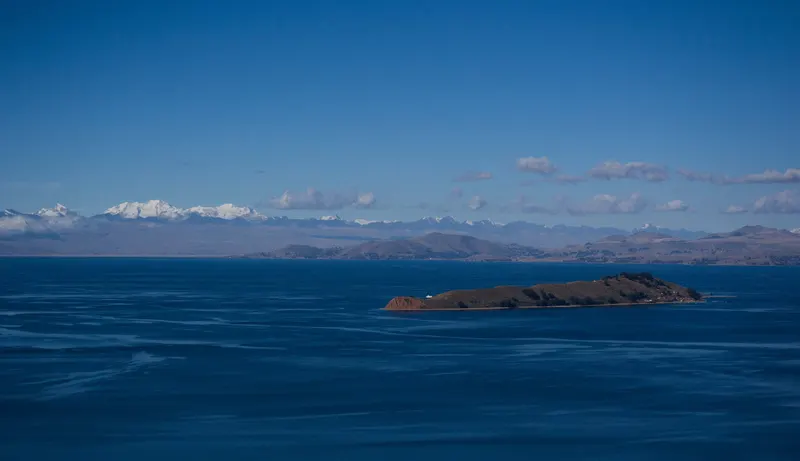
Isla de la Luna covers 1.05 km², has about 80 residents and lies some 8 km east of Yumani. Its main ruin, Iñak Uyu (the “Palace of the Virgins”), began as a Tiwanaku temple around AD 650-1000, and the Incas later built a complex there for the acllas, the chosen women who served the state religion. In Inca legend, the creator god Viracocha ordered the moon to rise from here. Paraguayan prisoners of war built a prison here during the Chaco War (1932-35), and future president Hernán Siles Zuazo escaped from it to Peru in 1949.
Boats run from Yumani in about 45 minutes, and Copacabana kiosks have sold combined Luna and Sol tickets. We couldn’t confirm 2026 boat fares, and the only recent entry fee we found was Bs 20 (Bushop). Give it a morning if you sleep on Isla del Sol, and skip it on a day trip.
Best time to visit Isla del Sol: weather by season
Figures are 1981-2010 averages from Copacabana’s weather station (3,841 m), about 150 m below Yumani.
May to October
Dry seasonClear skies, average highs of 13-15 °C (55-59 °F) and nights that can drop below freezing. Expect more Bolivian visitors in early August, around the August 5 feast of the Virgin of Copacabana and Independence Day on August 6.
Verdict: The best months to go. Pack a warm layer for the night.
November to March
Rainy seasonJanuary is the wettest month, with 184.7 mm of rain at Copacabana, and highs reach about 15-16 °C (59-61 °F). Floods and landslides can block roads during these months.
Verdict: Doable with rain gear and a spare day in your plan.
For the rest of the country, see our guide to the best time to visit Bolivia.
To fit the island into a longer trip, our Bolivia itinerary has day-by-day routes for one to three weeks, and our list of things to do in Bolivia covers the next stops.
Frequently asked questions
Is Isla del Sol worth visiting?
Yes, if you can spend at least one night. You get a car-free walk along the island's ridge, Inca ruins such as Pilko Kaina and the Chincana, and sunset and sunrise over the lake after the day boats have left. The best-reviewed day tour from La Paz takes about 15 hours door to door for 1 hour 40 minutes at the south end, so book it only if you have no other day for Lake Titicaca.
Can you do Isla del Sol as a day trip from La Paz?
Yes, on a tour. Bolivia Hop's full-day trip leaves La Paz at 7 a.m., lands at Yumani around 1:40 p.m., boards the boat back at 3:20 p.m. and gets you to La Paz around 10-10:30 p.m.. You see Pilko Kaina and the Yumani shore only. On your own it barely works, because the 1:30 p.m. public boat reaches Yumani around 3 p.m. and the last boat back leaves around 3:30.
How long is the boat from Copacabana to Isla del Sol?
About 1.5 hours to Yumani at the south end and about 2 hours to Challapampa in the north. As of September 2026, public boats leave Copacabana around 8:30 a.m. and 1:30 p.m. for the south, while boats to the north run in the morning only (8:30 or 9:30, depending on the source). The last boat back from Yumani leaves around 3:30 p.m.
How much does it cost to visit Isla del Sol?
As of September 2026, the boat costs about Bs 30-50 (US$2.50-4.20) each way, each community charges Bs 10-20 in cash, and the Chincana ruins add Bs 10. Two days from La Paz on public buses, with half of a budget or mid-range double room, come to about Bs 245-730 (US$20-61) per person before food. Tours from La Paz start at about US$59 for the day trip and US$69 for two days, with bed and food extra.
Is the north of Isla del Sol open?
Reports say yes, but check. A dispute between the Challa and Challapampa communities disrupted tourism from 2017, the communities signed a peace agreement in June 2019, and travel writers reported the north open again from about 2022. In August 2026 two English-language guides still described access as intermittent or unclear. We found no official 2026 statement, so ask at the Copacabana pier or your lodge the day before.
What is the altitude of Isla del Sol?
The lake surface is at 3,812 m (12,507 ft), Yumani village at 3,989 m (13,087 ft), and the high point, Cerro Chequesani, at about 4,050-4,075 m (sources differ). Yumani is about 350 m higher than central La Paz, so spend two or three nights in La Paz before you sleep on the island. Our La Paz altitude sickness guide covers symptoms and prevention.
How do you get from Puno to Isla del Sol?
Take a bus from Puno to Copacabana, which takes 3-4 hours including the Kasani border crossing about 8 km from town, then a public boat to the island. Bolivia is one hour ahead of Peru, so reset your watch before you check boat times. A full-day tour from Puno, from about US$130, includes the bus, a guide, lunch, a shared boat and the island entrance. Route details are in our Cusco to La Paz guide.
Are there ATMs on Isla del Sol?
No. The island has no ATMs and cards are almost never accepted, so bring enough bolivianos for fees, meals and your room. Withdraw cash in La Paz before you leave, because ATMs in rural towns can run out of money. Carry plenty of Bs 10 and Bs 20 notes for the community fees.
Keep planning