












Quick answer
Copacabana is Bolivia's main town on Lake Titicaca, at 3,841 m (12,602 ft) and about 155 km by road from La Paz. Buses and minibuses leave La Paz's Cementerio General area and take 3.5-4 hours, including a launch across the Strait of Tiquina. Expect Bs 40-60 (about US$3.30-5) one way. Stay at least one night for the basilica, a Cerro Calvario sunset and a boat to Isla del Sol.
On this page
- Where is Copacabana, Bolivia?
- Is Copacabana, Bolivia worth visiting?
- How to get from La Paz to Copacabana
- Crossing from Puno or Cusco (Kasani border)
- Things to do in Copacabana
- Festivals and the Virgin of Copacabana
- Boats from Copacabana to Isla del Sol
- Tour or DIY: which is better?
- Where to stay in Copacabana
- Where to eat: Lake Titicaca trout
- Copacabana weather and the best time to go
- Altitude, money and safety in 2026
- How many days do you need in Copacabana?
- Frequently asked questions
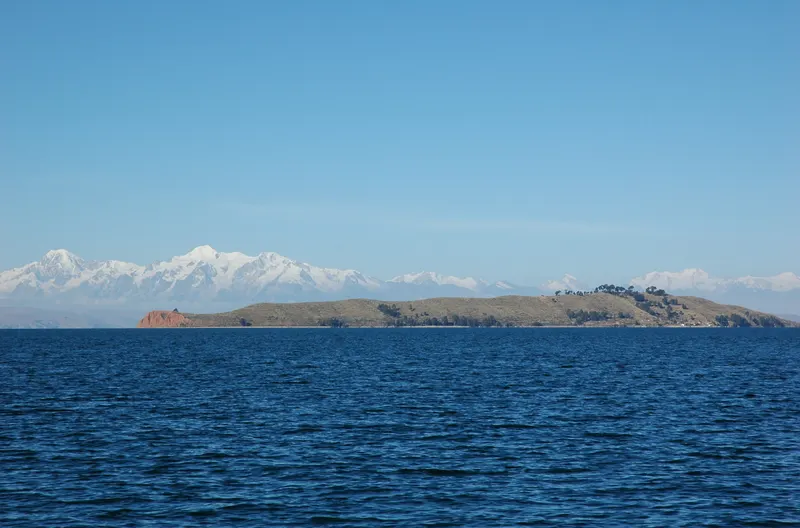
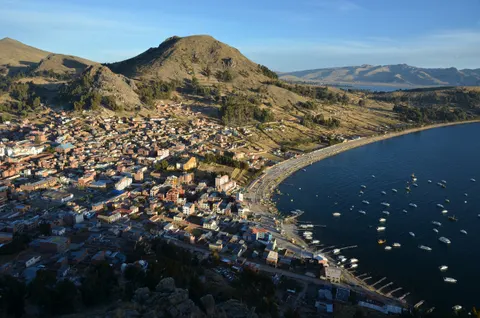
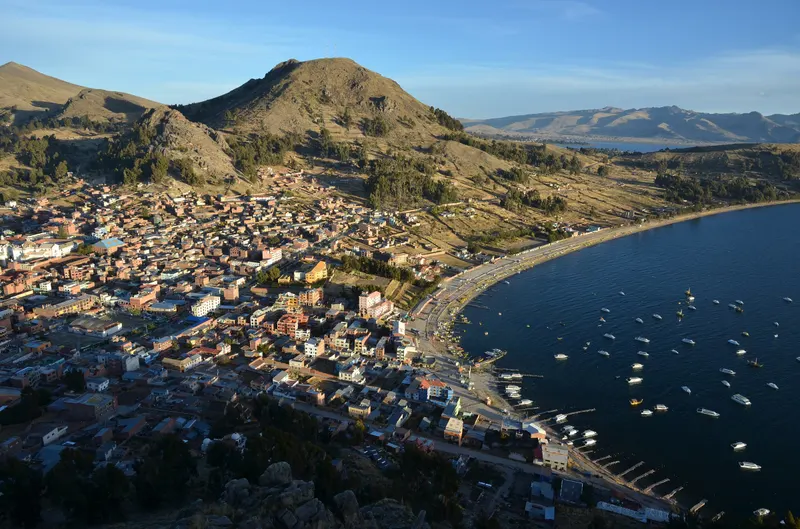
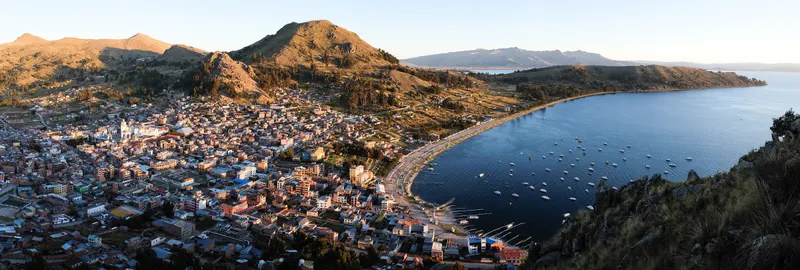
Copacabana, Bolivia, is a town of about 6,000 people on the southern shore of Lake Titicaca, 150-155 km by road from La Paz and about 8 km from the Peruvian border at Kasani. Its Virgin, enthroned here in 1583, is Bolivia’s patron saint, and Rio de Janeiro’s beach district borrowed her name. Boats leave here for Isla del Sol, and buses on the overland route from Cusco and Puno stop here after crossing from Peru. At 3,841 m (12,602 ft), the town sits about 200 m higher than central La Paz.
- Altitude
- 3,841 m (12,602 ft)
- From La Paz
- 3.5-4 h by bus (about 155 km)
- Bus fare
- Bs 40-60 (Sep 2026)
- Peru border
- Kasani, about 8 km
- Boat to Isla del Sol
- About 1 h 30 min
Where is Copacabana, Bolivia?
Copacabana is the capital of Manco Kapac province, in the department of La Paz, and its municipality counted 17,463 people in the 2024 census. The peninsula it sits on joins the mainland only through Peru, at Yunguyo, and the Strait of Tiquina separates it from the rest of Bolivia. That’s why the bus from La Paz needs a ferry and the bus from Puno doesn’t. Our Lake Titicaca guide covers the rest of the lake, which Bolivia shares with Peru.
Is Copacabana, Bolivia worth visiting?
Yes, if Isla del Sol is on your list or you’re traveling overland between Peru and La Paz, because the town is the island’s port and the first stop after the border. One or two nights cover the basilica, Cerro Calvario and a trout dinner by the water. Skip it if you want a beach holiday; the lake stays at 10-14 °C (50-57 °F).
Our take
Sleep at least one night. The 16-hour day trip from La Paz gives you about 1 hour 40 minutes on Isla del Sol and leaves Copacabana at 5:45 p.m., before sunset. A night in town buys you the Cerro Calvario sunset and the 8:30 a.m. boat.
How to get from La Paz to Copacabana
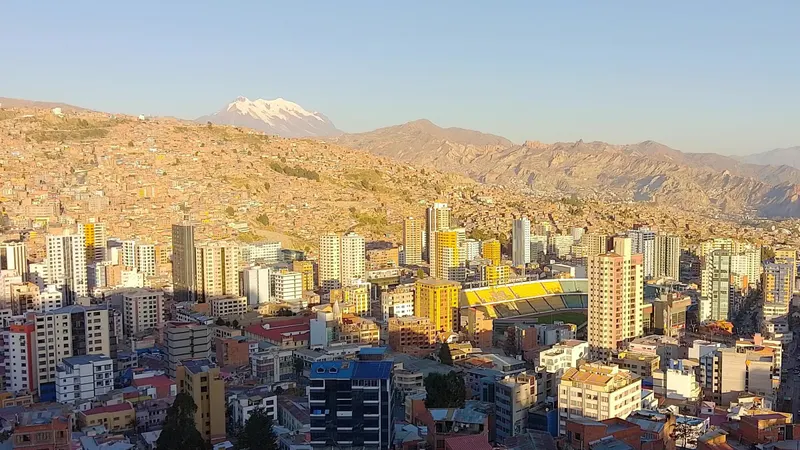
Buses and minibuses to Copacabana, run by companies such as Manco Kapac, 2 de Febrero and Trans Titicaca, leave from the streets around La Paz’s Cementerio General. The ride takes 3.5-4 hours, or up to an hour more on weekends and holidays, and costs Bs 40-60 (about US$3.30-5) one way, plus Bs 5 for the Tiquina launch.
| Option | Where from | Price (Sep 2026) | Time | Best for |
|---|---|---|---|---|
| Public bus or minibus | Cementerio General area, La Paz | Bs 40-60 (US$3.30-5) + Bs 5 launch | 3.5-4 h | Tight budgets |
| Tourist bus (e.g. Bolivia Hop) | Hotel pickup in La Paz | Bs 80-100 (US$6.70-8.30) | 3.5-4 h | First trip in Bolivia, big luggage |
| Guided day trip with Isla del Sol | Hotel pickup in La Paz | From about US$59 | About 16 h round trip | Travelers with one day |
Fares have moved all year. Unitel reported Bs 60 on buses and Bs 40-45 on minibuses after the December 2025 fuel-subsidy cut, and ABI reported Bs 40 when service restarted after the June 2026 blockades. Diesel prices were freed on September 18, and La Paz’s departmental government says only diesel vehicles, 19-25% of the provincial fleet, should raise fares (El Deber, September 24). Ignore blogs quoting Bs 20-35.
Crossing the Strait of Tiquina
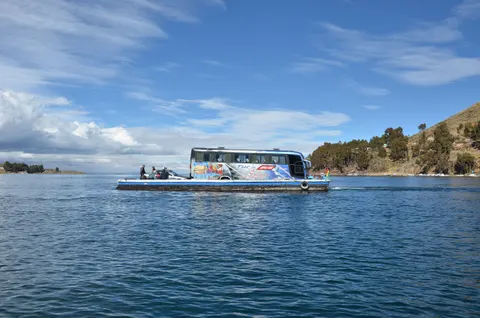
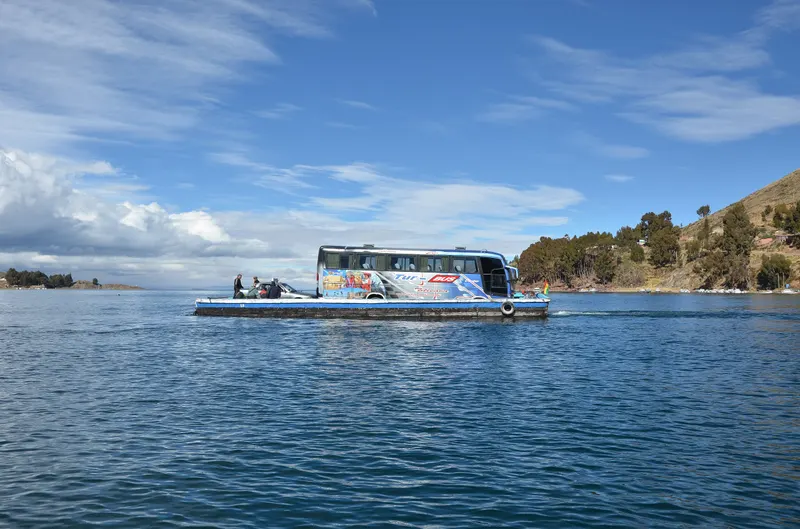
About 2 hours 15 minutes out of La Paz, the road reaches the water at San Pablo de Tiquina.
- Everyone gets off and buys a launch ticket, Bs 5 (about US$0.40) since December 2025 and separate from the bus fare. One May 2026 guide still lists Bs 2.
- The launch crosses the strait, about 800 m wide, in a few minutes.
- At San Pedro de Tiquina you wait for your bus, which follows on a wooden barge.
Keep your passport, cash and phone with you. The stop takes 15-45 minutes. Bolivian Life says the crossing shuts after dark, while Bolivia Hop schedules a crossing around 7 p.m., so plan to cross in daylight. A bridge designed in 2024 (ABI) remains unbuilt.
Bus tips and the return from Copacabana to La Paz
Take a radio taxi (company name and phone number on the roof) to the Cementerio area and buy your ticket inside a company office. The UK Foreign Office reports express kidnappings around Cementerio General and advises a direct bus from Copacabana back to La Paz. Return buses leave from near the main plaza, and Bolivia Hop’s leaves the lakefront daily at 6 p.m. Heading back, Bolivian Life suggests a right-hand seat for lake views.
Blockades and the state of exception (as of September 2026)
This road closed twice in 2026. During the January fuel-subsidy protests, the navy evacuated 127 tourists from Copacabana across the lake (Correo del Sur). From May, blockades shut it for 51 days, until police and soldiers cleared it on June 23 (ABI). A state of exception now runs to about mid-December 2026, and its extension allows a state of siege with possible curfews. After the September 18 diesel rise, La Paz’s provincial transport unions threatened new blockades (La Razón). Check the news the day before, and leave a spare day before any international flight from El Alto. More in is La Paz safe?
Crossing from Puno or Cusco (Kasani border)
Buses from Puno take 3-4 hours door to door and cross at Kasani, about 8 km from Copacabana. As of February 2026, Trans Titicaca left Puno’s terminal at 06:00, 07:30 and 13:30, Tour Peru at 07:00, and Bolivia Hop picked passengers up at Puno hotels at 08:30 (The Only Peru Guide).
The border closes at night. Bolivian Life (June 2026) gives 07:30-18:00 on the Peruvian side, which is 08:30-19:00 in Bolivia, one hour ahead; How to Peru cites 07:00-20:00. Formalities take 30-90 minutes, longer in July, August and festival weeks, so aim to cross between 10:00 and 15:00.
Americans haven’t needed a visa since December 1, 2025, when Bolivia dropped the US$160 fee, though some 2026 guides still quote it. British, Canadian, Australian and most EU travelers are visa-free too. Bring a passport valid for six months and your first night’s booking, which the UK Foreign Office says officers may ask to see. Details are in our Bolivia visa guide.
With one day in Puno, this full-day tour from Puno (from about US$130) covers Copacabana and Isla del Sol with lunch, a guide and island entry, and can end in La Paz. For every Peru route, see Cusco to La Paz.
Things to do in Copacabana
Basilica of Our Lady of Copacabana
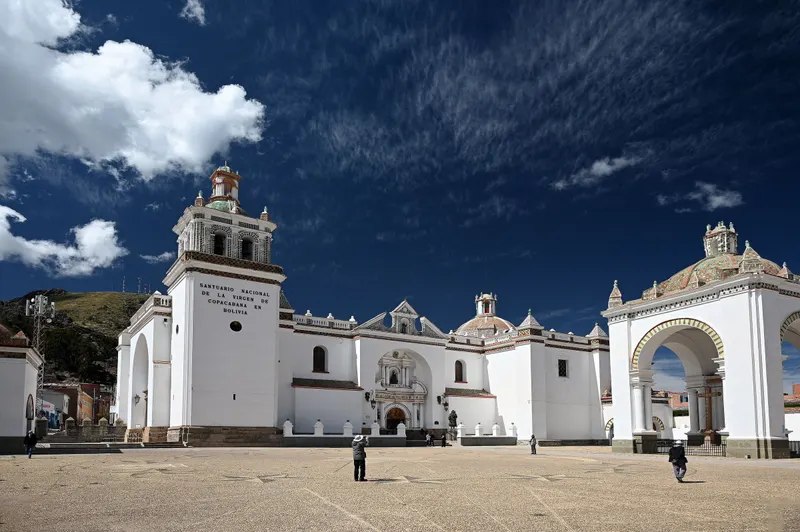
The white basilica holds the Virgin that made Copacabana a pilgrimage town. The Indigenous sculptor Francisco Tito Yupanqui carved the statue, which was enthroned here in 1583 and crowned in 1925. The 17th-century building (sources disagree on the exact years) became a minor basilica under Pope Pius XII in 1940. The original statue never leaves the shrine, and processions carry a replica. We couldn’t verify opening hours or fees, so ask at the door.
The blessing of cars
Families drive cars, minibuses and trucks decked in flowers to Copacabana for the bendición de movilidades, asking the Virgin to keep them out of accidents. Outside the basilica a priest sprinkles holy water on each vehicle, the owners pour alcohol on the ground for the Pachamama (Mother Earth), and firecrackers go off. Blessings start around 10 a.m. daily and peak on weekend mornings, holidays and in August.
Local custom
For these families it’s a religious rite, so ask before taking close-up photos.
Sunset from Cerro Calvario
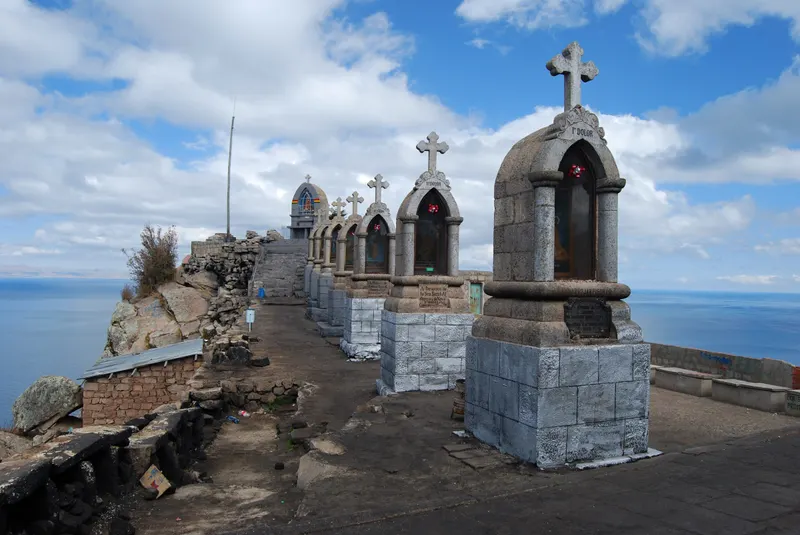
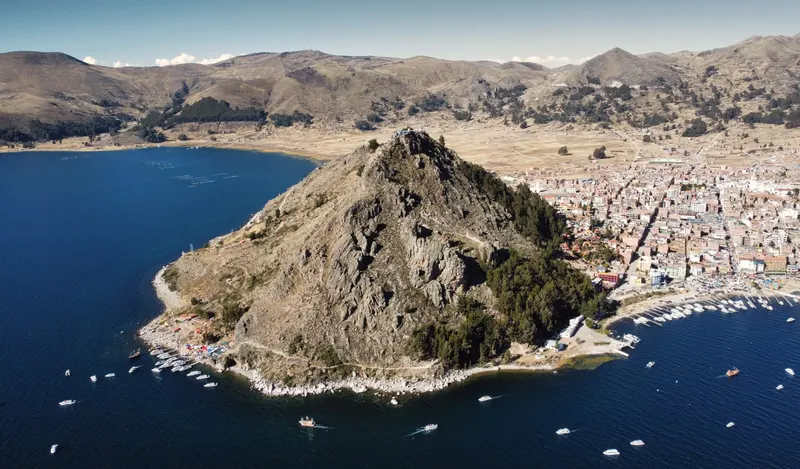
Cerro Calvario rises at the north end of town to 4,018 m (13,182 ft), about 180 m above the streets. The path climbs past 14 Stations of the Cross, built in 1946, and takes 30-45 minutes. From the top you see the town, the bay and the lake, so go for sunset. On your first day at 3,841 m, climb slowly, and bring a headlamp for the descent and a warm layer, since average lows run 2-5 °C (36-42 °F).
Horca del Inca
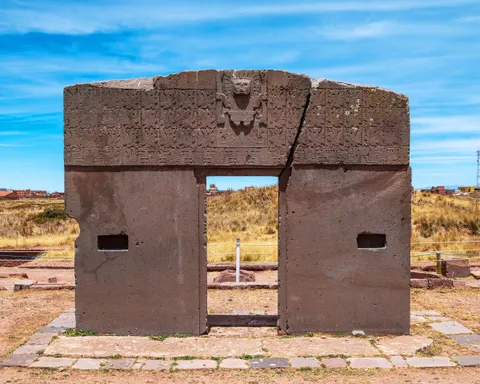
On a hill at the southeast edge of town, the Horca del Inca (“the Inca’s gallows,” a Spanish misnomer) is a pre-Inca stone structure that Bushop’s 2026 guide describes as a solar calendar. It’s about 30 minutes uphill, and 2026 visitors reported paying about Bs 10 (US$0.80).
The beach and lakefront
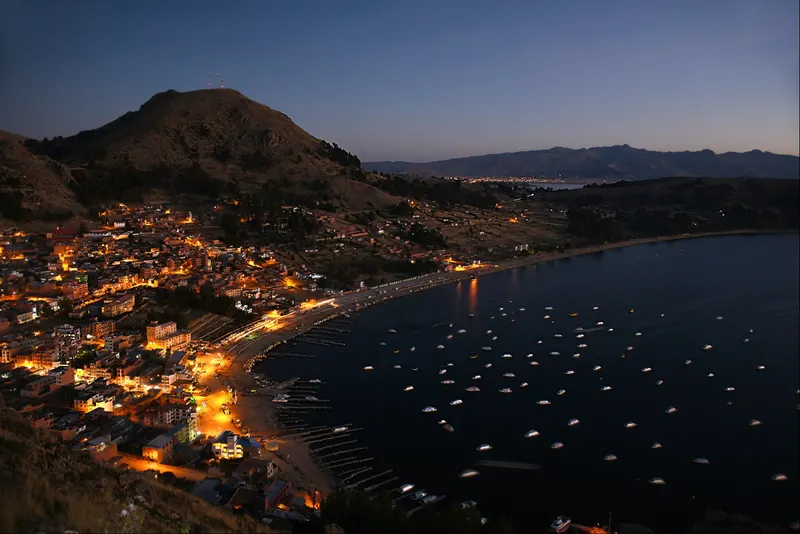
The beach is the lakeshore along the bay, lined with trout stalls and swan- and dragon-shaped pedal boats (about Bs 20-30, or US$1.70-2.50, per half hour as of September 2026). The water stays at 10-14 °C (50-57 °F), and a 2011 UN report found cadmium, arsenic and lead in parts of the lake. We found no water-quality data for Copacabana’s bay and would stick to the pedal boats.
Walk to Yampupata
With a spare day, walk about 17 km up the peninsula to Yampupata (4-6 hours), where boats cross to the south of Isla del Sol. Bushop’s 2026 guide puts the minivan back at about Bs 15 (US$1.25). Save it for your second day at altitude.
Festivals and the Virgin of Copacabana
| When | What happens | Next date |
|---|---|---|
| February 2 | Feast of the Virgin of Candelaria | Tuesday, February 2, 2027 |
| Holy Week | Pilgrims walk 140-155 km from La Paz over 2-3 days; Stations of the Cross on Cerro Calvario | Good Friday, March 26, 2027 |
| August 4-6 | Main feast on August 5, running into Independence Day on August 6 | Thursday, August 5, 2027 |
Past Holy Week pilgrimages drew more than 4,000 walkers; expect full hotels on all three dates.
Boats from Copacabana to Isla del Sol
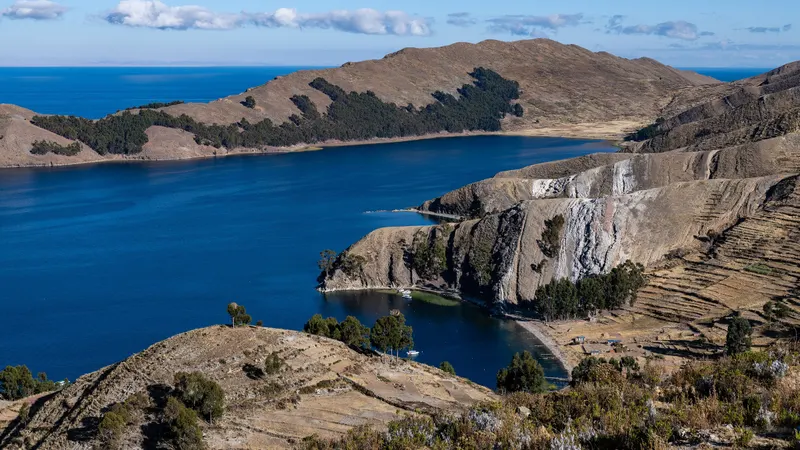
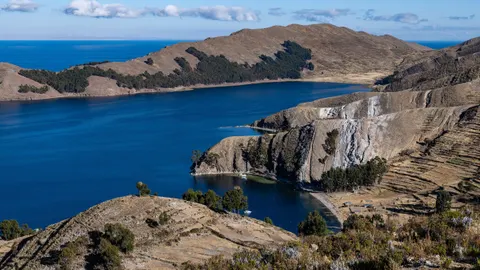
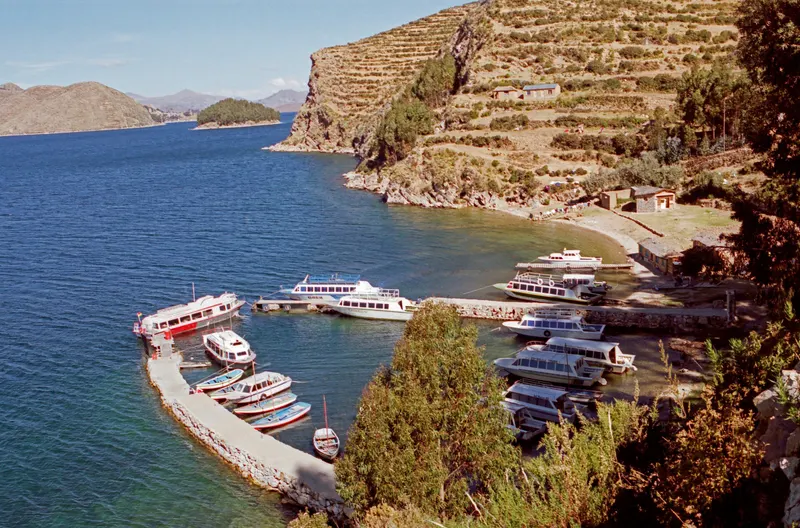
Public boats leave the main pier, typically at 8:30 a.m. and 1:30 p.m., and take about 1 hour 30 minutes to Yumani, at the island’s south end; Challapampa, in the north, is 30 minutes more. The last boat back from Yumani usually leaves around 3:30 p.m. Buy tickets at the pier the day before and ask whether boats run north, where access has been intermittent since a 2017 dispute between island communities.
Fare quotes from 2026 range from Bs 30-40 return to Bs 30-50 each way, so budget Bs 30-60 (US$2.50-5) a ticket. Each community checkpoint charges Bs 10-20 in cash, and the island has no ATMs. The UK Foreign Office calls Titicaca boats “often very basic” and says to check for life jackets. Our Isla del Sol guide covers the ruins, trails and lodging.
Tour or DIY: which is better?
On your own, a return bus (Bs 80-120), two Tiquina launches (Bs 10), a return boat to the island (Bs 30-100) and community fees (Bs 10-20) come to about Bs 130-250 (US$11-21) before food and a bed. The best-reviewed day tour, run by Bolivia Hop, starts at about US$59. It leaves La Paz at 7:00 a.m. and gets back around 10:00-10:30 p.m.
| Tour | From | Best for | Check availability |
|---|---|---|---|
| Full Day Guided Tour in Copacabana and Isla del SolFree cancellation | $59 | Cheapest day trip | Check price |
| 2 Day Trip From La Paz: Copacabana & Isla del Sol (Night in Isla del Sol)Free cancellation | $69 | Night on Isla del Sol | Check price |
| Private Tour to Copacabana and Sun Island from La PazFree cancellation | $288 | Private day trip | Check price |
| Copacabana and Isla del Sol Tour from Puno (Whole Day)Free cancellation | $130 | From Puno | Check price |
Prices in US$ per person from Viator as of Sep 30, 2026. They change; you see the final price before paying.
Bolivia Hop’s two-day version (from about US$69) adds a night on Isla del Sol, with the bed extra. The private tour costs about five times the shared one and had only five reviews in September 2026.
Pros
- Hotel pickup in La Paz
- Tiquina launch and island boat arranged
- Bilingual guide on board
Cons
- 16-hour day, about 9 hours of it on the road
- About 1 hour 40 minutes on the island
- Island fee and food paid separately
Almost every well-reviewed Viator tour starts in La Paz or Puno, and the Copacabana listings are mostly bus tickets with few reviews, so once you’re in town, take the public boat. For more outings, see La Paz tours and day trips from La Paz. Tiwanaku is on the Desaguadero road, so give it its own day.
Where to stay in Copacabana
Copacabana’s hotels fall into four areas:
- Below Cerro Calvario (Calle Michel Pérez): bay views and quiet nights, uphill from the plaza. La Cúpula, Las Olas and Utama.
- The center (plaza, basilica, Av. 6 de Agosto): everything on foot, noisier during festivals. Gloria and Florencia.
- The lakefront (Av. Costanera and the beach): the water outside your window. Rosario and Onkel Inn.
- The south side, toward the Horca del Inca: cheaper and quieter, about 800 m from the center. Piedra Andina.
Dry-season nights drop below freezing, and not every guesthouse has heating. Of our picks, Utama and Gloria say their rooms are heated; ask anywhere else before you book.
Hotel La Cúpula
Best for: Bay views and an on-site restaurant at the foot of the Calvario
It sits on Calle Michel Pérez at the foot of Cerro Calvario, with gardens, hammocks and lake views. There are 19 rooms, from doubles and family rooms to suites, one with a jacuzzi, and a restaurant serving vegetarian, vegan and trout dishes. Getting there means an uphill walk from the plaza, which you'll feel with a backpack at 3,841 m.
- Restaurant with vegan options and trout
- Hammock gardens with lake views
- One suite with a jacuzzi
Hotel Rosario Lago Titicaca
Best for: Four-star comfort on the lakeshore
Grupo Rosario's Copacabana hotel stands on Av. Costanera facing the lake, with a restaurant, breakfast included and rooms decorated individually in Andean style, up to suites with jacuzzis. It's the priciest of our picks. We couldn't confirm that the rooms are heated, so ask when you book, since dry-season nights drop below freezing.
- Four stars on the lakefront
- Breakfast included
- Lake views from most rooms
Hotel Onkel Inn Torres de Copacabana
Best for: Sleeping on the beach for less
It's on Copacabana's beach, with panoramic lake views, a buffet breakfast and barbecue facilities for guests. It's the cheaper of our two lakefront picks. The center and the basilica are a few minutes' walk away.
- On Copacabana beach
- Buffet breakfast
- Free parking
Hotel Utama
Best for: Good value with heating and breakfast
On Calle Michel Pérez, about 250 m from Plaza Sucre, with a restaurant, garden and free parking. Rooms have private bathrooms with hot water and heating, which matters when July lows average 2 °C. Only the superior rooms have lake views.
- Heated rooms
- Restaurant and buffet breakfast
- Free parking
Price band for a double room in the dry season. Confirm rates and dates on Expedia.
Four more we’d consider: Hostal Florencia (dorms by the basilica), Hostal Piedra Andina (quiet south side), Hotel Gloria Copacabana (heated family rooms) and Hostal Las Olas (suites over the bay), or browse more Copacabana hotels on Expedia. For the night before or after, see hotels in La Paz.
Where to eat: Lake Titicaca trout
Order the trout. Lakefront stalls and restaurants on Av. 6 de Agosto, the street running from the center to the shore, serve it with rice, potatoes and salad for Bs 30-60 (US$2.50-5), mostly Bs 35-50. Rainbow trout is an import, and with the silverside it probably drove the native Titicaca orestias extinct (last seen in 1938).
We couldn’t confirm which restaurants are open in 2026, so compare menus along 6 de Agosto and carry cash. For the rest of the menu, see Bolivian food.
Copacabana weather and the best time to go
Daytime highs stay around 13-16 °C (56-61 °F) all year, so rain decides when to go. The table shows 1981-2010 averages from SENAMHI, Bolivia’s weather service (Copacabana station, 3,815 m).
| Month | High °C (°F) | Low °C (°F) | Rain (mm) | Rain days |
|---|---|---|---|---|
| January | 15.1 (59) | 5.3 (42) | 184.7 | 19.4 |
| February | 15.2 (59) | 5.2 (41) | 113.0 | 13.6 |
| March | 15.1 (59) | 5.3 (42) | 111.5 | 13.3 |
| April | 14.9 (59) | 4.8 (41) | 52.4 | 7.8 |
| May | 14.4 (58) | 3.4 (38) | 16.0 | 2.4 |
| June | 13.4 (56) | 2.2 (36) | 11.5 | 2.3 |
| July | 13.3 (56) | 2.1 (36) | 9.2 | 1.7 |
| August | 14.0 (57) | 2.7 (37) | 16.7 | 2.8 |
| September | 14.7 (58) | 3.2 (38) | 28.7 | 5.2 |
| October | 15.5 (60) | 4.5 (40) | 45.5 | 6.5 |
| November | 16.0 (61) | 5.1 (41) | 63.4 | 8.1 |
| December | 16.0 (61) | 5.4 (42) | 108.8 | 13.0 |
May to October
Dry seasonUnder 30 mm (1.2 in) of rain a month from June to September, and the coldest nights, about 2 °C (36 °F) in June and July, with some frosts.
Verdict: the best time to go; pack a warm layer for the boat and Cerro Calvario.
November to March
Rainy seasonJanuary is the wettest month, with 185 mm (7.3 in) over about 19 days. Canada’s travel advice warns that floods and landslides can block roads.
Verdict: still worth the trip; take the morning boat and allow for road delays.
For the rest of the country, see the best time to visit Bolivia.
Altitude, money and safety in 2026
The US rates Bolivia Level 2, Exercise Increased Caution; on this trip the main risks are the Cementerio transfer and blockades, covered above. Tourist police and emergency numbers are in our La Paz travel tips.
How high is Copacabana?
Copacabana sits about 200 m above central La Paz (3,640 m), and Cerro Calvario reaches 4,018 m. Above 3,000 m, the CDC advises raising your sleeping altitude by no more than 500 m a night. The bus from La Paz fits that rule. A flight from sea level into El Alto (4,061 m) breaks it, so spend a night or two in La Paz first and, as the CDC also advises, skip alcohol for 48 hours. See our guide to altitude sickness in La Paz.
Money
The boliviano was floated on June 26, 2026, and the official rate was Bs 12.02 per US dollar on September 30, so ignore guides converting at 6.96. Copacabana’s ATMs may reject foreign cards or run dry, and Isla del Sol has none, so bring bolivianos from La Paz. See our Bolivian currency guide.
How many days do you need in Copacabana?
Which one is for you?
- If you only have one day: take the guided day trip and accept a short visit to Isla del Sol.
- If you have two days: sleep in Copacabana, catch the Cerro Calvario sunset and take the 8:30 a.m. boat to the island.
- If you’re coming from Puno or Cusco: spend a night here before La Paz, and reach Kasani by mid-afternoon, since the border may close at 7 p.m. Bolivian time.
- If you want to walk: give it three nights, with the Yampupata hike and a night on Isla del Sol.
To fit Copacabana into a longer trip, see our Bolivia itinerary and things to do in Bolivia.
Frequently asked questions
Is Copacabana in Brazil or Bolivia?
Both countries have one. This page covers Copacabana, Bolivia, the pilgrimage town on Lake Titicaca. Rio de Janeiro's beach district took its name after a chapel was built there to hold a replica of Our Lady of Copacabana, whose original statue stays in the Bolivian town's basilica. Bolivia has no coastline, and its Copacabana sits beside a lake at 3,841 m (12,602 ft).
Is Copacabana, Bolivia safe for foreign visitors?
The US rates Bolivia Level 2, Exercise Increased Caution, and on this trip the risks are mostly on the road. The UK Foreign Office reports express kidnappings around La Paz's Cementerio General, where Copacabana buses leave, and at overland border points with Peru, and advises a direct bus from Copacabana to La Paz. Blockades closed the highway for 51 days in May and June 2026. See is La Paz safe?
Can you swim in Copacabana, Bolivia?
You can, but the water is cold. Lake Titicaca sits at 3,812 m and its surface averages 10-14 °C (50-57 °F). A 2011 UN report found cadmium, arsenic and lead in parts of the lake. We found no water-quality data for Copacabana's bay, so we can't call it clean or polluted. The pedal boats on the beach are the easier way onto the water.
Can you do a day trip from La Paz to Lake Titicaca?
Yes, but it's long. The best-reviewed Viator day trip, run by Bolivia Hop, leaves La Paz at 7:00 a.m., reaches Copacabana around 11:30 and puts you on Isla del Sol from about 1:40 to 3:20 p.m. You're back in La Paz around 10:00-10:30 p.m. That's 16 hours for 1 hour 40 minutes on the island. If you can spare a night, sleep in Copacabana.
How many days do you need in Copacabana, Bolivia?
One night covers the town, with the basilica, the Cerro Calvario sunset and a trout dinner on the lakefront. Two nights give you a full day on Isla del Sol by public boat. Allow three if you want to walk the 17 km to Yampupata or sleep on the island. The day trip from La Paz works in a pinch but leaves you under two hours on Isla del Sol.
How do you get from Puno to Copacabana?
By bus, in 3-4 hours door to door, crossing the border at Kasani. As of February 2026, Trans Titicaca left Puno's terminal at 06:00, 07:30 and 13:30, Tour Peru at 07:00, and Bolivia Hop picked passengers up at Puno hotels at 08:30. Most guides give border hours of 07:30-18:00 Peru time, which is 08:30-19:00 in Bolivia, one hour ahead. Formalities take 30-90 minutes.
Is it better to visit Lake Titicaca from Peru or Bolivia?
Each side has different sights. The Uros floating reed islands are on the Peruvian side, off Puno. The Bolivian side has Copacabana, Isla del Sol with its Inca ruins, and Isla de la Luna. On the overland route from Cusco to La Paz you can see both, with a night in Puno and another in Copacabana. Our Lake Titicaca guide compares the two sides.
Can you fly to Copacabana, Bolivia?
No. Copacabana has had an airfield since July 2018, but it has no commercial flights. Fly into El Alto International Airport (LPB), which serves La Paz, and continue by bus or tour, 3.5-4 hours by road. Our El Alto airport guide explains how to get from the terminal into the city.
Keep planning