

















Quick answer
The Valley of the Moon (Valle de la Luna) is a municipal park of eroded clay spires in Mallasa, about 12 km by road south of central La Paz, Bolivia, at roughly 3,300 m. Foreigners pay Bs 15 (about US$1.25) at the gate, and the city lists it open daily 9 a.m.-6 p.m. The long loop takes about 45 minutes; with the 30-45 minute ride each way, budget half a day.
On this page
- What is the Valley of the Moon in Bolivia?
- Valley of the Moon entry fee and opening hours (2026)
- Valley of the Moon hike: the 15- and 45-minute loops
- How to get to the Valley of the Moon from central La Paz
- Moon Valley tour or on your own?
- Best time to go
- Is the Valley of the Moon worth it?
- What else is nearby: Mallasa, Muela del Diablo and Valle de las Ánimas
- Frequently asked questions
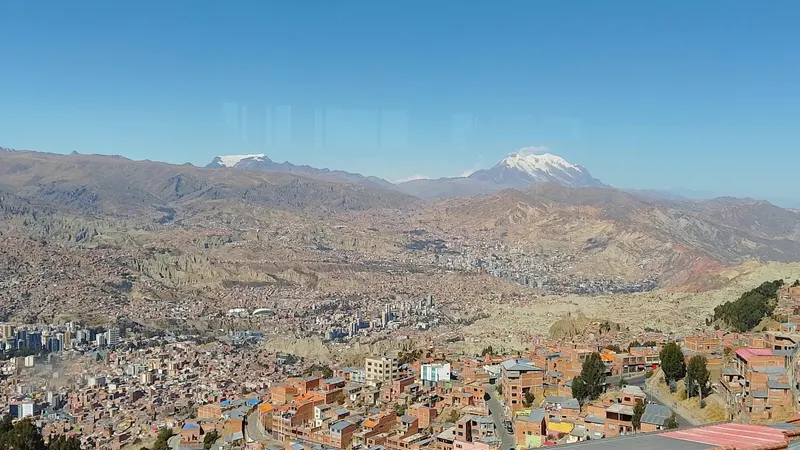
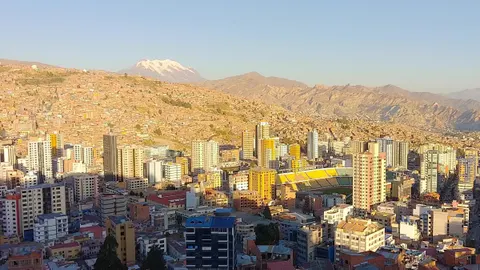
Valle de la Luna, the Valley of the Moon, is a small park of eroded clay spires in Mallasa, on the southern edge of La Paz, Bolivia (Chile and Argentina have unrelated valleys of the same name). It lies about 12 km by road from Plaza San Francisco, costs foreigners Bs 15 and takes 45 minutes to walk. At about 3,300 m it is also roughly 340 m (1,100 ft) lower than the city center, which makes it one of the gentler outings for your first days at altitude. The fee and hours below come from the city government’s tourism portal, and we checked transport costs in September 2026.
- Entry
- Bs 15 (about US$1.25)
- Hours
- 9 a.m.-6 p.m. daily
- Altitude
- about 3,300 m (10,800 ft)
- From downtown
- 12 km, 30-45 min
- Long loop
- about 45 min
What is the Valley of the Moon in Bolivia?
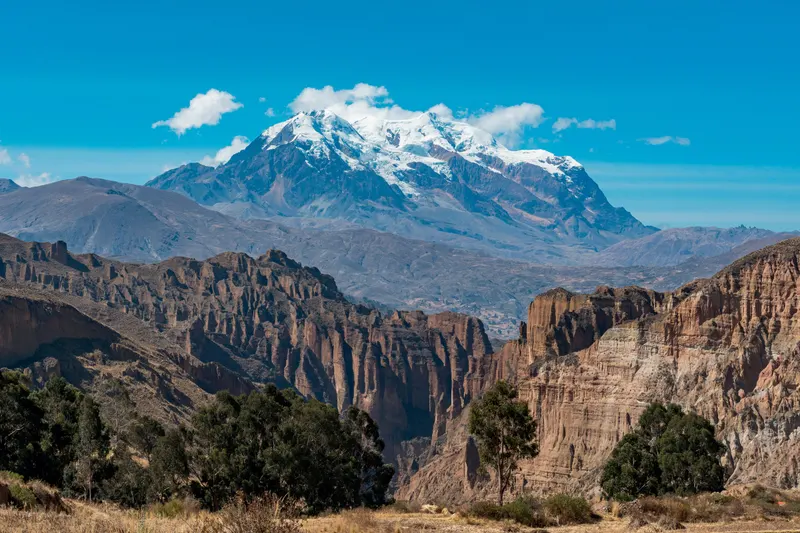
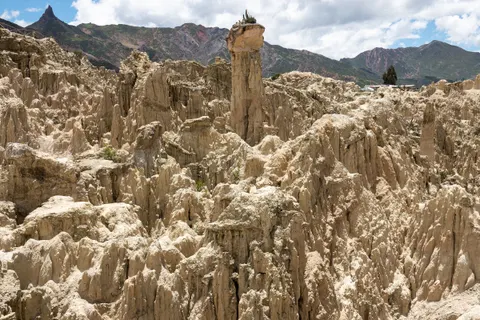
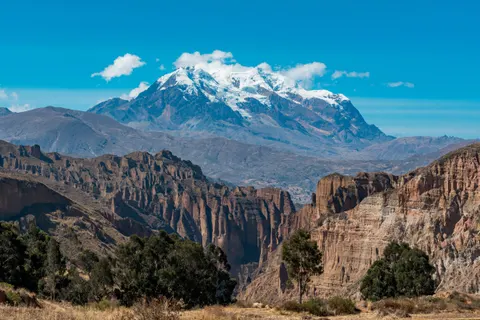
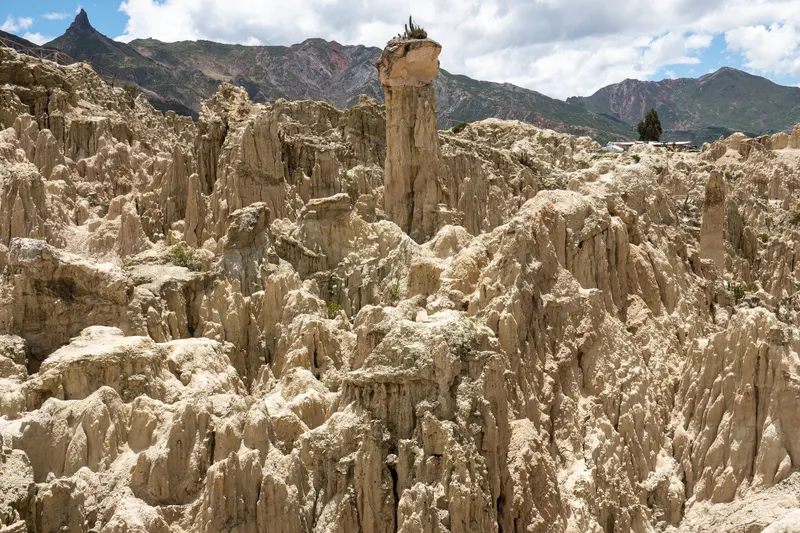
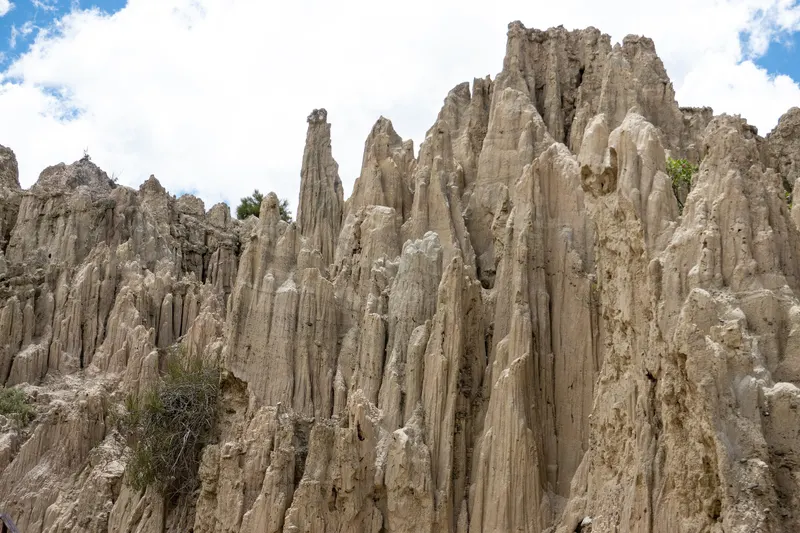
The hills of Mallasa are clay with some sandstone, soft enough for rain and wind to carve into a maze of pointed spires, fluted ridges, gullies and small craters. The city government describes colors running from pale beige to red and even violet, depending on the minerals in each layer, and the tones change as the sun crosses the sky.
The municipality protects the site as “Valle de la Luna y Cactario”, a natural heritage area of about 44 hectares by its own count. English Wikipedia and a 2021 report give 15 ha, possibly counting only the trail zone. The Cactario holds more than 32 native cactus species, and vizcachas, rabbit-sized rodents related to chinchillas, live among the formations. In September 2026 the valley held a 4.4 rating from 6,416 Google reviews.
Why is it called Moon Valley?
According to the city government, Neil Armstrong visited the La Paz Golf Club next door in 1969, looked across at the formations and said they reminded him of the Moon. Before that the place was known as Valle del Cactus (Cactus Valley), according to a 2025 feature in the Bolivian daily Los Tiempos. The dates don’t line up. Wikipedia follows the city’s 1969, Los Tiempos says the 1970s, and a 2018 article in La Región puts the visit before Apollo 11. La Paz doesn’t appear among the stops listed for the Apollo 11 crew’s world tour in late 1969, and we found no NASA or newspaper record of the visit. We’d file it under local legend.
Not the Valle de la Luna in Chile or Argentina
Chile’s Valle de la Luna lies 13 km west of San Pedro de Atacama, inside Los Flamencos National Reserve. Argentina’s best known is Ischigualasto Provincial Park in San Juan, a UNESCO World Heritage Site since 2000, and Jujuy province has another. Spanish Wikipedia lists one more in Bolivia’s Potosí region.
Valley of the Moon entry fee and opening hours (2026)
You need a ticket, and you buy it at the booth (boletería) by the entrance. Pay in cash, in bolivianos; we couldn’t confirm that the booth takes cards or QR payments.
| Ticket | Price |
|---|---|
| Foreign visitors | Bs 15 (about US$1.25) |
| Bolivian nationals | Bs 3 (about US$0.25) |
| Children | Bs 1 (under US$0.10) |
| Opening hours | Monday to Sunday, 9 a.m.-6 p.m. |
Source: the La Paz city government’s tourism portal, last updated February 2026. It gives no age limit for the children’s rate.
Google Maps and some travel sites show a 5 p.m. closing, so arrive by 4:30 p.m. to be safe. You’ll also find booking sites and blogs quoting the entry in dollars, or rates such as Bs 10 for Bolivians, that don’t match the city’s tariff. The city’s page still listed Bs 15 in September 2026, three months after the boliviano was floated.
Bring small change
Carry Bs 10 notes and Bs 2 or Bs 5 coins for the ticket, the minibus and the toilets (a 2025 visitor report mentions a small toilet fee). Our Bolivia currency guide covers ATMs and the floating exchange rate.
Valley of the Moon hike: the 15- and 45-minute loops
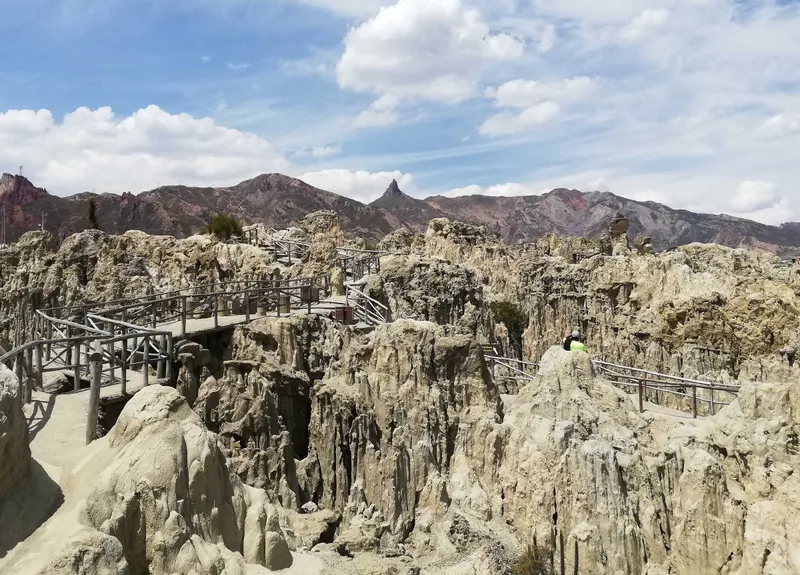
Two marked loops start near the entrance, a short one of about 15 minutes and a long one of about 45. Wooden walkways wind between the spires, and a railed platform on the ridge looks over the formations. Named rocks along the way include the Sombrero de la Dama (Lady’s Hat), the Salto de la Vizcacha, the Ventana del Sur (South Window) and El Buen Abuelo (the Good Grandfather). About 20 minutes in, the Sapo de la Abundancia, a small fountain with a toad sculpture and log benches, is where visitors stop to make a wish. The long loop ends at the Mirador del Diablo, which some English guides call Devil’s Point.
Budget an hour to 90 minutes on site with photos. The walking is easy, but at 3,300 m you should take any climb slowly. Stay on the marked paths, since the clay edges crumble and the whole park is protected. Wet clay gets slippery, so skip the visit after heavy rain. Shade is limited to a few benches and shelters, and tour operators tell guests to bring a hat and sunscreen; add water. We found no reliable information on wheelchair access.
How to get to the Valley of the Moon from central La Paz
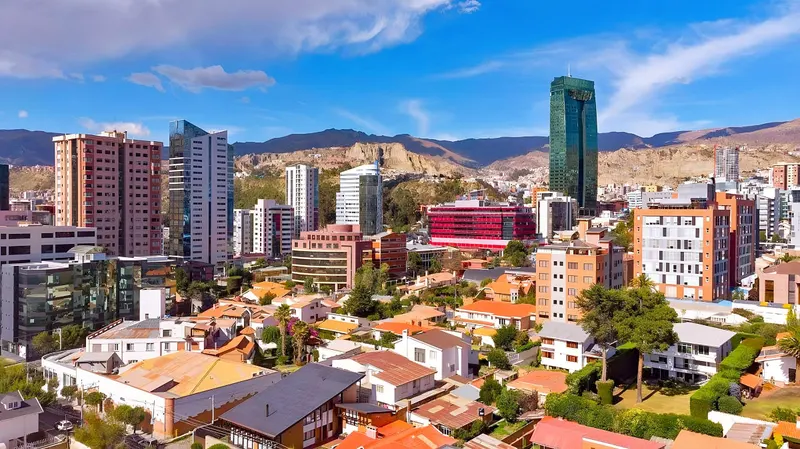
The entrance is on Avenida Valle de la Luna in Mallasa, about 12 km by road from Plaza San Francisco. In a straight line it’s about 9 km, which explains the “10 km” in many guides. The route runs south and downhill through the Zona Sur, the opposite direction from El Alto and the airport, and the ride time depends on traffic there.
| Option | Cost each way (Sept 2026) | Time | Best for |
|---|---|---|---|
| Minibus signed “Mallasa” | Bs 3.50 (about US$0.30) | 30-45 min | Tight budgets, some Spanish |
| Cable car to Irpavi, then taxi | Bs 5 (about US$0.40) plus the taxi | About 45 min | Views, dodging downtown traffic |
| Taxi or ride-hailing app | About Bs 50-70 (US$4-6) | 20-45 min | Groups, late starts |
| Guided tour | From about $43 per person | 4-5 h including the city | First days, no logistics |
By minibus
La Paz minibuses are shared vans on fixed routes, with the destinations on a sign in the windshield. Look for one signed “Mallasa” or “Valle de la Luna”. Two travel blogs (2024 and 2025) cite lines 231 and 273 from Calle México, and other guides say to catch them near Plaza San Francisco. Routes change, so read the sign, ask “¿Valle de la Luna?” before you climb in and ask the driver to drop you at the entrance. The fare for a long route has been Bs 3.50 (about US$0.30) since the city’s December 2025 tariff. Fares held after the diesel price rise of 18 September 2026, though drivers’ unions have warned of increases. To return, flag a minibus heading back to the city on the same avenue.
By cable car and taxi
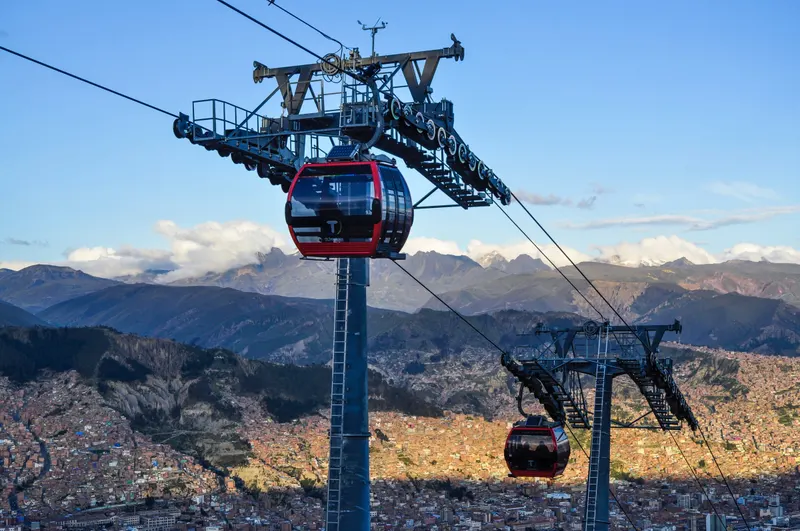
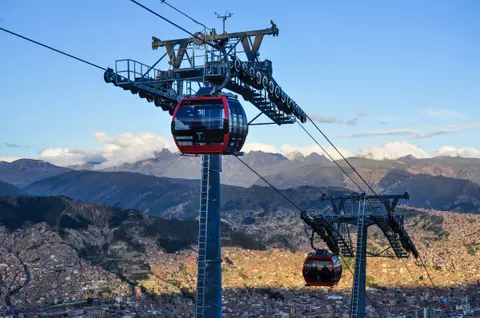
The cable car lets you skip most of the traffic. Ride the Light Blue (Celeste) Line from Prado station to Libertador, about 10 minutes, then change to the Green (Verde) Line and ride to Irpavi, the end of the line, about 16 minutes more. The first line costs Bs 3 and the transfer Bs 2, so Bs 5 in all (about US$0.40). From Irpavi the valley is about 5 km by road, 10-15 minutes by taxi or app car. We couldn’t confirm a minibus or a typical fare for that leg, so check the app price or agree one before you get in. Our La Paz cable car guide covers hours, payment and the other eight lines.
By taxi or app
Blog reports put a one-way taxi from the center at Bs 45-55 in early 2025 and Bs 50-70 in 2026 (about US$4-6). Gasoline prices rose in December 2025, so treat the lower figures as out of date. Uber, inDrive and Yango operate in La Paz, and all three settle the fare before you ride. For street taxis, the UK Foreign Office (September 2026) advises radio taxis with the company name on the roof, a fare agreed first and no strangers sharing the car.
If you’re staying in Calacoto, in the Zona Sur, the valley is only 4.8 km away by road. Our guide to where to stay in La Paz compares the neighborhoods.
Moon Valley tour or on your own?
On your own, the outing costs about Bs 22 (about US$1.85) for two minibus rides and the foreigner ticket. No well-reviewed tour on Viator covers only this valley. The good ones bundle it with the cable cars and El Alto, or with Valle de las Ánimas, which is hard to reach by public transport.
Check what’s included before you book. The two best-reviewed half days, both run by Wonder Tours, list Moon Valley admission as not included, so carry Bs 15. The Chacaltaya combo also excludes entry fees, and its listing tells guests to budget Bs 25 for Chacaltaya and Bs 20 for the valley, Bs 5 more than the city’s posted foreigner price.
Moon Valley tours worth a look
Book on Viator From $43Private City tour, Cable Car and Moon ValleyFree cancellationCheck availability
 From $85Valle de Las Animas, Moon Valley and Killi Killi half day tourFree cancellationCheck availability
 From $165Valle de las Animas, Moon Valley, La Paz day tour PrivateFree cancellationCheck availability
 From $40Chacaltaya + Moon ValleyFree cancellationCheck availability
Prices in US$ per person from Viator as of Sep 30, 2026. They change; you see the final price before paying.
Which one is for you?
- If you have a free morning and want the cable cars too: Wonder Tours’ city, cable car and Moon Valley half day, with more than 400 reviews (from about $43, valley entry extra). It starts at San Francisco church and ends at the Witches’ Market.
- If you want two valleys and a viewpoint without working out transport: Valle de las Ánimas, Moon Valley and Killi Killi, from about $85 with hotel pickup.
- If you want sunrise at Valle de las Ánimas with entries and breakfast paid: Visit South America’s private full day, from about $165.
- If you’ve acclimatized and want views from above 5,000 m the same day: the Chacaltaya + Moon Valley combo, rated 4.88 but from only 8 reviews (the other Chacaltaya combos on Viator score 4.4 or lower).
- If you’re on a tight budget and speak some Spanish: the minibus, for about Bs 22 all in.
What we'd skip
We’d pass on private three-hour “city plus Moon Valley” tours such as one at about $128, rated 4.3 from 20 reviews. The $43 half day above has more than 400 reviews and adds the cable cars. Skip any site selling Moon Valley “tickets” in dollars, too. You pay Bs 15 at the gate.
For every other option, see our comparison of La Paz tours.
Best time to go
April to October
Dry seasonThese are the months the city government recommends. July averages about 5 mm of rain in La Paz, so the trails stay dry and firm. Mornings are cold, with July lows around 3°C (37°F) in the center.
Verdict: the best time to go.
November to March
Rainy seasonJanuary averages about 125 mm of rain, and wet clay turns slick and muddy on the paths. Canada and the UK both flag these months for floods and landslides in Bolivia.
Verdict: watch the forecast and pick a dry morning.
The gate opens at 9 a.m. For photos, go after 3 p.m., when the low sun brings out the texture and the reds in the spires, but get there by 4:30 p.m. in case the 5 p.m. closing on Google is right. Our La Paz weather guide has month-by-month numbers, and the best time to visit Bolivia covers the rest of the country.
Is the Valley of the Moon worth it?
Our take
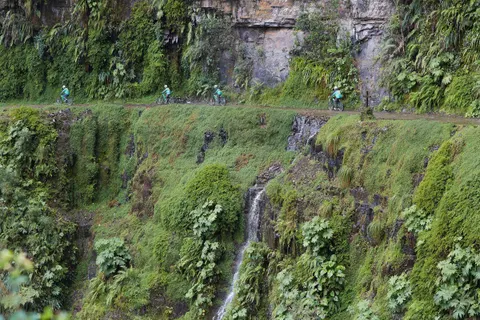
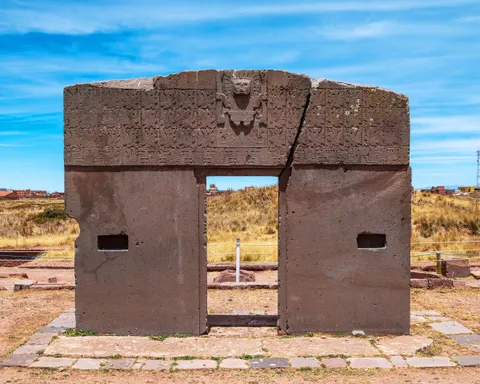
Yes, for a half day, if you have three or more days in La Paz or want an easy outing while you acclimatize. The park is small enough to see in about an hour. With only one free day in La Paz, Tiwanaku or the Death Road will fill it better. Pair the valley with the cable-car ride out or the Mallasa sights below rather than crossing the city for it alone.
At about 3,300 m (10,800 ft), the valley is lower than your hotel downtown but still well above the 2,450 m where the CDC says the risk of altitude illness begins. Walk slowly, drink water and, as the CDC advises, skip alcohol for your first 48 hours. Our altitude sickness guide covers the symptoms and when to get help.
What else is nearby: Mallasa, Muela del Diablo and Valle de las Ánimas
The city government lists eight sights in the Mallasa district, from a climbing rock to a golf course. Three fit easily around a valley visit.
| Sight | From the valley | Hours | Price (Sept 2026) |
|---|---|---|---|
| Mirador de Mallasa (Mallasilla viewpoint) | About 500 m northwest, straight line | Always open | Free |
| Bioparque Vesty Pakos (city zoo) | 2.2 km by road | Tue-Sun 10 a.m.-3 p.m. | Bs 10 (about US$0.85) over 12, Bs 5 ages 5-12, free over 60 |
| Parque Valle del Sol | 2.7 km by road | Daily 9 a.m.-5 p.m. | Bs 3.50 (about US$0.30) adults, Bs 1.50 children |
The Mirador de Mallasa looks over Valle de la Luna and the ridges around it. The Bioparque, open since 1993, keeps Andean animals including the spectacled bear (jucumari) and closes on Mondays. Parque Valle del Sol, also called Parque Nacional Mallasa although the city runs it, is a 198-hectare picnic park with grills and play areas.
Muela del Diablo
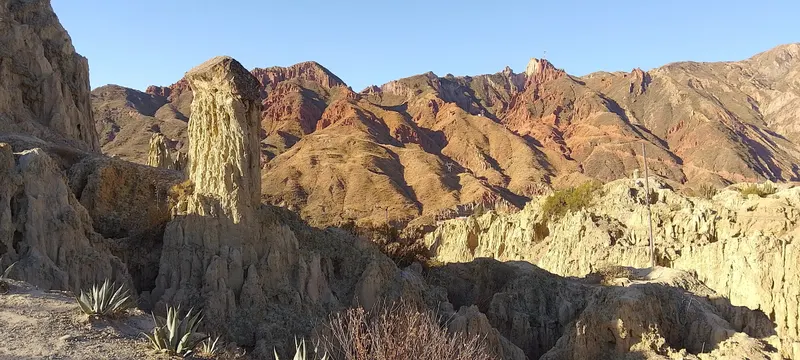
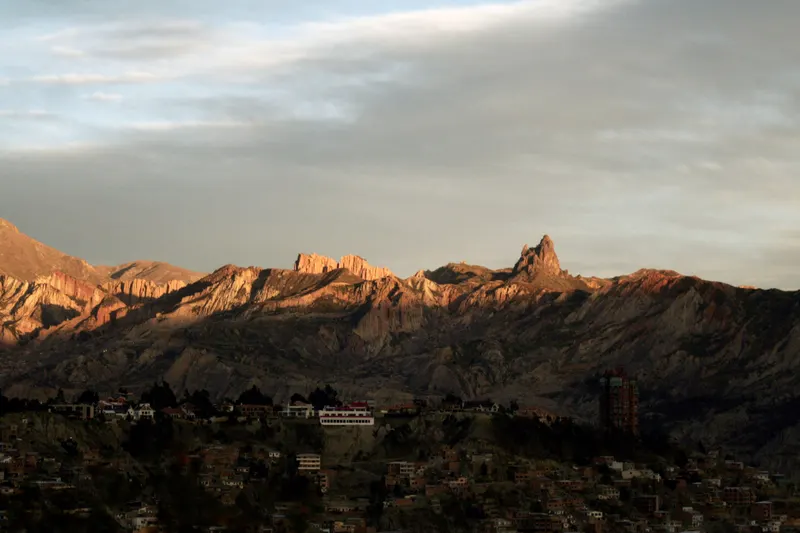
The jagged tooth on the skyline of many valley photos, including the one at the top of this page, is the Muela del Diablo (Devil’s Molar). The 150 m monolith stands on the land of the Chiaraque community, who call it Achachilakollo, “father mountain” in Aymara. The city lists it as free (parking Bs 5), puts the climb at about 90 minutes and asks visitors to leave by 6 p.m. It’s about 4 km from the valley in a straight line but about 11 km by road, on the far side of the river, so plan a separate taxi trip. At close to 3,900 m it’s also 600 m higher than the valley; leave it for after a few days in La Paz.
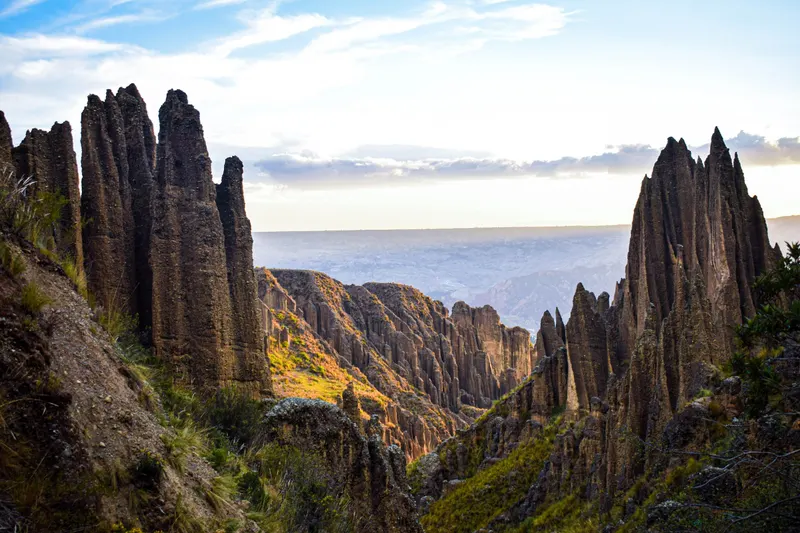
Valle de las Ánimas (Valley of the Souls)
Valle de las Ánimas is a bigger field of rock needles east of the city, about 13 km by road from the Valley of the Moon. The city lists it as free and always open but advises leaving by 4 p.m. to avoid security problems, and tells visitors to bring water, food and trekking shoes because services are scarce. Public transport there is hard to piece together, so a guide makes sense. Bolivia Homeland Tours’ afternoon Valley of the Souls hike costs from about $22 with transport and a snack, and the Wonder Tours combo above covers both valleys in a half day.
Chacaltaya on the same day
Combo tours drive about 90 minutes up to Chacaltaya (5,395 m or 5,421 m, depending on the source) and end at the valley in the afternoon. That’s about 2,000 m higher, so go only after two or three nights in La Paz; our Chacaltaya guide has the details. For a shorter day, the Wonder Tours two-valley combo ends at Mirador Killi Killi, one of the La Paz viewpoints over the city center.
Current conditions (as of September 2026)
The city’s tourism portal lists the valley as open daily, and we found no closure notices in the sources we checked. A state of exception declared on 20 June 2026 has been extended to about mid-December; Canada reports no curfew or general movement restrictions. On 9 September the US Embassy warned of calls for protests and blockades over fuel prices, and diesel went up 83% on 18 September, though La Paz minibus fares stayed at Bs 3.50. Mallasa is inside the city, but check local news the day before. Our guide to whether La Paz is safe right now covers advisories and common scams.
For the rest of your stay, see our things to do in La Paz and day trips from La Paz.
Frequently asked questions
Do you need tickets for Valle de la Luna?
Yes. You buy them at the booth by the entrance in Mallasa, in cash: Bs 15 (about US$1.25) for foreign visitors, Bs 3 for Bolivians and Bs 1 for children, according to the La Paz city government. The city lists hours of 9 a.m. to 6 p.m. daily, while Google shows a 5 p.m. close, so arrive by 4:30 p.m. Ignore websites selling Moon Valley tickets in dollars.
Is Valle de la Luna worth it?
Yes, as a half-day outing. The park is small, with a long loop of about 45 minutes, but it costs Bs 15, sits about 340 m below central La Paz and is easy to reach by minibus, cable car or taxi. It suits your first days at altitude or a spare morning. If you have only one free day in La Paz, Tiwanaku or the Death Road will fill it better.
What is the Moon Valley in Bolivia?
Valle de la Luna is a municipal protected area of clay and sandstone formations in Mallasa, on the southern edge of La Paz, about 12 km by road from the center. Rain and wind have eroded the soft ground into spires, gullies and craters in shades from beige to red and violet. Walkways run through it on two loops of about 15 and 45 minutes. It has no connection to the Valle de la Luna in Chile's Atacama Desert.
Why is it called Moon Valley?
According to the La Paz city government, Neil Armstrong visited the neighboring La Paz Golf Club in 1969, said the formations looked like the Moon, and the name replaced the older Valle del Cactus. Other sources place the visit in the 1970s or before Apollo 11. We found no NASA or press record of the visit, so we treat the story as local legend.
How long do you need at the Valley of the Moon?
Plan an hour to 90 minutes on site. The long loop takes about 45 minutes and the short one about 15, plus photo stops. Add 30-45 minutes each way by minibus or taxi from central La Paz, depending on traffic, and the trip fits in a morning or an afternoon. Guided tours that combine the valley with the city and the cable cars take 4-5 hours.
Can you visit Chacaltaya and the Valley of the Moon in one day?
Yes. Combo tours drive up to Chacaltaya in the morning and finish at the valley in the afternoon, in about 8 hours, from about $35-40 on Viator. Chacaltaya tops 5,300 m, about 2,000 m higher than the valley, so go only after two or three nights in La Paz and turn back if you feel altitude symptoms. Check whether entry fees are included.
Is La Paz, Bolivia safe to travel to right now?
The US rates Bolivia Level 2, exercise increased caution (August 2026), and a state of exception runs to about mid-December 2026 after blockades cut La Paz off in May and June. The US Embassy warned in September of new protests over fuel prices. Day to day, the risks are petty theft, fake police and unlicensed taxis. Our guide to whether La Paz is safe covers each one.
Keep planning