Quick answer
Death Road Bolivia is the old North Yungas Road northeast of La Paz, a 64 km route that drops from La Cumbre (about 4,650 m) to Yolosa (about 1,200 m), with 31-33 km of single-lane gravel above sheer drops. Since a paved bypass opened in 2006, mountain bikers have been its main users. Guided day tours cost from about US$90 to US$156 (September 2026), plus a Bs 50 (about US$4) cash road fee, with 4-5 hours of riding.
On this page
- What is the Death Road in Bolivia?
- Is the Death Road dangerous today?
- Death Road Bolivia tour companies compared (2026)
- Death Road Bolivia prices: tours, road fee and extras
- The Death Road day, hour by hour
- What to bring
- Who should skip the Death Road
- When to ride: weather and current conditions
- Can you drive, walk or ride it without a tour?
- Stay the night in Coroico
- Frequently asked questions
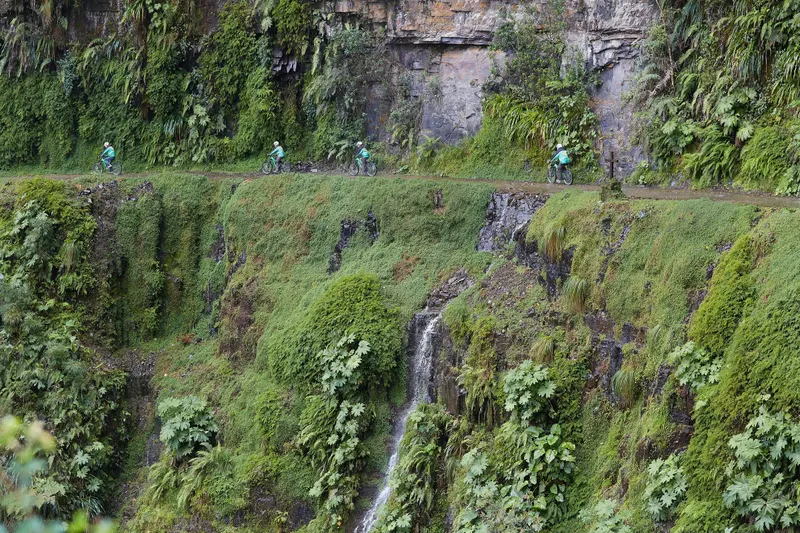
The Death Road is the old road from La Paz, Bolivia, down into the Yungas, the steep cloud-forest valleys on the eastern slope of the Andes. Officially it’s the Camino a los Yungas (North Yungas Road), and in Spanish the Camino de la Muerte. Since a paved highway replaced it in 2006, its main users have been mountain bikers on guided day tours. The ride runs about 64 km (40 miles) from the La Cumbre pass, some 1,000 m above La Paz, to the village of Yolosa, dropping almost 3,500 m (11,300 ft) in 4-5 hours in the saddle. We compared the main companies’ September 2026 listings, added up the full cost in dollars and bolivianos, and checked road conditions after this year’s blockades.
Top-rated Death Road tours
Book on Viator From $156Death Road Bolivia Biking TourFree cancellationCheck availability
 From $145Death Road, Bolivia: Mountain Bike Tour on the World's Most Dangerous RoadFree cancellationCheck availability
 From $90The World's Most Dangerous Road - Barracuda Biking's Death Road RidingFree cancellationCheck availability
Prices in US$ per person from Viator as of Sep 30, 2026. They change; you see the final price before paying.
- Distance
- about 64 km (40 mi)
- Start
- La Cumbre, ~4,650 m (15,300 ft)
- Finish
- Yolosa, ~1,200 m (3,900 ft)
- Riding time
- 4-5 h
- Tours
- from about US$90 (Sep 2026)
- Road fee
- Bs 50 cash, about US$4
What is the Death Road in Bolivia?
Until 2006 this was the main road from La Paz to Coroico and the Yungas. It starts at La Cumbre, about 23 km by road from central La Paz, and ends at Yolosa, 7 km below Coroico. The gravel section runs through Cotapata National Park, and a 2022 study in the journal Ecología en Bolivia found that vehicle traffic on the old road fell 90% after the new highway opened.
Where is the Death Road?
The pin marks the top of the gravel section, near Chuspipata, northeast of La Paz.
| Point | Altitude | Surface | What happens on a tour |
|---|---|---|---|
| La Cumbre pass | ~4,650 m (15,300 ft) | Asphalt | Bike fitting, briefing, start |
| Unduavi | ~3,300 m (10,800 ft) | Asphalt, then uphill | Drug-control checkpoint; first Bs 25 on most tours |
| Chuspipata | ~3,000 m (9,800 ft) | Gravel starts | Most tours drive up from Unduavi and ride on from here |
| Yolosa | ~1,200 m (3,900 ft) | End of the ride | Finish; lunch stop nearby |
| Coroico (optional) | ~1,700 m (5,600 ft) | 7 km uphill by road | Town for an overnight stay |
Most tours ride the first 20-24 km on asphalt, drive about 8 km of uphill to Chuspipata, then ride 31-33 km of gravel to Yolosa. Altitudes are rounded from race-organizer and satellite data; operators round La Cumbre up to 4,700 m, and published lengths run from 61 to 64 km.
Why is it called the world’s most dangerous road?
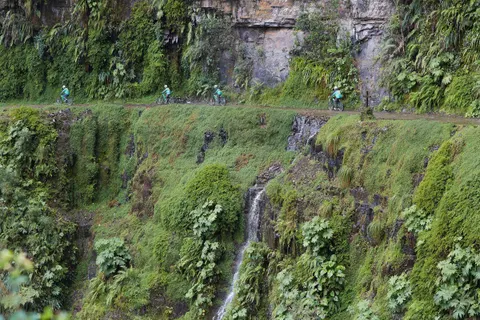
The old road is a single lane, under 3 m (10 ft) wide in places, with no guardrails and drops of hundreds of meters. Until 2006, trucks and buses used it in both directions, often in fog and mud. Wikipedia says parts of it were built in the 1930s by Paraguayan prisoners from the Chaco War, and repeats an estimate of 200-300 deaths a year; we found no official figures behind that number. The worst crash on record came in July 1983, when a bus went into a canyon and more than 100 passengers died. The “world’s most dangerous road” label is credited to the Inter-American Development Bank in 1995, though we couldn’t find the bank’s original document.
Traffic on the old road keeps left, the only road in Bolivia where it does, so drivers can see the edge under their wheels. The paved Cotapata–Santa Bárbara highway opened in December 2006 (some sources say 2007). Top Gear drove the old road for its Bolivia Special, aired in December 2009.
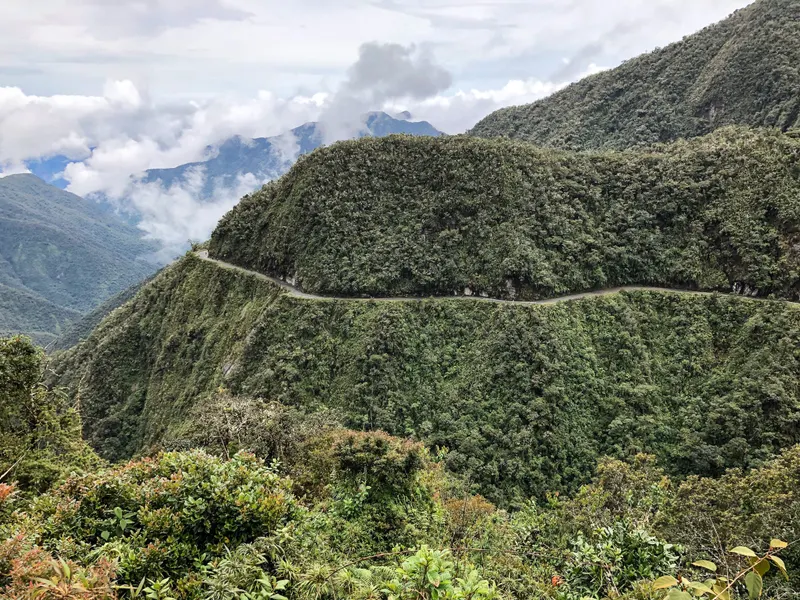
Is the Death Road dangerous today?
With vehicle traffic down about 90%, most of the danger now comes from riders going too fast on loose gravel and braking late into bends. Fog, rain and mud make both worse from November to March, and you’ll still meet local vehicles and support vans on a road barely wider than one of them.
We found no official count of cyclist deaths. The most-quoted figure, at least 18 cyclists since 1998, comes from Wikipedia, which credits Barracuda Biking and gives no date. In January 2019 a New Zealand rider on a guided tour went over the edge in the rain (Sticky Bottle). In March 2021 a 29-year-old from Oruro, also on a tour, fell about 100 m near the Puente del Diablo, and the fire service’s director asked operators for more care in the rainy season (Los Tiempos). In April 2023 a 27-year-old Ecuadorian cyclist fell about 170 m near the San Juan viewpoint, with no tour mentioned (Opinión). We found no later reports, but without an official register we can’t rule them out.
The UK Foreign Office notes that Bolivia has no official minimum standards for tour operators. It tells Death Road riders to make sure the bikes are in good condition, that the guide carries safety equipment and a first-aid kit, and that their insurance covers the ride.
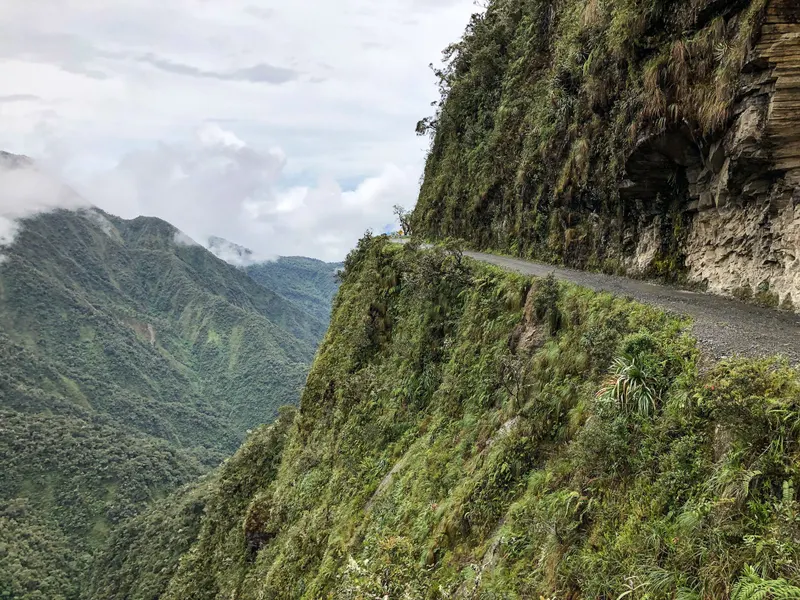
How to ride it safely
- Ride at your own speed and scrub off speed before each bend; guides regroup everyone at set stops.
- Keep both hands on the bars on the gravel; take photos only when stopped.
- Stop where your guide says, and ride on whichever side of the road the guide tells you.
- Walk any stretch you don’t like, and tell the guide at once if your brakes feel soft.
Death Road Bolivia tour companies compared (2026)
Viator lists 21 Death Road tours (September 2026), and four have more than 700 reviews each. Among the five below, price follows the bike, group size, pickup, lunch stop and extras. None includes the Bs 50 road fee.
| Tour | From | Best for | Check availability |
|---|---|---|---|
| Death Road Bolivia Biking TourFree cancellation | $156 | Most reviewed | Check price |
| Death Road, Bolivia: Mountain Bike Tour on the World's Most Dangerous RoadFree cancellation | $145 | Senda Verde lunch, overnight option | Check price |
| The World's Most Dangerous Road - Barracuda Biking's Death Road RidingFree cancellation | $90 | Lowest price, hydraulic discs | Check price |
| Death Road Biking TourFree cancellation | $105 | Hotel pickup, mid-price | Check price |
| Bike Tour to the Death RoadFree cancellation | $125 | Private group from 2 | Check price |
Prices in US$ per person from Viator as of Sep 30, 2026. They change; you see the final price before paying.
From each company’s Viator listing, September 2026:
| Company | From | Bike | Group | Start | Lunch stop |
|---|---|---|---|---|---|
| Altitude Travel | US$156 | Transition, Specialized or Rocky Mountain RMX (price varies by bike) | Up to 50 per departure | Hotel pickup around 7 a.m. | Hotel Dos Ríos |
| Gravity | US$145 | Kona full suspension | Max 14 | Pickup arranged by email | La Senda Verde refuge (entry included) |
| Barracuda | US$90 | Kona full suspension, hydraulic disc brakes | 3 to 14 | Meet 7:30 a.m., Calle Murillo at Tarija; no pickup | Own refuge with pool |
| One Death Road | US$105 | Scott Voltage | Private | Pickup from downtown hotels | Included, place not named |
| Vertigo | US$125 | Full suspension, sized to you | Up to 15 | Meet 7:40 a.m. near the Witches’ Market; some hotel pickups | Hotel with pool |
Details to check before you book:
- Altitude Travel: photos, video and a souvenir shirt are included; travel insurance isn’t.
- Barracuda: medical insurance is required; the guide sells cover on the day if you have none.
- One Death Road: the T-shirt costs US$15 extra and goggles aren’t included. The listing sells full suspension as an upgrade, so confirm which bike your price includes.
- Vertigo: 208 lb (94 kg) weight limit; the T-shirt (US$10) and lunch drinks cost extra. It can cancel if too few riders book, then offers an alternative or a refund.
Death Road Bolivia also lists dual-suspension bikes, a full-face helmet and hotel pickup (from about US$98), with only 39 reviews so far.
How to choose a Death Road operator
- Suspension and size: full suspension, sized to you. All seven listings we checked ask your height at booking.
- Brakes: ask for hydraulic disc brakes (only Barracuda’s listing states them) and which lever works the front brake. Most UK and Australian bikes put it on the right, most US bikes on the left; Barracuda sets the levers to match your home country.
- Backup: 14 riders or fewer, more than one guide, and a support van behind the group.
- Insurance: a policy that covers mountain biking.
What we'd skip
- The cheapest Viator listing with reviews, Red Line at about US$75, which doesn’t say what bike you get.
- Front-suspension-only bikes, when Barracuda’s full-suspension tour starts at about US$90.
- Street-agency deals where you can’t see and test the bike before you pay.
Which one is for you?
- If you want the most-reviewed tour: Altitude Travel, with 3,755 reviews.
- If you want lunch at an animal refuge or a night in the Yungas: Gravity.
- If price matters most but you want full suspension and hydraulic discs: Barracuda.
- If you want hotel pickup at a mid price: One Death Road.
- If you’re two or more and want your own guide: Vertigo’s private option.
- If you’re under 18: One Death Road (from 14) or Gravity’s direct booking (13 and over, with an extra guide).
For other trips from the city, see our La Paz tours compared.
Death Road Bolivia prices: tours, road fee and extras
As of September 2026, a guided Death Road tour costs from about US$90 to US$156 per person on Viator. Expect US$100-170 once the road fee, drinks, a tip and extras are added.
| Item | US$ | Bs |
|---|---|---|
| Budget tour with full suspension (Barracuda, no pickup) | from 90 | ~1,080 |
| Mid-range with hotel pickup (One Death Road, Death Road Bolivia) | from 98-105 | ~1,180-1,260 |
| Premium (Vertigo, Gravity, Altitude Travel) | from 125-156 | ~1,500-1,875 |
| Road fee, cash, two payments of Bs 25 | ~4 | 50 |
| Souvenir T-shirt, where not included | 10-15 | ~120-180 |
| Guide tip (optional), pooled by the whole group | ~7-13 per guide | 80-160 per guide |
| Realistic total per person, with drinks and your share of the tip | ~100-170 | ~1,200-2,050 |
The cards above show live prices. UK operator Andean Trails suggests Bs 80-160 a day for a specialist guide, pooled by the group. Its dollar figures predate the float, so go by the bolivianos.
The Bs 50 road fee is per rider and paid in cash, usually Bs 25 around Unduavi and Bs 25 lower down. Operators call it a municipal charge, a community fee, a road tax or the Cotapata park entrance, and all give the same amount. Bring small notes; cards are rarely accepted outside Bolivia’s cities.
Blog posts quoting Bs 400-850 for the tour date from the 6.96-to-the-dollar peg. The boliviano was floated on 26 June 2026 and traded at about Bs 12 per US$ on 30 September; our Bolivia currency guide covers cash and ATMs. Diesel also jumped from Bs 9.80 to Bs 17.95 a liter on 18 September 2026, so confirm the price when you book.
The Death Road day, hour by hour
This timeline combines five companies’ September 2026 itineraries; times vary by up to an hour.
| Time | Where | What happens |
|---|---|---|
| 6:30-8:00 a.m. | La Paz | Pickup or meeting point; some operators serve breakfast |
| +1 to 1.5 h | Drive to La Cumbre | About 23 km uphill through city traffic |
| ~9:00 a.m. | La Cumbre, ~4,650 m | Bike and kit fitting, briefing, hot drink. Cold. |
| 9:00-10:30 a.m. | Asphalt | 20-24 km to Unduavi; checkpoint, first Bs 25 |
| ~10:30 a.m. | Van to Chuspipata | About 8 km over the climb, then a second briefing and bike check |
| 10:30 a.m.-2:30 p.m. | Gravel | 31-33 km with regroup stops, snacks and waterfalls; warmer as you drop |
| 1:45-2:30 p.m. | Yolosa, ~1,200 m | End of the ride |
| 2:30-4:30 p.m. | Lunch stop | Buffet lunch, hot shower, pool |
| 4:00-4:30 p.m. | New highway | 3 to 3.5 hours back to La Paz |
| 7:00-10:00 p.m. | La Paz | Drop-off downtown or near your hotel |
You’ll do the last part of the drive back on the Cotapata–Santa Bárbara highway after dark, so eat properly at lunch and keep something warm for the van.
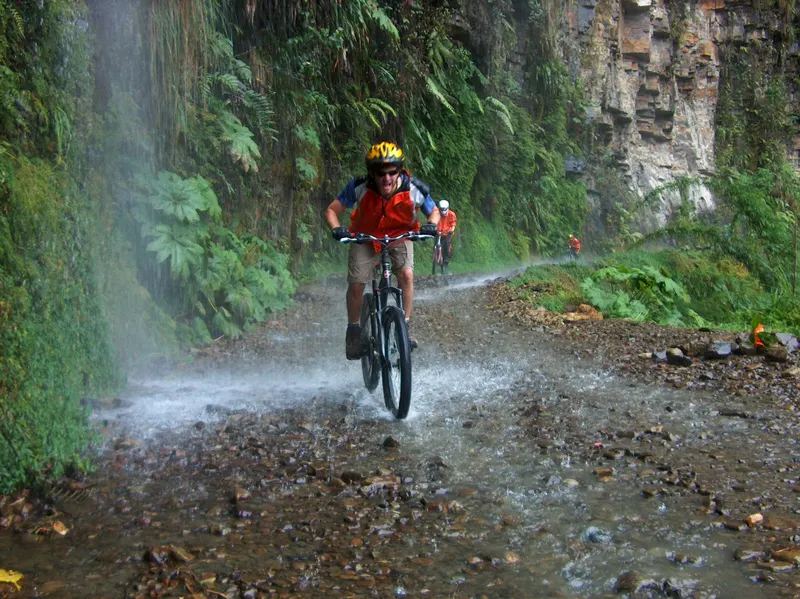
What to bring
- A warm layer and a hat for the start. Most operators lend a jacket and trousers to wear over them.
- Closed shoes you don’t mind getting wet and muddy.
- A full change of clothes and shoes for the drive back.
- Swimsuit for the pool at the lunch stop.
- Sunglasses, sunscreen and insect repellent for the lower valleys.
- A rain jacket from November to March.
- Cash in small bolivianos: Bs 50 for the road fee, plus drinks and tips.
- Passport details and your insurer’s name for the booking form.
Who should skip the Death Road
Skip it if…
- You’re pregnant or have heart, back or spinal problems; most listings above advise against the ride.
- You’re under 18 (the chooser above lists the two exceptions).
- You aren’t confident braking and steering downhill on loose gravel.
- You’ve been in La Paz for less than two or three days. The ride starts about 1,000 m higher than the city (about 3,640 m), so read our La Paz altitude sickness guide first.
- You were drinking the night before. The CDC advises no alcohol for your first 48 hours at high altitude, and you’ll be at 4,650 m by about 9 a.m.
- You weigh more than 208 lb (94 kg) and planned to ride with Vertigo.
To see the Yungas without the bike, take a minibus down the new highway to Coroico and spend a night. For a low-effort day trip by van, pair Chacaltaya with the Valley of the Moon. Experienced hikers can walk from the Andes to the Yungas on the 3-day El Choro trail; Viator’s only reviewed version is a private trek from about US$430, with six reviews. Its other Yungas trips have few or no reviews. If you’d rather go up than down, see our guide to climbing Huayna Potosí.
When to ride: weather and current conditions
May to October
Dry seasonClearer views and firmer gravel, with dust in the driest months. The start is cold. El Alto, 600 m lower than La Cumbre, averages below-freezing nights from May to September.
Verdict: the best months to ride.
November to March
Rainy seasonMud, fog and landslides that can block the roads out of La Paz. The fatal falls of January 2019 and March 2021 both happened in the rainy season. None of the Viator listings provides for weather cancellations, so a wet day means a wet ride.
Verdict: doable with a well-equipped operator and rain gear, but expect fewer views.
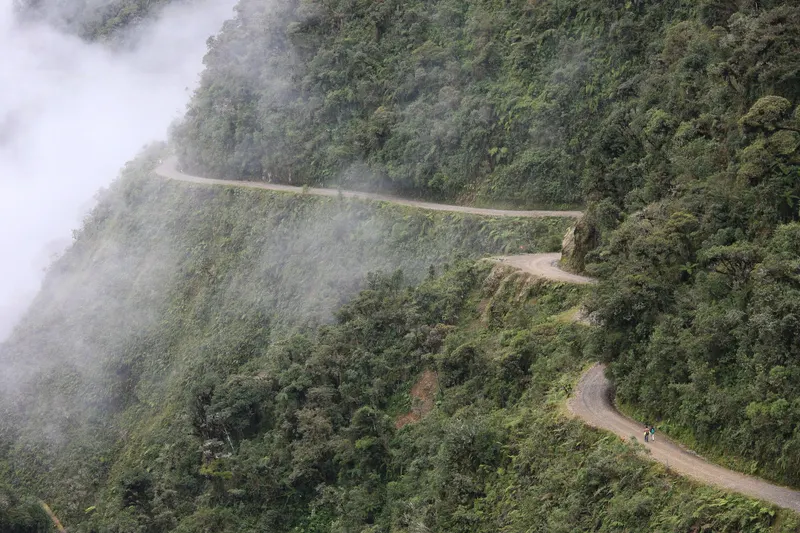
Current conditions (as of September 2026)
- State of exception: in force since 20 June 2026 and extended in mid-September by 90 days, to about mid-December. It allows for possible curfews.
- Blockades: national road blockades ran from 1 May to 23 June 2026. Police cleared the La Paz–Coroico road on 13 May; a four-week blockade at Puente Armas, beyond Coroico toward Caranavi, ended on 30 May.
- Snow: snow at La Cumbre made the road to the Yungas impassable in February 2026, and the highway authority closed the pass at least twice in August 2026 (Correo del Sur). While the pass is shut, tours can’t reach the start.
- Fuel: the US Embassy warned on 9 September of planned fuel-price protests and blockades; diesel then rose 83% on 18 September.
- Race day: the Yolosa–La Cumbre uphill mountain-bike race runs up the Death Road on Saturday 3 October 2026; ask your operator how it affects that week.
- Before you go: check the road-status map of the highway authority, ABC (it may not load from outside Bolivia), and message your operator the day before. Our five picks offer free cancellation up to 24 hours ahead.
For the wider picture, see whether La Paz is safe right now and the best time to visit Bolivia.
Can you drive, walk or ride it without a tour?
Yes, all three. The old road is public and still carries local vehicles and tour support vans. Riding it on your own means no support van, no mechanic and no transport waiting at Yolosa, and the Ecuadorian cyclist who died in 2023 was not reported to be on a tour. We found no rule against walking it, but the gravel section alone is 31-33 km. The Bs 50 is charged per cyclist; we couldn’t confirm what drivers or walkers pay.
Our verdict
Book a guided tour for your first ride. The support van, the briefings before each section and a bike checked that morning are most of what you’re paying for.
Stay the night in Coroico
Staying in the Yungas saves you the 3 to 3.5 hours in the van. Gravity’s listing offers a night at La Senda Verde or in Coroico, and Vertigo’s guides will help you get a taxi or bus to Coroico if you’re heading on to Rurrenabaque and the Amazon. With other companies, ask before booking whether they’ll leave you at the end of the ride.
La Senda Verde, a wildlife sanctuary near Yolosa, has cared for rescued animals since 2003 and says it now looks after more than 1,000. Coroico sits on a ridge 7 km up the road from Yolosa, at about 1,700 m (sources give 1,525 to 1,740 m), so you sleep roughly 2,000 m lower than in La Paz. Minibuses back take about 2.5-3 hours on the new highway to the Minasa terminal in Villa Fátima, where Canada’s travel advice warns of petty crime. We couldn’t verify fares after the diesel rise.
Yolosa and Coroico sit below 2,300 m, the altitude under which the CDC recommends the yellow fever vaccine in designated parts of La Paz department, and below the 2,500 m line under which it lists malaria. Ask a travel-medicine doctor before a night in the Yungas and pack repellent; sources disagree on when you must carry the certificate. Our Coroico guide covers what to do and where to stay, or compare Coroico hotels on Expedia.
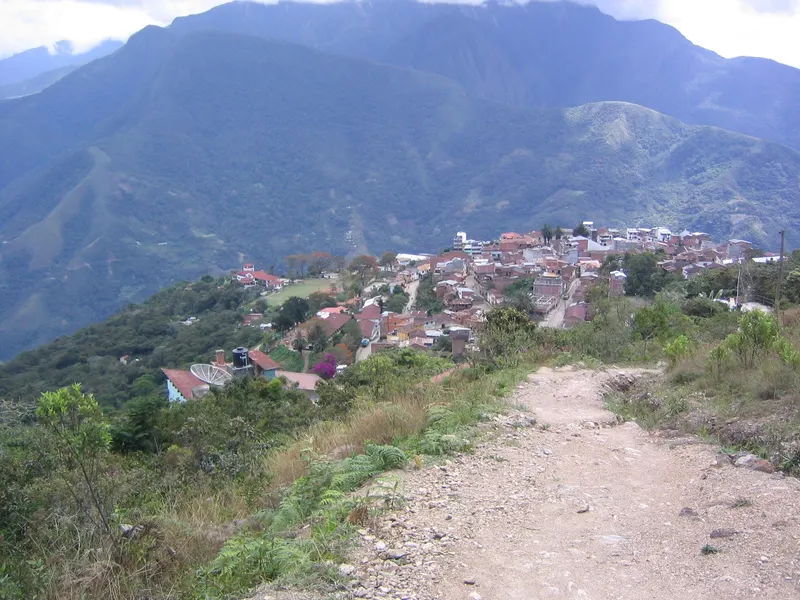


More trips within a day of the city are in our guide to day trips from La Paz.
Frequently asked questions
How much does it cost to bike the Death Road in Bolivia?
As of September 2026, guided tours on Viator start at about US$90 (Bs 1,080) with Barracuda and run to about US$156 (Bs 1,875) with Altitude Travel. None includes the Bs 50 (about US$4) road fee, paid in cash as two Bs 25 payments. With a tip, lunch drinks and a souvenir shirt, expect US$100-170 per person. Diesel prices jumped on 18 September 2026, so tour prices may rise.
How many people have died on the Death Road?
We found no official count. Wikipedia repeats an estimate of 200-300 deaths a year from the decades when this was the main road, and a bus crash in July 1983 killed more than 100 people. For cyclists, the often-quoted figure of at least 18 deaths since 1998 is old and comes from a tour operator. News outlets reported riders' deaths in January 2019, March 2021 (both on guided tours) and April 2023.
Is the Death Road worth it?
Yes, if you can ride a bike with confidence, have spent at least two or three days in La Paz first, and book an operator with well-maintained full-suspension bikes. In one day you drop almost 3,500 m, from a high Andean pass into cloud forest and through waterfalls, and 90% of it is downhill. Skip it if you're pregnant, have heart or back problems, or freeze up near sheer drops.
Can you drive on the Death Road?
Yes. It's still a public road used by local vehicles and tour support vans, though vehicle traffic fell about 90% after the paved Cotapata–Santa Bárbara highway opened in late 2006. It's the one road in Bolivia where traffic keeps left, so drivers can judge the distance between their wheels and the edge. Most visitors ride it by bike with a guide, and that's what we'd recommend the first time.
Why is it called the Death Road?
Because of its crash record when it was the main road from La Paz to the Yungas. It's a single lane, under 3 m wide in places, with no guardrails and drops of hundreds of meters, and until 2006 trucks and buses used it in both directions, often in fog and rain. The label 'world's most dangerous road' is credited to the Inter-American Development Bank in 1995.
How long does the Death Road tour take?
A full day of 11 to 14 hours door to door, depending on the operator. Pickup is between 6:30 and 8 a.m., the drive to La Cumbre takes 1 to 1.5 hours, and the riding itself takes 4 to 5 hours. After lunch and a shower near Yolosa, the van takes 3 to 3.5 hours to get back to La Paz, where you arrive between 7 and 10 p.m.
Is there a minimum age for the Death Road?
Altitude Travel, Gravity, Barracuda and Vertigo set 18 as the minimum on Viator. As of September 2026, One Death Road's listing books riders from 14 and Death Road Bolivia's from 17, and Gravity's own website lists a US$180 rate for riders 13 and over who ride with an extra guide. Upper limits vary too: One Death Road books riders up to 69, Altitude Travel up to 85.
Do I need mountain-biking experience for the Death Road?
Gravity's listing says the ride suits beginners and experts. You do need to handle a bike confidently on a long descent, braking steadily, looking ahead and holding your line on loose gravel, and because 90% of the ride is downhill, that matters more than fitness. Guides stop the group before tricky sections to explain what's coming, and you can walk any stretch you don't like.
Keep planning