















Quick answer
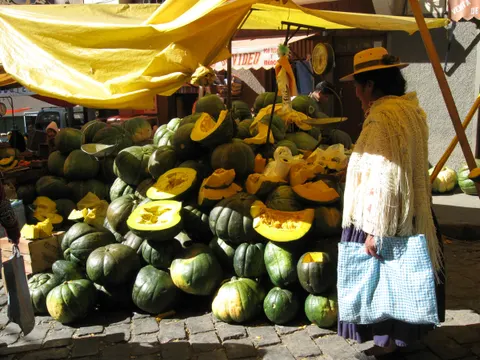
Cholitas, or cholas, are the Aymara and mestiza women of La Paz and El Alto, Bolivia, who wear the pollera: a wide pleated skirt over several petticoats, a fringed manta shawl, two long braids and a small felt bowler hat. The dress took shape under Spanish colonial rule. The bowler caught on in La Paz around 1920, imported from Italy, the United States and Germany. In 2013 La Paz declared the chola paceña part of its heritage.
On this page
- Who are the cholitas of Bolivia?
- What cholitas wear: traditional Bolivian clothing, piece by piece
- Why do Bolivian women wear bowler hats?
- Why were cholitas discriminated against, and what changed?
- What cholitas do today: markets, politics, fashion and sport
- Cholets: the buildings of El Alto’s Aymara merchants
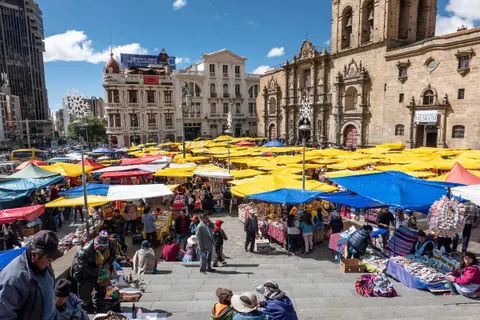
- Where to see chola culture in La Paz
- How to visit respectfully
- Frequently asked questions
The women in wide pleated skirts, fringed shawls and small bowler hats you see across La Paz, Bolivia are cholas, known to most visitors as cholitas. Their outfit goes back to Spanish colonial rule, and in 2013 La Paz declared the chola paceña part of its cultural heritage.
- Who
- Aymara and mestiza women of La Paz and El Alto
- The look
- Pollera, manta, two braids, bowler hat
- Bowler in La Paz
- Since about 1920
- Heritage
- La Paz municipal law, 2013
- Outfit cost
- From Bs 2,000 (2015) to over Bs 21,000 (2024)
Who are the cholitas of Bolivia?
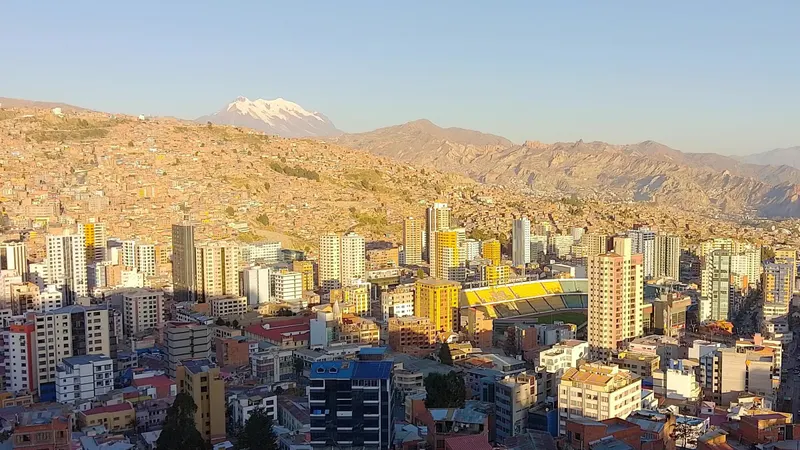
In Bolivia, chola names women, mostly Aymara and Quechua, who wear the pollera outfit that took shape in colonial times. The chola paceña is usually Aymara or mestiza, often speaks Aymara, and lives in La Paz or in El Alto, the city of 885,035 people (2024 census) on the plateau above, at about 4,150 m.
Cholita, the diminutive, is the affectionate everyday form. The polite description is mujer de pollera, a woman who wears the pollera, and a woman in Western clothes is de vestido. Many women de pollera wear it every day.
Bolivian hats change by region: a small bowler perched high in La Paz, a tall black hat in Potosí, the tall white tarro in Cochabamba, and a small hat worn at the back of the head in Tarija, where many women prefer the name moza chapaca. The bowler is also worn in Oruro and in Puno, Peru.
Where the word “chola” comes from
Nobody agrees. The Inca Garcilaso de la Vega’s Comentarios Reales (1609) records cholo as a Spanish insult taken from a Caribbean word for dog. The La Paz folklorist Antonio Paredes Candia (1924-2004), in La chola boliviana, traced it instead to the Spanish chulo, the bullring assistant who distracts the bull while the matador changes capes. His female counterpart, the chula, wore a long pleated skirt, a frilled lace blouse and an embroidered Manila shawl. Bolivia’s Ministry of Education cites that theory in its 2015 standard for pollera makers. Either way, chola was long a slur for urban Indigenous and mestiza women, and many now use it with pride.
What cholitas wear: traditional Bolivian clothing, piece by piece
The pollera outfit is the traditional dress in Bolivia most visitors recognize, and new designs debut each year at Gran Poder, says historian Sayuri Loza, quoted by the state news agency ABI (July 2026).
| Piece | What it is | Worth knowing |
|---|---|---|
| Pollera | Wide gathered skirt using more than 6 m of fabric | La Paz polleras are defined by their bastas (horizontal tucks), anywhere from one to 44 |
| Enaguas | Four or five petticoats, mankhancha in Aymara | They give the skirt its volume |
| Blouse | Long-sleeved and fitted, with lace | Low-cut 2024 “fashion” versions are party wear, says historian Sayuri Loza |
| Manta | Fringed shawl closed with a brooch (prendedor) | Different from the aguayo, the striped cloth used to carry babies and goods |
| Bowler (bombín) | Small felt hat balanced on top of the head | History below |
| Braids | Two braids joined by tasseled cords (tullmas) | Tullmas are traditionally llama or vicuña hair, in natural tones in La Paz |
| Jewelry | Gold earrings, manta brooch, hat spray (ramillete) | Costume pieces are common day to day because gold attracts thieves |
| Shoes | Flat leather shoes | Heeled ankle boots were the city style into the mid-1900s |
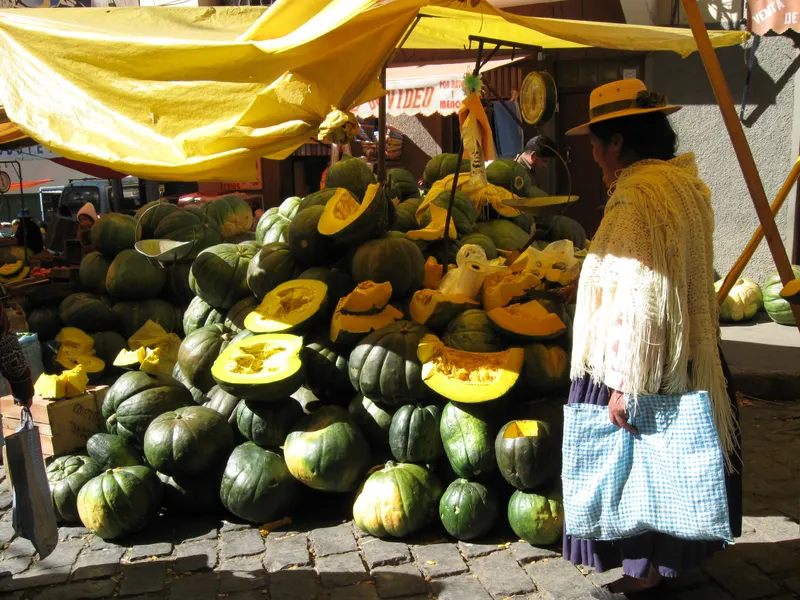
What a full outfit costs
Nobody has published 2026 prices, and prices in bolivianos have likely risen since the June 2026 currency float. Dollar figures for 2024-2026 use the September 2026 rate of about Bs 12 per US$.
| Item | Price | Year and source |
|---|---|---|
| Basic complete outfit | From Bs 2,000 (minimum wage: Bs 1,440) | 2015, El País |
| Complete outfit | US$300-8,000 | 2016, El País |
| Vicuña manta | About Bs 7,000 | 2015, El País |
| Finest bowler hats | Bs 4,000-5,000; over US$200 | 2013, Port Magazine; 2024, Tiempo Argentino |
| Made-to-measure festival outfit | Over Bs 21,000 (about US$1,750) | 2024, Los Tiempos |
| Outfit rental | From Bs 150 (about US$12.50) | 2024, Los Tiempos |
| Gold jewelry | Bs 3,000 to over 15,000 (about US$250-1,250) | July 2026, ABI |
Why do Bolivian women wear bowler hats?
Italian merchants brought bowlers to Bolivia before World War I, and the hats became a status symbol. Borsalinos were expensive, so owning several in different colors was how successful cholas showed their money, historian William Beezley writes.
The bowler is English. London hatters Thomas and William Bowler made the first in 1849 for Lock & Co., to Edward Coke’s design for a hard hat his gamekeepers could wear on horseback. Before it arrived, La Paz cholas wore a version of Cochabamba’s tall, wide-brimmed hat.
Firms in Tacna, Peru, shipped Borsalinos from Genoa to the mining towns. In March 1914 Ludovico Galoppo, a Piedmontese storekeeper in the tin town of Huanuni, asked Borsalino’s wholesaler for a cheaper bowler women could afford, the Cappello da Ciola or chola hat, and ordered 18 dozen for 1916. By 1919 Borsalinos were on sale in La Paz. Around 1920 the felt bowler caught on with La Paz’s cholas, and hats came from factories in Italy, the United States and Germany, according to La Paz press accounts.
The popular version stars Domingo Soligno, a La Paz hat seller from Buenos Aires, who ordered bowlers like those worn by railway builders (British or Irish, depending on who tells it). They arrived too small and brown, so he sold them to cholas, claiming the crown’s height showed whether a woman was married. Beezley tells it; Veja points out that nobody has confirmed it. Another tale says the hats made women fertile.
Myth check
Google’s AI summary for “cholitas Bolivia” (September 2026) says British railway workers brought the bowler in the 1920s. The records point to Italian merchants and a Borsalino model made for cholas from 1914 (Beezley, Wiley, 2021).
In La Paz the undersized hat balances on the crown of the head, and by custom it sits straight on a married woman and tilted on a single one (Port Magazine, 2013). When World War II cut off Italian imports, a factory in Sucre and workshops in La Paz filled the gap, and most bowlers worn today are made in Bolivia.
Why were cholitas discriminated against, and what changed?
Most Bolivian accounts, MUSEF’s included, date the pollera to the years after the 1780-1781 uprisings of Túpac Amaru II and Túpac Katari, when colonial authorities made Indigenous women trade the wide axsu dress and lliklla shawl for tighter Spanish-style clothes. Some women had hidden weapons in those wide dresses, MUSEF anthropologist Milton Eyzaguirre told ABI in 2026. El País (2015) describes women adopting the pollera to move up socially instead.
Whatever its origin, the pollera marked women for exclusion. Until recent decades cholas could be turned away from restaurants, taxis and buses, and for generations they could not walk freely in Plaza Murillo or the Zona Sur (BBC, 2014). Lidia Katari, wife of Aymara vice-president Víctor Hugo Cárdenas (1993-1997), was told to remove her pollera to keep teaching, and left teaching instead.
| Year | What changed |
|---|---|
| 1609 | Garcilaso records cholo as a Spanish insult |
| 1780-1781 | Túpac Amaru II and Túpac Katari uprisings; dress rules follow |
| 1952 | Universal suffrage and land reform |
| 1989 | Remedios Loza, first woman de pollera elected to the Chamber of Deputies |
| 2006 | Evo Morales, Bolivia’s first Indigenous president, takes office |
| October 2010 | Law 045 against racism and discrimination |
| October 2013 | La Paz declares the chola paceña part of its cultural heritage |
| 2019 | Gran Poder joins UNESCO’s intangible heritage list |
| July 2026 | Chola Paceña 2026 contest; Museo Costumbrista exhibition opens |
What cholitas do today: markets, politics, fashion and sport
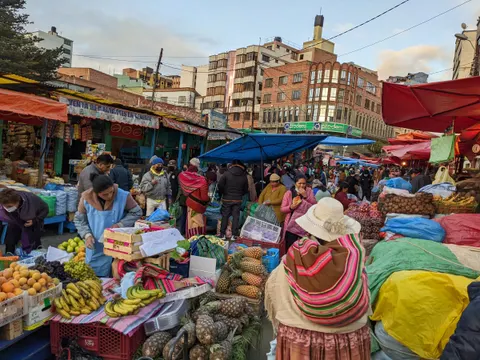
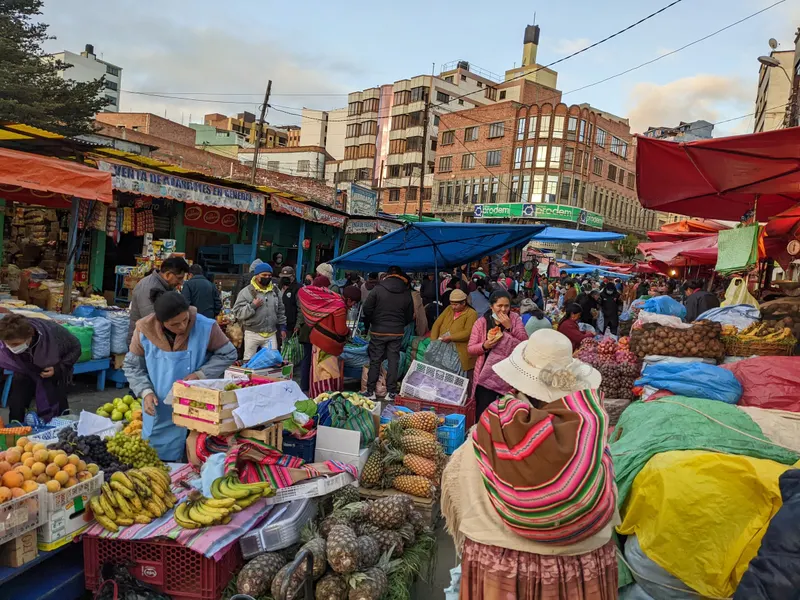
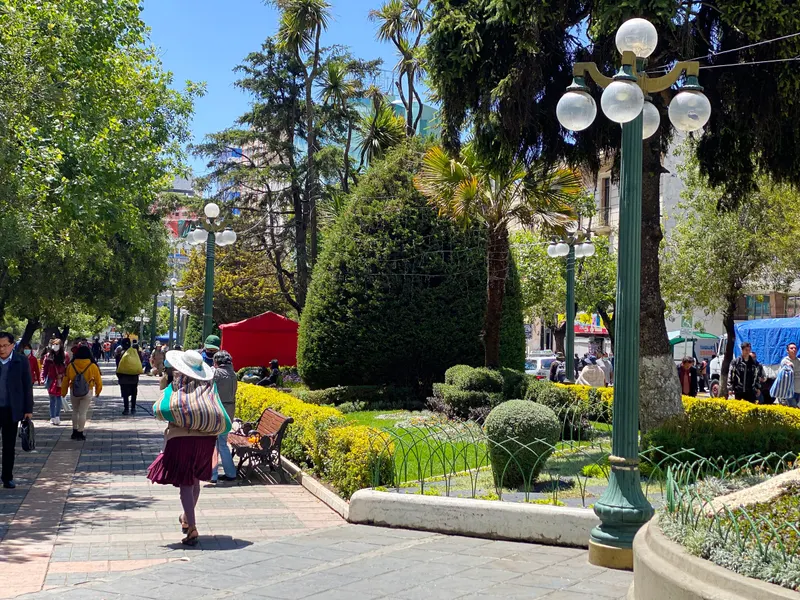
Aymara women have long dominated market trade in La Paz. A 1974 New York Times headline called the cholas “the backbone of Bolivia”, and the richest now import from China, Chile and Panama (BBC, 2014). Remedios Loza (1949-2018), a radio presenter from 1965, became the first woman de pollera in the Chamber of Deputies in 1989 and ran for president in 1997. Silvia Lazarte, a Quechua leader from Cochabamba, chaired the assembly that wrote the 2009 constitution.
By 2014 the BBC found cholitas working as TV presenters, lawyers and bank staff. Designer Eliana Paco took a 12-outfit collection to New York’s Uptown Fashion Week in 2016. In October 2024 the city built a 150 m runway for the chola paceña on Plaza Tejada Sorzano, and on 8 July 2026 about 17 young women competed to be Chola Paceña 2026.
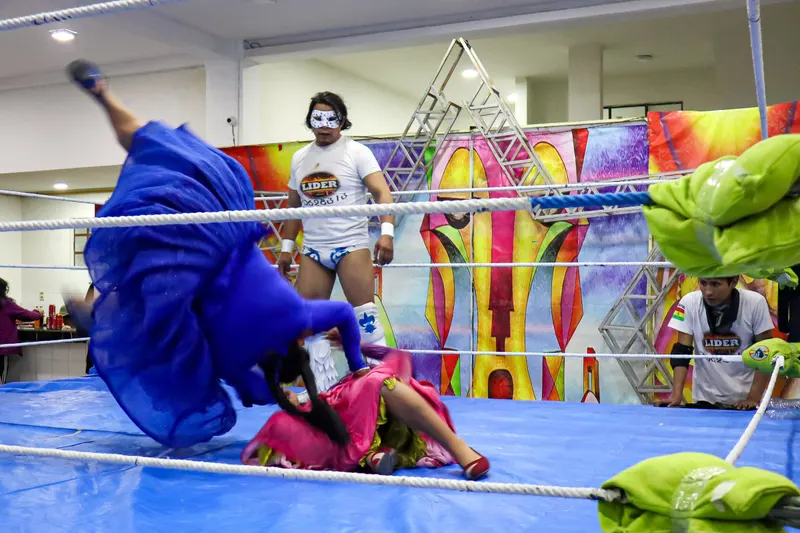
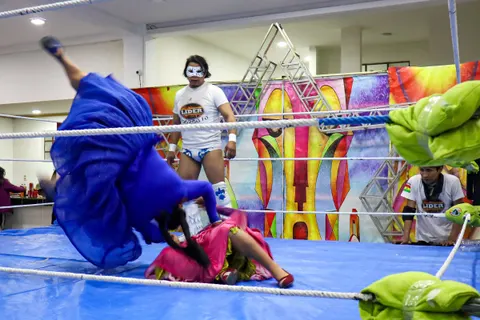
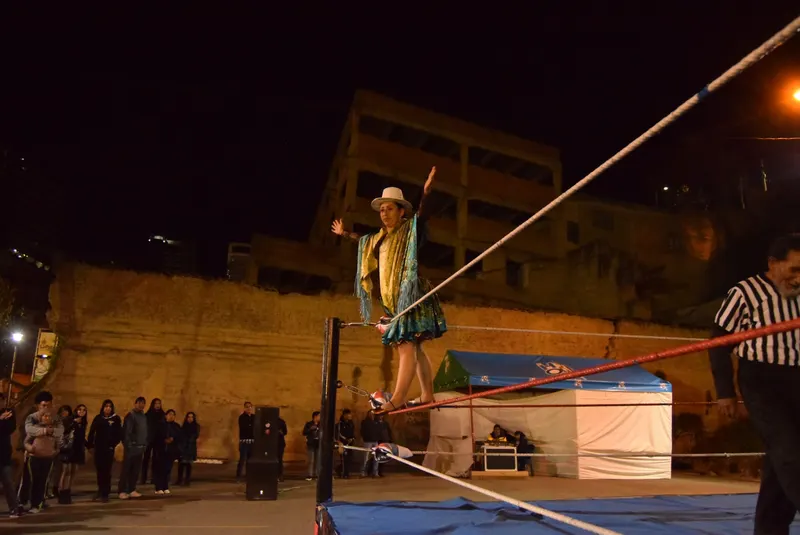
Women de pollera have wrestled in El Alto since the early 2000s. El Alto’s city hall relaunched a Sunday afternoon show in July 2026, and tourist shows run most days (details in our cholita wrestling guide). The Cholitas Escaladoras (cholita climbers) go up mountains in their polleras. Eleven of them, led by mountain cook Lidia Huayllas, summited Huayna Potosí (6,088 m) in 2015, and the group reached the top of Aconcagua on 23 January 2019.
Cholets: the buildings of El Alto’s Aymara merchants
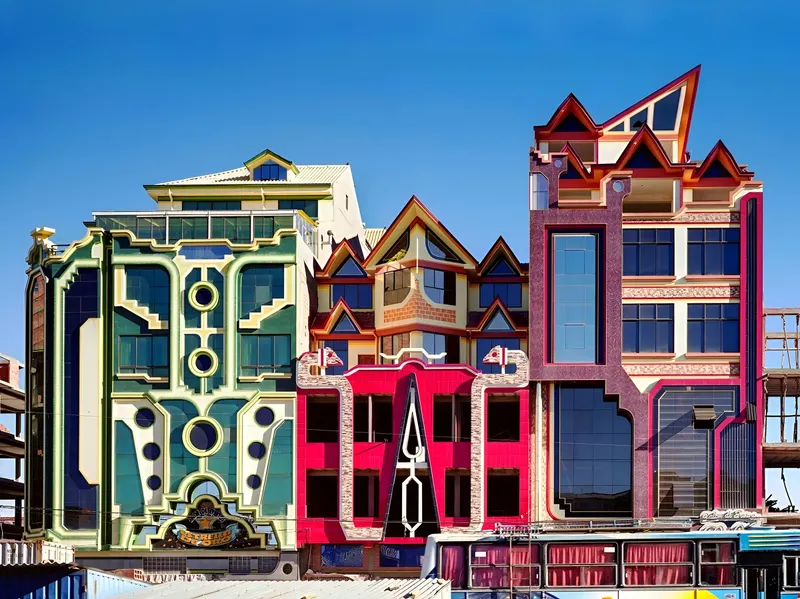
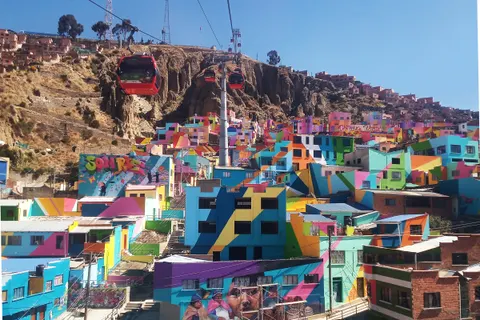
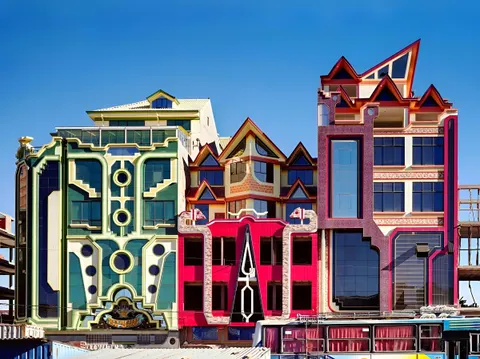
Aymara trading money also built El Alto’s cholets. Freddy Mamani Silvestre, a former bricklayer born in Catavi in 1971, had built more than 100 of them by October 2018, each costing US$200,000-500,000 (The Guardian). The layout repeats: shops at street level, a double-height party hall (salón de eventos), apartments, and the owner’s chalet on the roof. Colors come from the aguayo, motifs from Tiwanaku and the chakana (Andean cross). The name joins cholo or chola with chalet and began as an insult.


Our El Alto guide covers the city, and the 3-hour cholet tour goes inside one.
Where to see chola culture in La Paz
Which one is for you?
- If you have one morning: Mercado Rodríguez, then MUSEF on Calle Ingavi.
- If it’s Thursday or Sunday: the Red Line up to the Feria 16 de Julio; on Sunday afternoon add cholita wrestling.
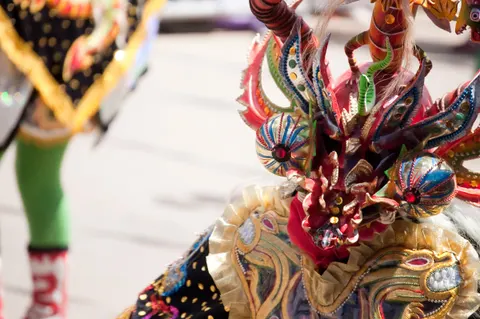
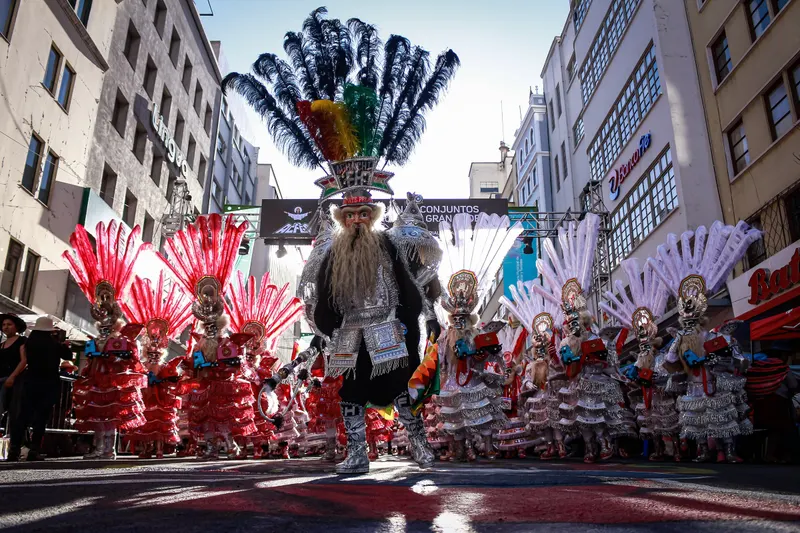
- If you’re here for Gran Poder: watch the parade where new pollera designs debut.
| Place | When | Cost (September 2026) |
|---|---|---|
| Mercado Rodríguez, San Pedro (produce market) | Mornings, our pick | Free |
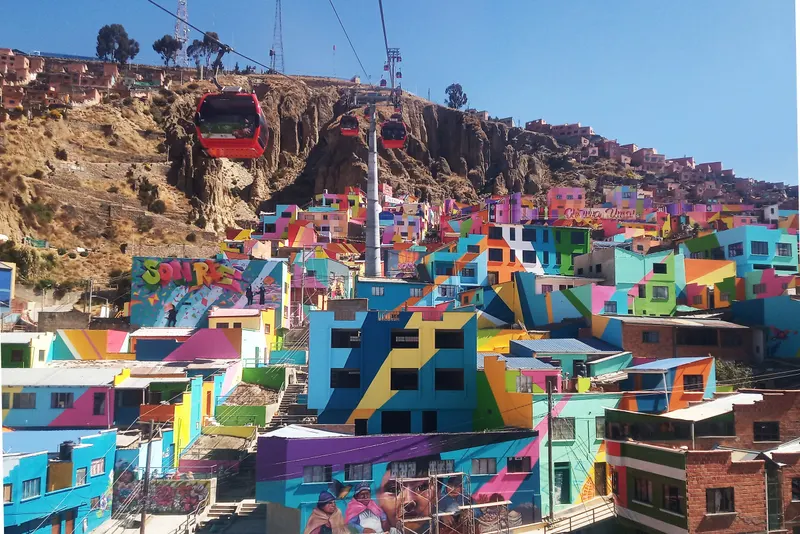
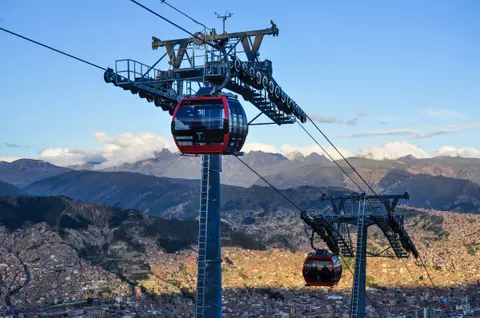
| Feria 16 de Julio, El Alto (about 200 blocks of stalls) | Thursdays and Sundays | Free; cable car Bs 3, plus Bs 2 per transfer |
| Gran Poder parade | 2026: Sat 1 Aug (moved by blockades); 2027: expected Sat 22 May, unconfirmed | Street parade |
| MUSEF, Calle Ingavi 916 (rotating exhibitions) | Mon-Fri 08:30-16:30, Sat-Sun 09:00-13:00 | Bs 35 for foreigners (about US$3) |
| Museo Costumbrista Juan de Vargas, exhibition “Chola paceña, entre la historia y la identidad viva” | To 19 Dec 2026; Tue-Fri 09:15-12:15 and 14:45-18:45, Sat 09:15-16:45 | Fee not published |
Listings disagree on the Museo Costumbrista’s street address (OpenStreetMap places it by Calle Jaén), so phone 2280758 before you go. MUSEF closes at 13:00 on weekends, so start at the market early.
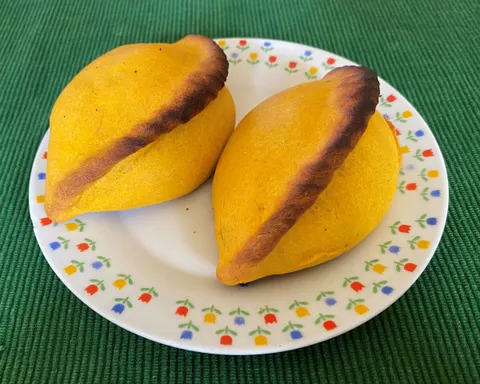
El Alto sits about 500 m above downtown; if you landed in the last two days, read our altitude sickness guide first. For lunch, street stalls sell the sándwich de chola, roast pork in a bun (Bolivian food guide).
No tour on Viator focuses on chola history (September 2026). These three come closest.
Tours into El Alto and cholita culture
Book on Viator From $35Cholet Tour - Andean Architecture and Culture - El AltoFree cancellationCheck availability
 From $25El Alto and Aymara MansionsFree cancellationCheck availability
 From $22Cholitas Wrestling/Cholitas LuchadorasFree cancellationCheck availability
Prices in US$ per person from Viator as of Sep 30, 2026. They change; you see the final price before paying.
The cholet tour rates 4.83 from 82 reviews; the wrestling package, the most-reviewed in its category, rates 3.95 from 40. More in our La Paz tours guide.
Check before you go (September 2026)
Road blockades from 1 May to 23 June 2026 cut off La Paz and El Alto for about 53 days. A state of exception runs to about mid-December 2026, and on 9 September the US Embassy warned of new protests over fuel prices. Check the news before riding up to El Alto, and read is La Paz safe right now.
How to visit respectfully
Etiquette
Ask before photographing anyone and accept a no (our advice, not a rule). Say señora, and don’t call a stranger “cholita”. Buying something is the easiest way to start a conversation at a stall. Renting a pollera to dance at a fiesta is normal; at Oruro’s 2015 Carnival, El País found women de vestido paying over €470 to dance as cholas. Keep it out of costume parties.
Our cable car guide has the lines and fares for the ride up to El Alto, things to do in La Paz fills the rest of your week, and the La Paz travel guide covers the basics.
Frequently asked questions
Is “cholita” an offensive word?
It depends on who says it and how. Chola began as a colonial insult, and the Inca Garcilaso recorded cholo as a Spanish slur in 1609. Cholita, the diminutive, is the affectionate everyday form in Bolivia, and many women now use chola with pride. The neutral description is mujer de pollera, a woman who wears the pollera. As a visitor, address a woman you don't know as señora.
What are Bolivian women in traditional dress called?
Cholas or cholitas, or mujeres de pollera. The name changes with the region: the chola paceña in La Paz, the chola cochabambina with her tall white hat, the chola potosina. In Tarija many women reject “chola tarijeña” and prefer moza chapaca. A Bolivian woman who wears Western clothes is described as de vestido.
How much does a cholita outfit cost?
Reported prices run from Bs 2,000 for a basic outfit in 2015 to US$300-8,000 for a complete one in 2016, and over Bs 21,000 (about US$1,750) for a made-to-measure festival outfit in 2024. Gold jewelry alone cost Bs 3,000 to over Bs 15,000 in July 2026. Rentals started at Bs 150 in 2024. Nobody has published 2026 prices, and prices in bolivianos have likely risen since the June 2026 float.
Can I take photos of cholitas in La Paz?
Ask first and accept a no. At a market stall, buy something before you ask. Dancers at Gran Poder and wrestlers in the ring are performing in public, so photographing them is expected, but ask before you photograph spectators or vendors. No law requires this; it is our advice.
Where can I buy a pollera or a bowler hat in La Paz?
Pollera sellers work in the textile streets around Avenida Max Paredes, which Tiempo Argentino described in 2024 as the city's textile district. We have not verified individual shops. Most bowlers sold today are made in Bolivia; a La Paz hatter told Port Magazine that genuine Borsalinos stopped arriving around 1975. For a single festival, renting is normal and started at Bs 150 in 2024.
Do cholitas live only in La Paz?
No. Women de pollera live across Bolivia's highlands and valleys, with their own styles in Cochabamba, Potosí, Oruro and Tarija, and the bowler is also worn in Puno, on the Peruvian side of Lake Titicaca. Bolivian migrants took the culture abroad too. Buenos Aires holds its own Gran Poder parade, Tiempo Argentino reported in 2024.
What is the Chola Paceña contest?
An election of a young woman as “Chola Paceña”. The 2026 edition took place on 8 July, the month of La Paz's 16 July anniversary, with about 17 contestants. AP reported that organizers framed it as a tribute to Aymara women and a boost for tourism after the May-June 2026 blockades. An AP report from 2024 said contestants are tested in Aymara and folk dance. See things to do in La Paz.
Keep planning