


















Quick answer
The La Paz cable car (Mi Teleférico) is a 10-line public transit network linking La Paz and El Alto, Bolivia. A ride costs Bs 3 plus Bs 2 per transfer (about US$0.25 and US$0.17, September 2026). Pay cash; QR payment needs a Bolivian bank app. Cabins run daily 06:30-22:30 (holidays 07:00-21:00). For views, ride the Red Line up to El Alto, then the Silver Line along the rim.
On this page
- How the La Paz cable car system works
- La Paz cable car map: the 10 lines and where they go
- How much does the La Paz cable car cost? (September 2026)
- How to pay as a tourist: cash, card, QR or the Yala app
- What are the La Paz cable car hours?
- Which cable car line is the most scenic?
- A self-guided cable car route (half day, about US$1)
- Guided cable car tours
- Is the La Paz cable car safe?
- Riding tips: altitude, cold and when to go
- Frequently asked questions
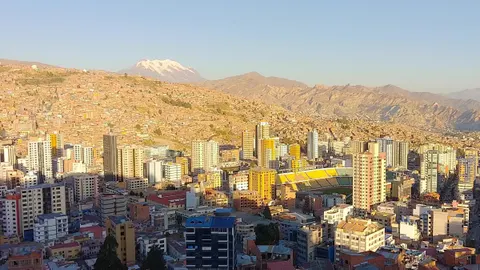
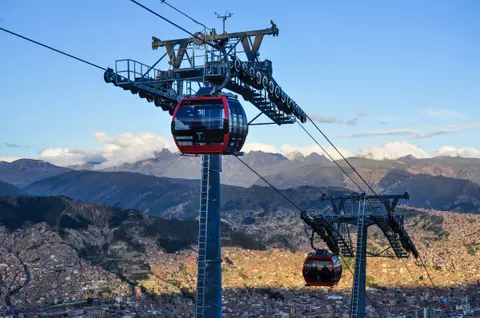
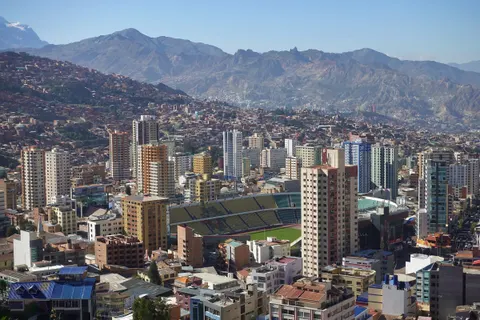
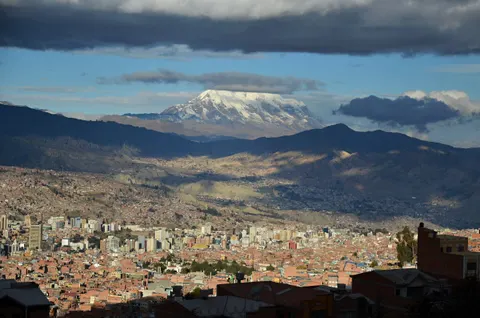
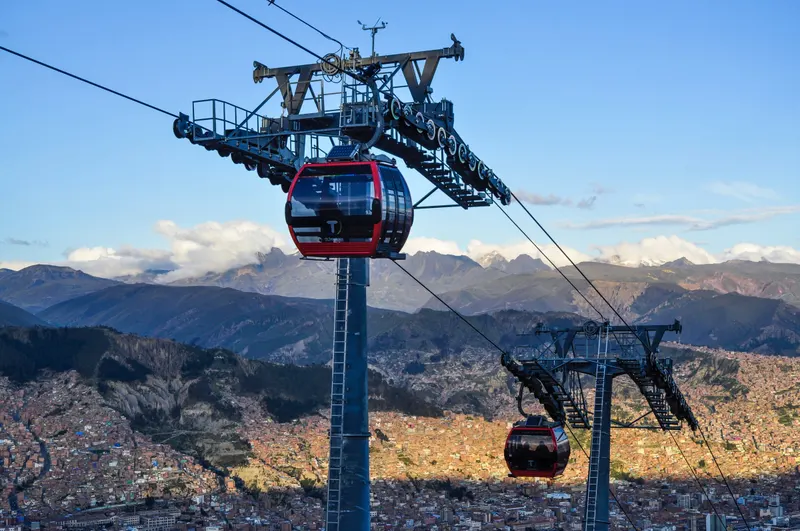
Mi Teleférico, the La Paz cable car, is a state-run public transit network of 10 gondola lines and 26 stations linking La Paz, Bolivia, with El Alto on the plateau above. Wikipedia, citing an Inter-American Development Bank study, calls its roughly 30 km of lines the longest aerial cable car system in the world, and about 260,000 people ride it on an average day. For a visitor, Bs 3 (about US$0.25) buys the fastest way up to El Alto and a view over the whole canyon, which puts it near the top of our things to do in La Paz.
- Lines
- 10 (26 stations)
- Fare (Sep 2026)
- Bs 3 + Bs 2 per transfer
- Hours (Sep 2026)
- 06:30-22:30 daily, holidays 07:00-21:00
- Frequency
- a cabin every 12 seconds
- Altitude
- about 3,300 to 4,100 m
How the La Paz cable car system works
Buy a ride at the station booth (boletería), pass the turnstile and step into a 10-person cabin. One leaves every 12 seconds, so there’s no timetable. Changing lines inside an interchange station costs Bs 2; walk out to the street and back in, and you pay Bs 3 again.
Signs carry Spanish and Aymara names, so Estación Central also reads Taypi Uta and Mirador reads Qhana Pata. Google Maps has included every line in its transit directions since August 2024.
La Paz cable car map: the 10 lines and where they go
Ride times are official (Ministry of Public Works, December 2025); altitudes are our satellite-terrain estimates for each end, rounded to 50 m.
| Line | Stations, in order | Ride | Altitude | Use it for |
|---|---|---|---|---|
| Red (Roja) | Central, Cementerio, 16 de Julio | 11 min | 3,700 → 4,100 m | Straight up to El Alto |
| Yellow (Amarilla) | Mirador, Buenos Aires, Sopocachi, Libertador | 17 min | 4,050 → 3,400 m | Biggest drop, via Sopocachi |
| Green (Verde) | Libertador, Alto Obrajes, Obrajes, Irpavi | 16 min | 3,400 → 3,300 m | Zona Sur, Valley of the Moon |
| Blue (Azul) | Río Seco, UPEA, Plaza La Paz, Plaza Libertad, 16 de Julio | 20 min | 4,050 ↔ 4,100 m | El Alto and its market |
| Orange (Naranja) | Central, Armentia, Periférica, Plaza Villarroel | 11 min | about 3,700 m | Central to Miraflores |
| White (Blanca) | Plaza Villarroel, Monumento Busch, Plaza Triangular, Av. Poeta | 11 min | 3,700 → 3,500 m | Miraflores, Killi Killi |
| Sky Blue (Celeste) | Prado, Teatro al Aire Libre, Av. Poeta, Libertador | 10 min | 3,600 → 3,400 m | Downtown to the Zona Sur lines |
| Purple (Morada) | 6 de Marzo, Faro Murillo, San José | 16 min | 4,050 → 3,600 m | Fastest to El Alto |
| Brown (Café) | Monumento Busch, Las Villas | 4 min | about 3,600 m | A residential spur |
| Silver (Plateada) | 16 de Julio, Faro Murillo, Mirador | 12 min | 4,100 → 4,050 m | The rim and Illimani |
The eight interchanges are Central (Red, Orange), 16 de Julio (Red, Blue, Silver), Mirador (Yellow, Silver), Libertador (Yellow, Green, Sky Blue), Plaza Villarroel (Orange, White), Monumento Busch (White, Brown), Av. Poeta (White, Sky Blue) and Faro Murillo (Purple, Silver). Mi Teleférico publishes an interactive network map with all 10 lines and their stations on a street map of La Paz and El Alto (checked November 11, 2026). Skip the downloadable PDF on the same site: when we checked in September 2026, it dated from February 2017, when only three lines were running.


How much does the La Paz cable car cost? (September 2026)
| Ticket | Bs | About US$ |
|---|---|---|
| First line | 3 | 0.25 |
| Each transfer | 2 | 0.17 |
| Reduced fare, with a preferential card | 1.50 + 1 per transfer | 0.12 + 0.08 |
| Rechargeable card, with Bs 5 of credit | 30 | 2.50 |
The fare has been Bs 3 since 2014. The news site Visión 360 confirmed it still applied during a September 2026 row over subsidies, and no change had been announced by September 30.
Guides that quote US$0.43 a ride used the old fixed rate of Bs 6.96 to the dollar; since the boliviano floated on June 26, 2026 (about Bs 12 to the dollar on September 30), a ride costs about a quarter. The reduced fare is for students, over-60s and people with disabilities, and we couldn’t confirm that foreign visitors qualify.
How to pay as a tourist: cash, card, QR or the Yala app
Pay cash at the booth, ideally in Bs 1, 2 and 5 coins. Since March 2, 2026, cashiers have checked Series B Bs 10, 20 and 50 notes against the central bank’s list of flagged serial numbers and refused any that match; coins avoid the check. Our Bolivia currency guide covers ATMs.
QR payment, offered at every booth since April 1, 2026, works only from a Bolivian bank’s app. The rechargeable card costs Bs 30 with Bs 5 of credit (June 2026 price), so the plastic alone costs more than the full 7-line loop. Yala, the operator’s app, is a virtual card whose QR code opens the turnstile. Since February 2026 you can activate it without visiting a booth, but we couldn’t confirm that it accepts foreign bank cards.
Our advice
Pay cash. Bs 20 in coins covers a full day of riding, including the 7-line loop (Bs 15).
What are the La Paz cable car hours?
Mi Teleférico runs from 06:30 to 22:30 (6:30 a.m. to 10:30 p.m.) Monday to Sunday, and from 07:00 to 21:00 on public holidays, according to the operator’s hours page, checked November 11, 2026. Sundays joined that schedule on September 20, 2026; they used to run 07:00-21:00 (ABI). Some guides and news reports still give other hours, so go by the operator’s.
Service stops on election days (the last was March 22, 2026), and each line closes one to three days a year for announced maintenance. The Green Line stopped for major maintenance in early November 2026 and reopened on November 7 (Visión 360, November 6). On May 18, 2026, vandalism and protests in El Alto halted six lines, all running again by May 21, yet over the 51 days of road blockades that May and June the network carried 15.8 million passengers. Check the operator’s Facebook page for same-day closures.
Current conditions (November 11, 2026)
A state of exception is in force until December 20, 2026 (Red Uno). On November 10, teachers and students blocked the La Paz to El Alto highway at Achachicala until police cleared it (eju.tv). On days like that, the cable car lets you get up to El Alto without the highway, as long as its lines are running. Same-day closures appear on @miteleferico. More in our Bolivia travel status page.
Which cable car line is the most scenic?
Our ranking, if you have one afternoon.
1. Red Line: over the cemetery to El Alto
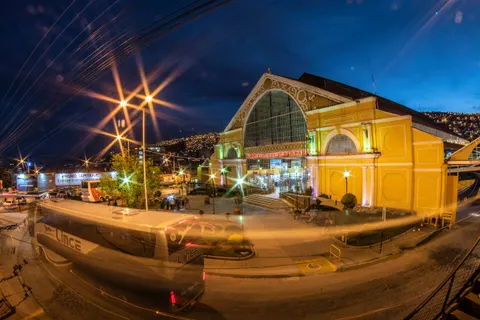
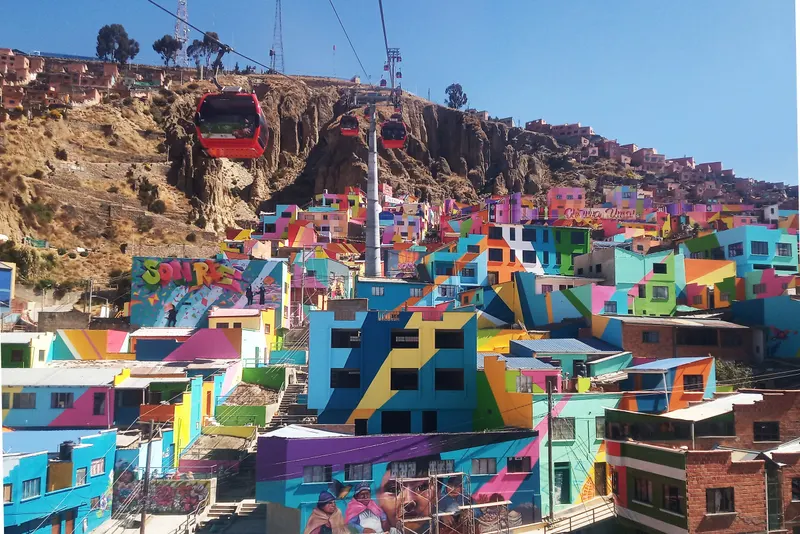
The first line (2014) climbs about 400 m in 11 minutes from Estación Central, the old railway station, over the Cementerio General and Chualluma, where four street artists painted about 160 houses in 2019. It tops out at 16 de Julio, where El Alto’s Thursday and Sunday market sets up.
2. Silver Line: along the rim
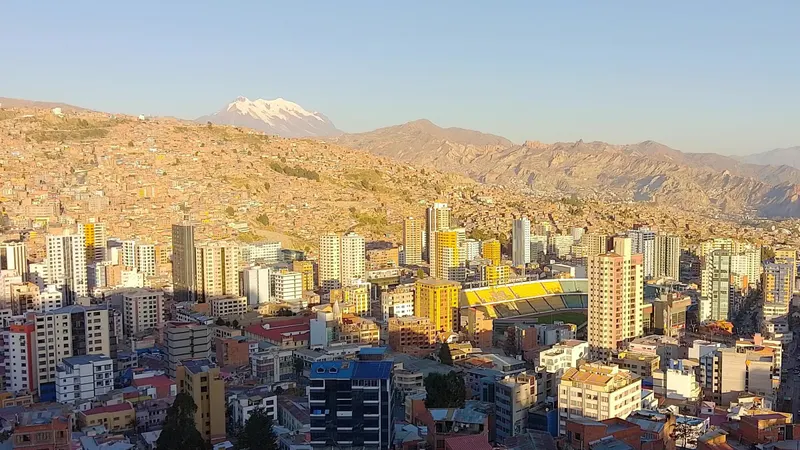
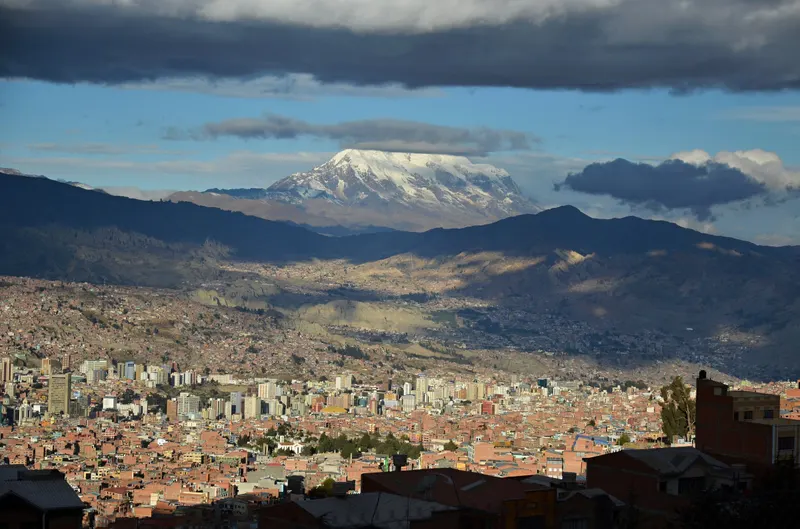
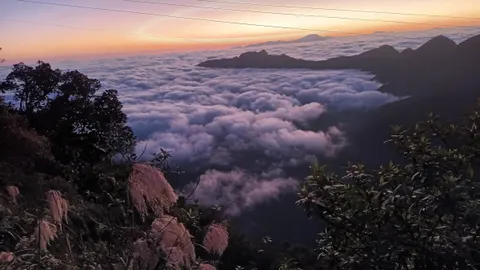
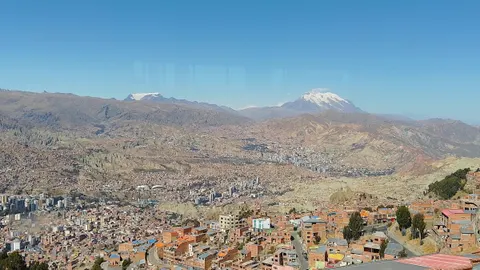
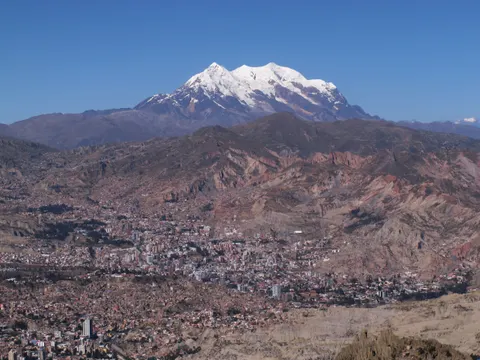
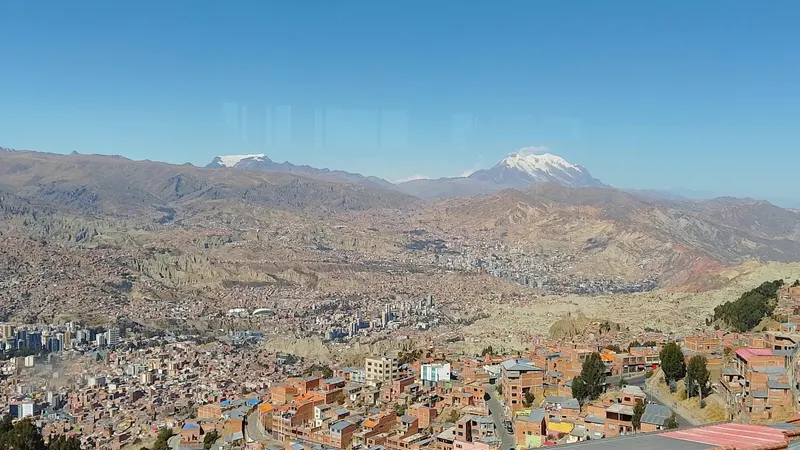
The newest line (2019) runs 12 minutes along El Alto’s edge at about 4,100 m, with the whole canyon below and Illimani behind it on clear days.
3. Yellow Line: the long drop to Sopocachi
It falls about 650 m in 17 minutes from Mirador to Libertador, with Illimani ahead on clear days. Get off at Sopocachi for the Montículo viewpoint, 350 m from the station.
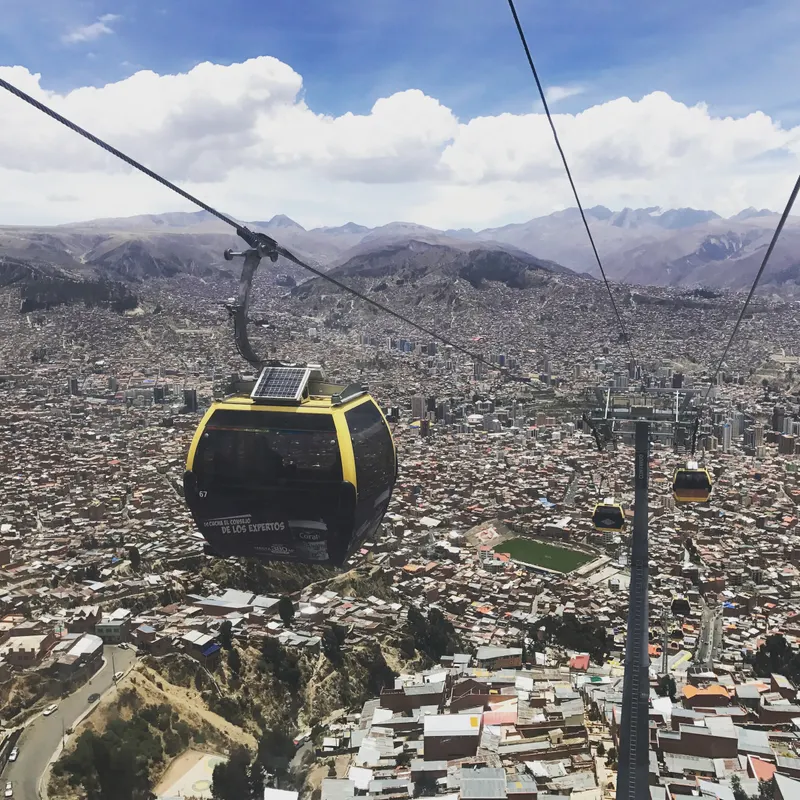
4. Blue Line: El Alto’s rooftops and market
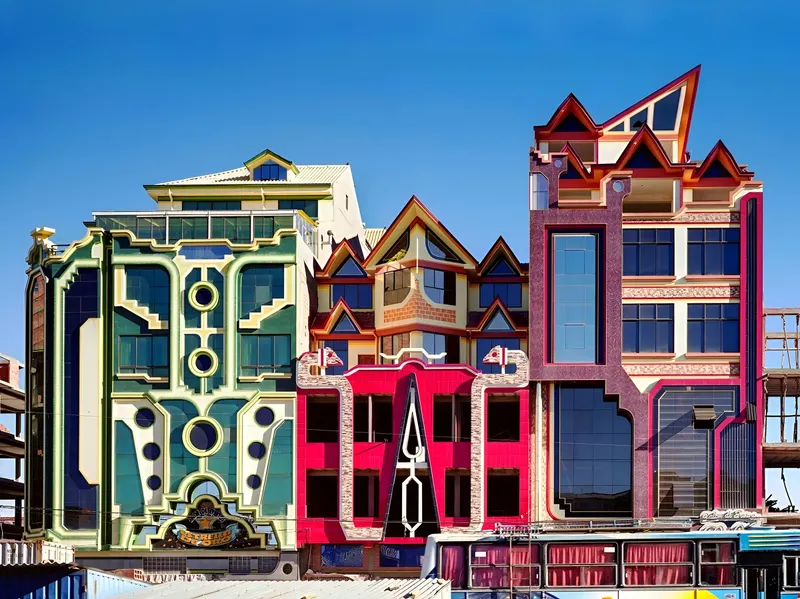
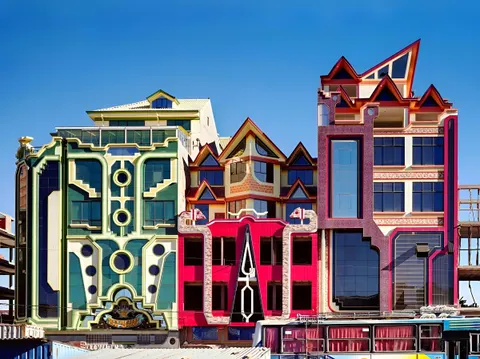
The longest ride (20 minutes) crosses El Alto at rooftop height, over the 16 de Julio market stalls. Our El Alto guide covers the market and the city’s decorated cholet buildings.
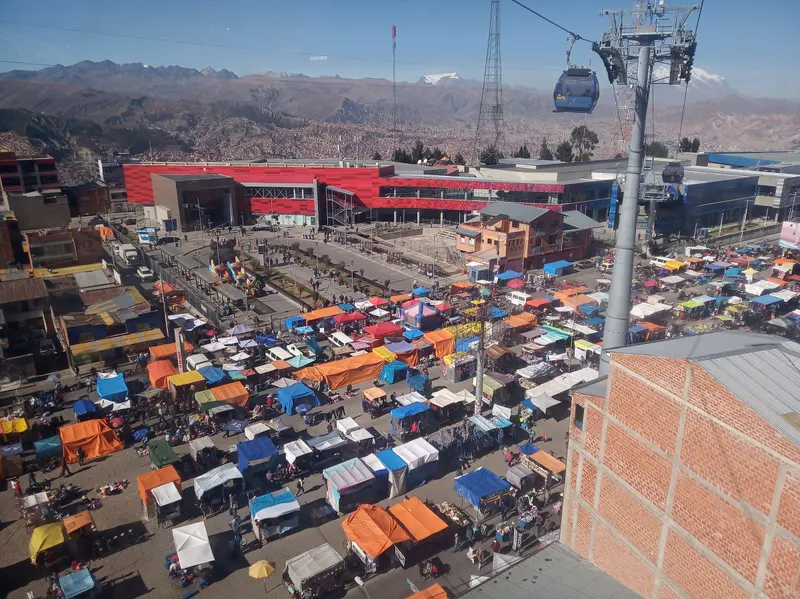
5. Purple Line: the fast way up
At 6 m/s, it’s the fastest link between downtown and El Alto. San José, the downtown terminal, is about 500 m from Plaza Murillo; on Sundays, ride up to Faro Murillo for cholita wrestling, a short taxi ride away.
6. Green Line: down to the Zona Sur
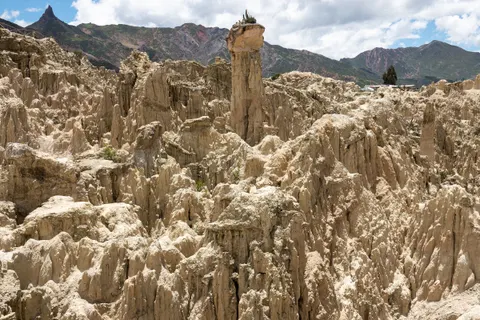
It descends to Irpavi, the lowest station (about 3,300 m) and 3.3 km in a straight line from the Valley of the Moon. Take a taxi from there; foreigners pay Bs 15 to enter (September 2026).
What to skip
The Brown Line, four minutes between two residential stations. Ride the Orange and White lines only if they’re on your way; the Red, Silver and Yellow lines have the better views.
A self-guided cable car route (half day, about US$1)
This route rides the three best lines, stops twice and ends near Plaza Murillo. Costs follow the official fare rules.
| Step | Line and stretch | Ride | Cost | What to do |
|---|---|---|---|---|
| 1 | Red, Central → 16 de Julio | 11 min | Bs 3 | Cemetery and Chualluma below; on Thursday or Sunday, exit for the market (re-entry Bs 3) |
| 2 | Silver, 16 de Julio → Mirador | 12 min | Bs 2 | The widest view of the canyon |
| 3 | Yellow, Mirador → Sopocachi | 10 min | Bs 2 | Exit, walk 350 m to the Montículo, eat in Sopocachi |
| 4 | Yellow, Sopocachi → Libertador | 7 min | Bs 3 | New entry |
| 5 | Sky Blue, Libertador → Prado | 10 min | Bs 2 | Ends about 560 m from Plaza Murillo |
That’s Bs 12 (about US$1) and about 50 minutes in the cabins, or three to four hours with the stops. For the Valley of the Moon, change to the Green Line at Libertador instead (Bs 2) and take a taxi from Irpavi.
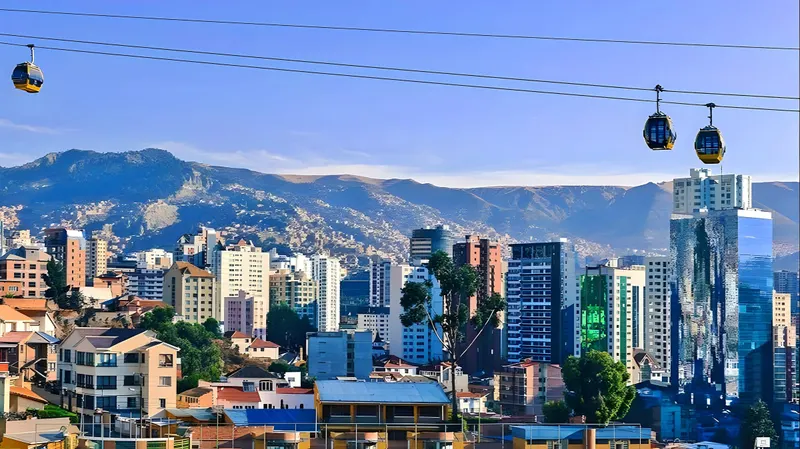
The full loop: 7 lines for Bs 15
Ride Prado → Av. Poeta (Sky Blue) → Plaza Villarroel (White) → Central (Orange) → 16 de Julio (Red) → Mirador (Silver) → Libertador (Yellow) → Prado (Sky Blue) without leaving the paid area. That’s one fare plus six transfers, Bs 15 (about US$1.25), for about 80 minutes of official ride time, or 1.5 to 2 hours in practice. A travel blog put the loop at Bs 21 in January 2025, so carry Bs 25 in change.
Which station is closest to the sights?
Straight-line distances we measured between station and sight.
| Going to | Nearest station | Distance |
|---|---|---|
| Plaza Murillo | San José (Purple), Prado (Sky Blue) | About 500 m, 560 m |
| Mirador Killi Killi | Monumento Busch (White, Brown) | About 650 m uphill; take a radio taxi |
| Main bus terminal | Central (Red, Orange) | About 450 m |
| El Alto airport | None | 1.6-1.8 km to Plaza Libertad or 6 de Marzo; taxi |
Guided cable car tours
The ride costs Bs 3, so book a tour for the guide, El Alto’s markets or the lift to the Valley of the Moon. Only one product in Viator’s cable car category has more than 20 reviews (September 2026), the third card below; the other two are city tours that ride several lines.
Best-reviewed tours that include the cable car
Book on Viator From $10City Tour plus Cable Car La PazFree cancellationCheck availability
 From $43Private City tour, Cable Car and Moon ValleyFree cancellationCheck availability
 From $22Cable Car, Cementery, Shaman and El Alto Adventure in La PazFree cancellationCheck availability
Prices in US$ per person from Viator as of Sep 30, 2026. They change; you see the final price before paying.
- City Tour plus Cable Car (from about $10): five lines and El Alto’s own witches’ market, from San Francisco church at 11:00 or 15:00, in English or Spanish, without hotel pickup.
- Private City tour, Cable Car and Moon Valley (from about $43): hotel pickup and cable car tickets included, plus the Valley of the Moon (Bs 15 entry extra) and the Witches’ Market.
- Cable Car, Cemetery, Shaman and El Alto (from about $22): meets at 14:00 on Calle Murillo, English only, with cable car tickets and the cemetery entry included.
Our La Paz tours guide compares the rest.
Is the La Paz cable car safe?
The worst passenger incident we found came on February 14, 2015, when a eucalyptus fell on an empty Yellow Line cabin and knocked the cable off its wheels; riders were stuck for about three hours, and about 19 had minor injuries. In July 2018 at least eight empty cabins collided before dawn without injuries. Spanish Wikipedia also records two deaths outside the cabins, a person who entered a restricted area in 2018 and a cleaning worker who fell in 2020. Lines get nightly maintenance and a yearly overhaul, and an international audit of five lines’ cables with the IDB and Bureau Veritas began on March 30, 2026; we haven’t seen results.
The US State Department rates Bolivia Level 2 and tells its staff to take extra care in El Alto because of petty crime, so keep your phone zipped away in full cabins. The UK Foreign Office reports express kidnappings by criminal taxis around the Cementerio General and Sopocachi, both served by stations; there, call a radio taxi with the company name and number on the roof.
Riding tips: altitude, cold and when to go
- Altitude: The CDC rates flying straight into La Paz as high risk, and the Red Line then adds about 400 m in 11 minutes. If you landed today, walk slowly at the top and skip alcohol for 48 hours; our altitude sickness guide covers soroche, as locals call it.
- Cold: El Alto’s average highs stay at 14-17 °C all year and its average lows fall below freezing from May to September, so bring a jacket.
- Views and crowds: May to October has the clearest skies (La Paz weather by month). On weekdays we’d avoid the commuter peaks, and after sunset on the rim we’d ride straight back down rather than wander 16 de Julio.
- Toilets: The operator lists them at 11 stations, including Central, 16 de Julio, Mirador, Sopocachi and Prado.
- Where to stay: Sopocachi (Yellow), the Prado (Sky Blue) and the old center near San José (Purple) all sit near a station. Compare them in our La Paz hotels guide and plan the rest with our La Paz travel tips.
Frequently asked questions
How much does the cable car cost in La Paz?
Bs 3 for the first line and Bs 2 for each transfer, about US$0.25 and US$0.17. A trip with one change costs Bs 5, and the 7-line loop Bs 15. Students, over-60s and people with disabilities pay Bs 1.50 with a preferential card. The rechargeable card costs Bs 30 with Bs 5 of credit. Guides that quote US$0.43 a ride are using the exchange rate from before June 2026.
Is it better to buy cable car tickets in advance?
No. Single rides aren't sold online or ahead of time, and a cabin leaves every 12 seconds, so there's nothing to reserve. Pay at the station booth in cash, by QR from a Bolivian bank app, or through the operator's Yala app. The only thing worth booking ahead is a guided tour, and you'd book it for the guide or the hotel pickup.
How long does the cable car round trip take?
The Red Line takes 11 minutes each way between Estación Central and El Alto, so up and back takes about half an hour with the wait at the booth (our estimate). Our half-day route spends about 50 minutes in the cabins. The full 7-line loop adds up to about 80 minutes of official ride time, or 1.5 to 2 hours once you count the transfers.
What is the best time to ride the cable car?
The dry season, May to October, gives the clearest views of Illimani. On weekdays, avoid the morning and evening commuter rush. Late afternoon on the Silver Line puts you on the rim for sunset, but El Alto drops below freezing on dry-season nights, so bring a jacket. Go on a Thursday or Sunday if you want to add the 16 de Julio market at the top of the Red Line.
Does the cable car go to El Alto airport?
No station serves El Alto International Airport. The closest ones, Plaza Libertad on the Blue Line and 6 de Marzo on the Purple Line, are about 1.6 to 1.8 km from the terminal in a straight line, which is too far with luggage at 4,000 m. Take a taxi or a transfer instead. Our El Alto airport guide compares the options.
Does the cable car run on Sundays, holidays and during protests?
Yes on Sundays. Since September 20, 2026, the lines run 06:30-22:30, the same hours as Monday to Saturday. Public holidays run 07:00-21:00. The whole system stops on election days, and single lines close for announced maintenance. In mid-May 2026 protests and vandalism halted six lines, all back by May 21, though the network carried 15.8 million passengers during 51 days of road blockades. Check the operator's Facebook page, @miteleferico, on the day.
How many cable car lines are there in Bolivia?
La Paz and El Alto have 10 lines and 26 stations, all run by the state company Mi Teleférico, which counts 36 because it lists each line's platform at an interchange separately. The same company operates one more line in Oruro, the Línea Turística Virgen del Socavón, a tourist cable car of about 800 m with two stations that opened in February 2018.
Keep planning