





























Quick answer
The fastest way from Cusco to La Paz, Bolivia is Avianca's daily nonstop flight, 1 h 15 min, from about US$214 one way. The cheapest is a direct overnight bus via the Desaguadero border, which leaves Cusco around 22:00 and takes 13-16 hours for about US$22-30. With two or three spare days, go via Puno and Copacabana and cross at Kasani instead. Fares are. Bolivia is one hour ahead of Peru.
On this page
- Cusco to La Paz compared: time, cost and border (September 2026)
- Cusco to La Paz by bus
- Via Puno and Copacabana: the Lake Titicaca route
- Crossing the Peru–Bolivia border
- Cusco to La Paz flights
- Lima to La Paz (and Arequipa)
- La Paz to Cusco or Puno
- Blockades and strikes: check before you go (September 2026)
- Which route should you take?
- Frequently asked questions
The road from Cusco to La Paz, Bolivia runs about 650 km (400 miles) via Puno and the Desaguadero border; in a straight line it’s 520 km (324 miles). Overland travelers arrive partly acclimatized, since Cusco sits at 3,399 m (11,152 ft) and Puno at 3,830 m (12,566 ft), higher than central La Paz at about 3,640 m (11,942 ft).
Prices are as of September 2026 and use the post-float rate of about Bs 12 per US dollar. Blockades shut this road for about seven weeks in May and June 2026 (details below). Our La Paz, Bolivia travel guide covers the city itself.
- Road distance
- About 650 km
- Direct bus
- 13-16 h
- Flight
- 1 h 15 min (Avianca)
- Borders
- Desaguadero or Kasani
- Time zone
- Bolivia 1 h ahead of Peru
Cusco to La Paz compared: time, cost and border (September 2026)
| Option | Border | Time | Price per person | Departs | Best for |
|---|---|---|---|---|---|
| Direct overnight bus | Desaguadero | 13-16 h | About US$22-30 (Bs 265-360); Inka Suite about US$42 | Cusco, nightly 22:00-22:30 | Tight budgets, few days |
| Bolivia Hop / Peru Hop | Kasani | 24 h minimum, with stops | From US$59 (about Bs 710) | Cusco, daily 21:30 | First land border |
| DIY via Puno and Copacabana | Kasani | 2-3 days with stopovers | Puno buses, then Bs 40-60 (US$3.30-5) to La Paz | Puno, mornings | Seeing Lake Titicaca |
| PeruRail Titicaca train + bus | Either | 10 h 30 min train, bus the next day | Premium; check PeruRail | Cusco, Wed, Fri, Sun | Scenery and comfort |
| Avianca flight | None | 1 h 15 min | From about US$214 one way | Daily | Short trips, blockades |
Departure times are Peru time. Add an hour for Bolivia.
Our pick
With two or more spare days, go via Puno and Copacabana and cross at Kasani, so you see both shores of Lake Titicaca and reach La Paz by day. On a budget with no days to spare, take the 22:00 direct bus. Fly if you have less than a week in Bolivia or the Altiplano roads are blocked.
Cusco to La Paz by bus
Direct overnight buses via Desaguadero
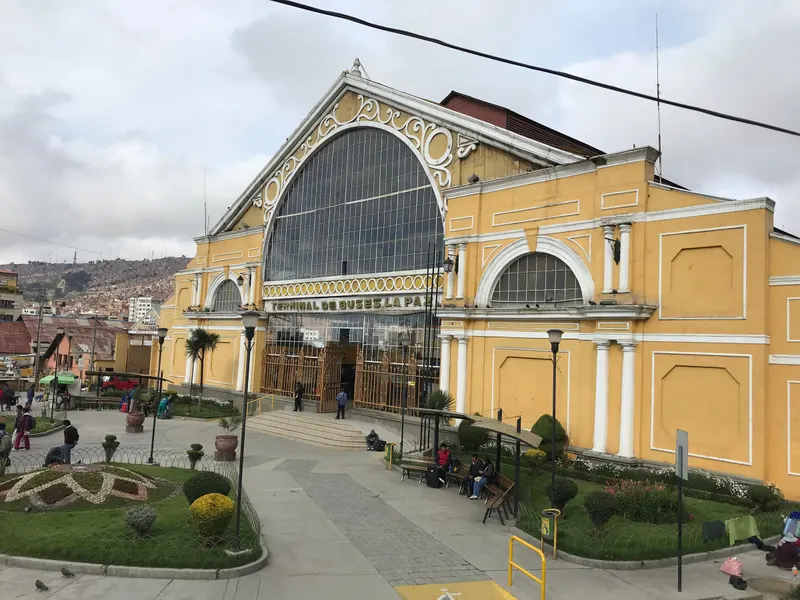
Four companies run direct buses from Cusco to La Paz, all leaving between 22:00 and 22:30 Peru time: Transzela (and its premium Inka Suite), Trans Salvador, Nuevo Continente and Tour Peru. They reach Desaguadero as the border opens and pull into the Terminal de Buses on Avenida Perú in La Paz around midday to mid-afternoon. Plan on 13-16 hours.
Regular seats cost about US$22-30 (Bs 265-360, or S/ 75-105) and the Inka Suite about US$42 (September 2026). Bolivian operators may raise prices after diesel jumped from Bs 9.80 to Bs 17.95 a liter on 18 September. Buses board at Cusco’s Terminal Terrestre on Avenida Luis Vallejo Santoni or, for some Transzela services, on Avenida Micaela Bastidas, so check your ticket. Everyone gets off at Desaguadero for passport stamps, and some services change buses there, so ask when you buy.
Bolivia Hop and Peru Hop: worth it?
Bolivia Hop and Peru Hop sell the same Cusco to La Paz pass, from US$59 (about Bs 710). The daily schedule runs Cusco 21:30, Puno 05:00-08:00, Kasani border 11:00, Copacabana 13:30-18:00 and La Paz around 22:30. That’s 24 hours at minimum; the pass stays valid for a year.
Pros
- Hotel pickups and help at the border
- Four and a half hours in Copacabana
- Starlink Wi-Fi on board, per the company
Cons
- Two to three times the direct bus fare
- Crosses Tiquina around 19:00, after dark for much of the year
We’d book it for a first land border crossing. Otherwise, public buses cover the same route for less and let you stop as long as you like.
Is the Cusco to La Paz bus safe?
The UK Foreign Office says “accidents involving public transport, especially long-distance buses, are common” in Bolivia and that companies aimed at tourists tend to have better standards, seatbelts included. Book one of those, wear the belt, and keep your passport and cash on your body. The FCDO also flags express kidnappings at overland border points, and Canada warns of petty crime at the La Paz terminal, so stay with your bus through the border and leave the terminal in a radio taxi (company name and phone number on the roof). More in our Bolivia safety guide.
Skip the Viator bus tickets
Viator lists La Paz-Cusco bus seats at about US$95, with no reviews, no refunds, and a title saying 07:30 over an itinerary that says 15:30. Trans Salvador, Nuevo Continente and Transzela sell seats at the terminal, on ticketsbolivia.com.bo or on redBus for US$22-42.
Via Puno and Copacabana: the Lake Titicaca route
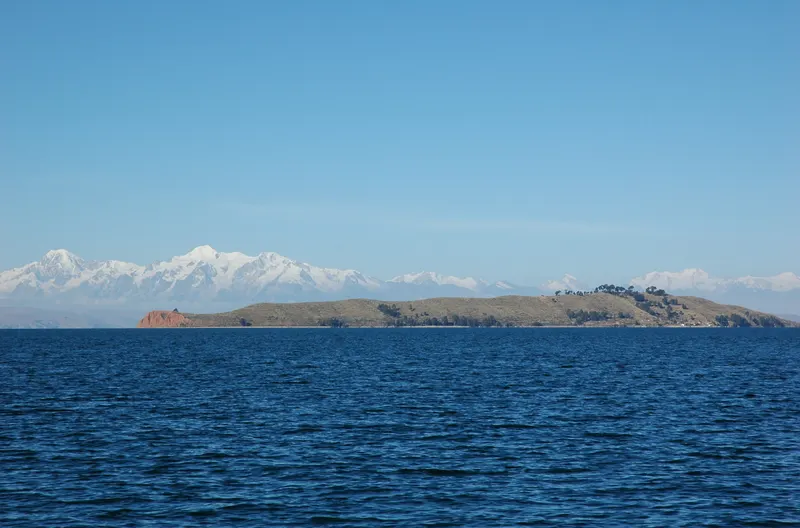
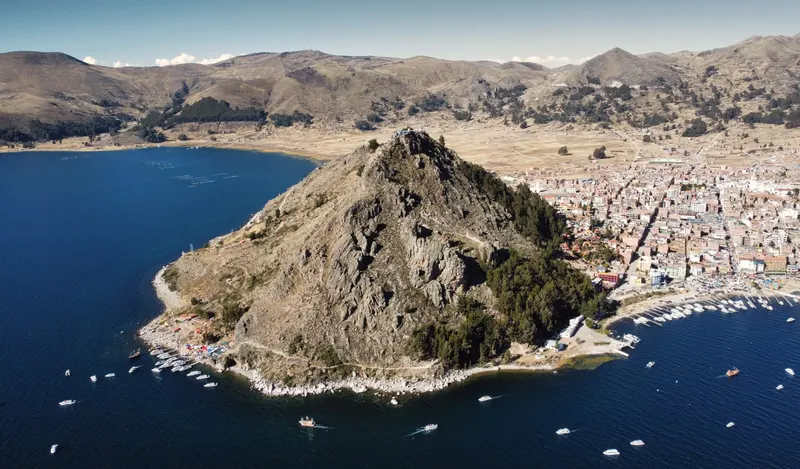
To see Lake Titicaca on the way from Cusco, sleep in Puno (Uros reed islands) and Copacabana (Isla del Sol), crossing at Kasani in between.
Cusco to Puno (Lake Titicaca) by train or bus
No passenger train runs from Cusco to La Paz. The closest is the PeruRail Titicaca to Puno, about 390 km from Cusco by road, which leaves Cusco on Wednesdays, Fridays and Sundays and takes about 10 h 30 min, with a three-course lunch and a stop at the La Raya pass. By road, Peru Hop runs overnight and Inka Express runs a daytime bus with stops at Andahuaylillas, Raqchi, La Raya and Pucará.
Puno to La Paz: Desaguadero or Kasani?
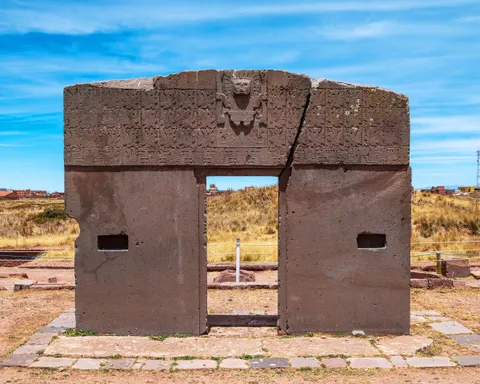
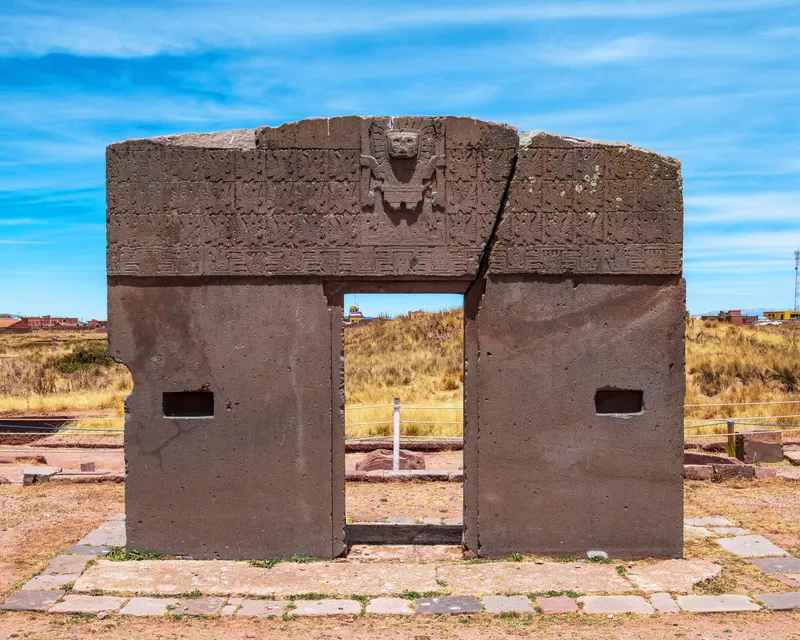
Via Desaguadero, the bus from Puno to La Paz takes about 6 hours and runs only by day because of border hours. In Bolivia the highway passes 1.5 km from Tiwanaku, but buses don’t stop; visit the ruins on a day trip from La Paz.
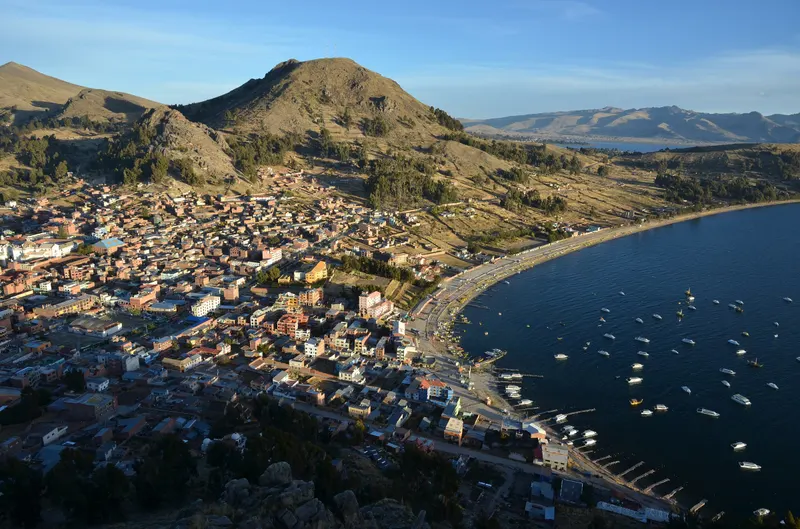
Via Kasani, buses from Puno reach Copacabana in 3-4 hours. As of February 2026, Trans Titicaca left Puno’s terminal at 06:00, 07:30 and 13:30 and Tour Peru at 07:00. Spend a night in Copacabana (hotels on Expedia) and take a boat to Isla del Sol.
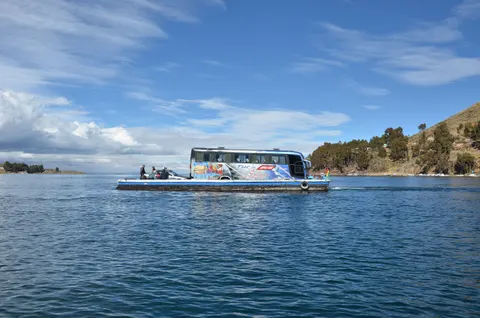
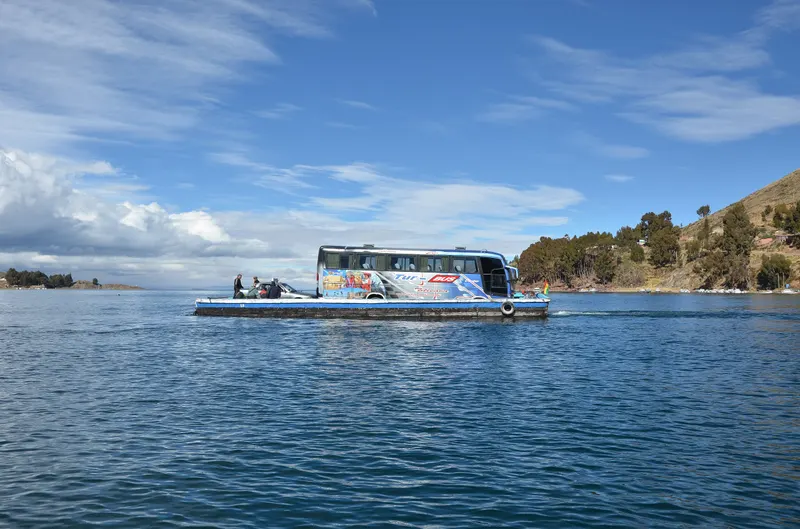
Buses from Copacabana reach La Paz in 3.5-4 hours for Bs 40-60 (about US$3.30-5). At the Strait of Tiquina you pay Bs 5 (about US$0.40; one May 2026 guide says Bs 2) for a launch while the bus crosses on a wooden barge. You arrive near La Paz’s Cementerio General, where the FCDO reports express kidnappings, so take a radio taxi onward.

No public boat runs from Puno to Bolivia, and we’d skip Viator’s catamaran package from Puno (3.86 from seven reviews, about US$430).
Make the crossing a Lake Titicaca stop
Book on Viator From $130Copacabana and Isla del Sol Tour from Puno (Whole Day)Free cancellationCheck availability
 From $59Full Day Guided Tour in Copacabana and Isla del SolFree cancellationCheck availability
 From $692 Day Trip From La Paz: Copacabana & Isla del Sol (Night in Isla del Sol)Free cancellationCheck availability
Prices in US$ per person from Viator as of Sep 30, 2026. They change; you see the final price before paying.
The Puno tour (from about US$130) covers Copacabana and Isla del Sol with a guide, lunch and island entry, and can drop you in La Paz at the end. The Bolivia Hop trips start in La Paz, for anyone who skipped the lake.
Private transfer from Puno
Groups of up to eight can book a private Puno-La Paz transfer from about US$320 per vehicle. It leaves Puno between 05:00 and 14:00, crosses at Desaguadero with a required change of vehicle, and takes about 7 hours; it had no reviews yet in September 2026.
Crossing the Peru–Bolivia border
Crossing from Peru into Bolivia usually takes 30-90 minutes, up to 2 hours in July and August (lapazlife.com and bolivianlife.com, 2026), and neither border opens at night. Get a Peruvian exit stamp and a Bolivian entry stamp, and check that the Bolivian one shows today’s date before you leave the window. Without a valid entry stamp, you’re fined on the way out.
Kasani (Yunguyo-Copacabana)
Kasani opens roughly 07:30-18:00 Peru time, or 08:30-19:00 in Bolivia. We found no official timetable from either country, and other guides say 08:00-20:00 or 08:00-21:00, so aim to cross between 10:00 and 15:00 Bolivia time. You walk a few hundred meters between posts, and Copacabana is about 8 km on.
Desaguadero
Every direct bus from Cusco, and the faster buses from Puno, cross this bridge over the Desaguadero River. Guides put the hours at roughly 08:00 to 19:30-20:30 Bolivia time (September 2026). Peru and Bolivia run separate passport controls, and a 2018 Wikivoyage report warns it’s easy to miss one, so get both stamps.
Entry rules for Bolivia
US citizens haven’t needed a visa since 1 December 2025 and can stay 90 days a year, per the US Embassy. British, Canadian, Australian and most EU passports are visa-free too, with different stay limits. Bring a passport valid six months past arrival with two blank pages, and your first night’s address.
Sources disagree on yellow fever. The CDC lists a certificate as required for all arrivals aged one and over, the UK only for travelers from a risk country. The CDC doesn’t recommend the vaccine for Cusco or Puno, but if you have the card, carry it. Our Bolivia visa guide covers each nationality and the SIGEMIG address registration.
Money at the border
On 30 September 2026 a US dollar bought about Bs 12 and a Peruvian sol about Bs 3.50. Border changers pay less, so change only enough for the first day. ATMs in small Bolivian towns can run dry, so reach Copacabana with some cash. The June float is explained in our Bolivian currency guide.
Cusco to La Paz flights
Avianca flies Cusco to La Paz nonstop seven times a week in 1 h 15 min, the only nonstop airline Kayak listed in September 2026. One-way fares started at about US$214 (about Bs 2,570) and round trips typically ran US$341-417, cheapest in May and most expensive in January and February. Guides that say no direct flight exists are out of date. BoA launched a La Paz-Cusco route in July 2025, but we couldn’t confirm a current schedule.
You land at El Alto airport, 4,061 m (13,325 ft), about 400 m above central La Paz. A taxi to the center takes 30-50 minutes and costs roughly Bs 70-150 (US$6-12.50); agree the fare first. See our El Alto airport guide and flights to La Paz, or compare Cusco-La Paz flights on Expedia.

For the salt flats, go through La Paz (La Paz to Uyuni); BoA’s 2025 Cusco-Uyuni flight is also unconfirmed. A 3-day Uyuni trip from Puno (from about US$380, 5.0 from 16 reviews) loops back to Puno.
Lima to La Paz (and Arequipa)
LATAM flies Lima to La Paz nonstop about five times a week in 1 h 54 min, from about US$149 one way on Kayak (September 2026). El Alto’s route list also shows BoA, which Kayak doesn’t. Lima is at sea level, and the CDC rates flying straight to above 3,400 m as high risk, with altitude sickness rates approaching 50% after a rapid ascent. Plan an easy first day (altitude sickness guide) or come overland from Cusco.
The La Paz-Lima bus covers 1,642 km in about 28 hours, changing buses at Desaguadero. Arequipa has no nonstop flight to La Paz, and its buses take 12.5-14 hours. For Lima, fly.
La Paz to Cusco or Puno
Buses to Cusco leave the La Paz terminal at 07:30 (Trans Salvador), 07:40 (Nuevo Continente Internacional), 15:00 (Trans Salvador) and 15:30 (Transzela), from about US$22 plus a Bs 2.50 terminal fee. The morning buses cross the Altiplano in daylight and reach Cusco late at night. Buses to Puno take about 6 hours and leave only between 07:00 and 15:30 to meet the border hours, from about US$12. Flights cost more in this direction, typically US$252-315 one way in September 2026 (compare La Paz-Cusco flights). Check Peru’s entry rules for your passport with Migraciones Perú.
Blockades and strikes: check before you go (September 2026)
This road closed for weeks in 2026
Blockades from 1 May to 23 June 2026 cut off La Paz and El Alto for about 53 days, and the state news agency ABI reported the Desaguadero and Copacabana roads clear on 25 June. In January the navy evacuated 127 tourists from Copacabana by boat during fuel protests. A state of exception runs to about mid-December 2026. La Paz’s terminal ran normally during the 28 September national drivers’ strike.
Ask your bus company the day before, read the US Embassy and UK Foreign Office alerts, and check the ABC highway agency’s road map (abc.gob.bo, which may only load inside Bolivia). The FCDO says not to try crossing a blockade in a vehicle. Our Bolivia travel status page has a dated roundup of blockades and roads.
Which route should you take?
Which one is for you?
- If you have one day: fly Avianca, or take the 22:00 direct bus.
- If you want to see Lake Titicaca: Puno, one night in Copacabana, then La Paz via Kasani. Our Lake Titicaca guide compares the two shores.
- If it’s your first land border: Bolivia Hop, for the help at the posts.
- If you’re a family or small group: the private transfer via Desaguadero.
- If you’re coming from Lima: fly, and keep your first day in La Paz easy.
- If the salt flats are next: read La Paz to Uyuni and compare Uyuni tours. Whole-trip routes are in our Bolivia itinerary.
Once you arrive, pick a neighborhood in our La Paz hotels guide or search La Paz hotels on Expedia, then plan your first days with our La Paz tours.
Frequently asked questions
Is it easy to cross the border from Peru to Bolivia?
Usually, yes. At Desaguadero or Kasani you get a Peruvian exit stamp, walk to the Bolivian post and get an entry stamp. It takes 30-90 minutes, and up to 2 hours in July and August. Neither post opens at night, so cross in daylight, ideally between 10:00 and 15:00 Bolivia time, and check that your Bolivian stamp shows the right date before you leave the window.
How long does it take to get from Cusco to La Paz?
About 1 h 15 min on Avianca's nonstop flight and 13-16 hours on a direct overnight bus via Desaguadero. Bolivia Hop takes at least 24 hours because it stops in Puno and Copacabana. The Lake Titicaca route on your own, with a night in Puno and another in Copacabana, takes two to three days.
Is there a direct bus from Cusco to La Paz?
Yes. Transzela, Trans Salvador, Nuevo Continente and Tour Peru leave Cusco between 22:00 and 22:30 and reach La Paz around midday to mid-afternoon via the Desaguadero border. Expect about US$22-30 on regular buses and about US$42 for Transzela's Inka Suite. Everyone gets off at the border for passport stamps, and some services change buses there.
Is there a train from Cusco to La Paz?
No passenger train crosses the Peru-Bolivia border. PeruRail's Titicaca train runs from Cusco to Puno on Wednesdays, Fridays and Sundays in about 10 h 30 min, and from Puno you continue by bus, either via Desaguadero in about 6 hours or via Kasani and Copacabana. Train plus bus takes two days, against 13-16 hours on the direct bus.
Do I need a visa for Bolivia if I'm coming from Peru?
Not with a US, UK, Canadian, Australian or most EU passport. Americans have entered visa-free since 1 December 2025. Your passport must be valid for six months after arrival, and officers may ask where you're staying the first night. Other nationalities are covered in our Bolivia visa guide.
Is there a time difference between Peru and Bolivia?
Yes. Bolivia is one hour ahead of Peru all year. Bolivia uses UTC-4 and Peru UTC-5, and neither observes daylight saving time. Bus companies print timetables in either country's time, so a bus due at 12:00 by one clock arrives at 13:00 by the other. Set your phone forward at the border, because Copacabana's boats to Isla del Sol (usually 08:30 and 13:30) run on Bolivian time.
Should I stop in Puno or Copacabana?
Both, if you have the days. Puno, on the Peruvian shore, is the base for the Uros reed islands and Taquile. Copacabana, on the Bolivian shore, is the base for Isla del Sol and its Inca ruins. Crossing at Kasani lets you sleep in one and then the other on the way to La Paz. Our Copacabana guide covers the Bolivian stop.
How much is a flight from Cusco to La Paz?
In September 2026 Kayak showed one-way fares from about US$214 (about Bs 2,570) and typical round trips of US$341-417 on Avianca, the only nonstop airline on the route. May was the cheapest month, January and February the most expensive. The reverse direction costs more, with typical one-way fares of US$252-315 from La Paz to Cusco.
Keep planning