



Quick answer
The best things to do in La Paz, Bolivia are riding Mi Teleférico (Bs 3, about US$0.25) up to El Alto, walking the historic center from Plaza Murillo to the Witches' Market, catching sunset at Mirador Killi Killi and walking Valle de la Luna (Bs 15). Once you have acclimatized, add a day trip to the Death Road or Tiwanaku. Plan three to four days and keep day one easy, because the center sits at about 3,640 m.
On this page
- Best things to do in La Paz, Bolivia by type of traveler
- The historic center (items 1-9)
- Viewpoints and neighborhoods (items 10-12)
- El Alto: markets, cholets and cholitas (items 13-15)
- Nature on the edge of the city (items 16-18)
- Day trips worth the early alarm (items 19-22)
- La Paz, Bolivia nightlife and evenings (item 23)
- How many days in La Paz, Bolivia: 1-day and 3-day plans
- What’s on by day of the week
- How much things cost in La Paz (September 2026)
- When to go, and festivals worth timing
- What to skip
- Where to stay for sightseeing
- Frequently asked questions
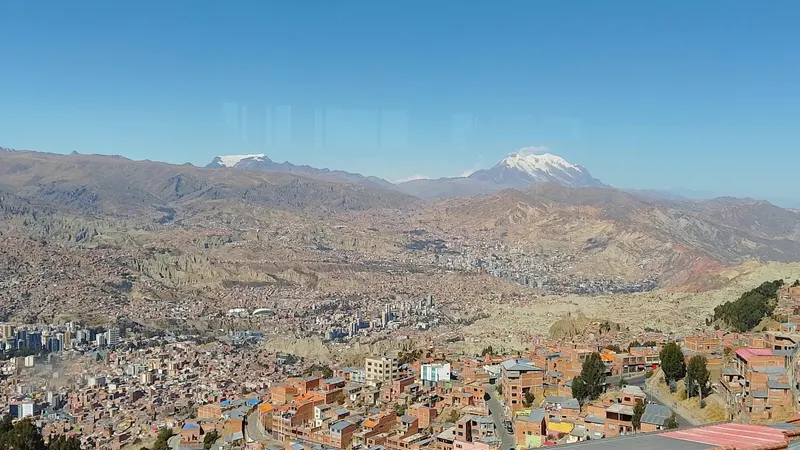
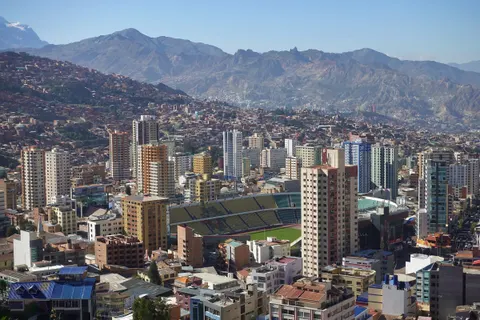
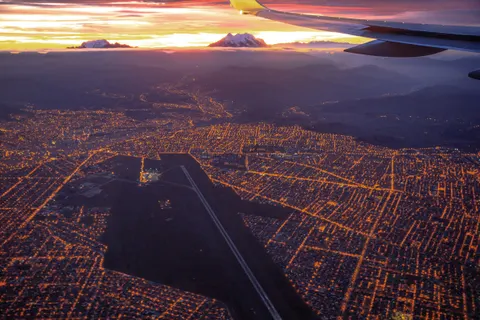
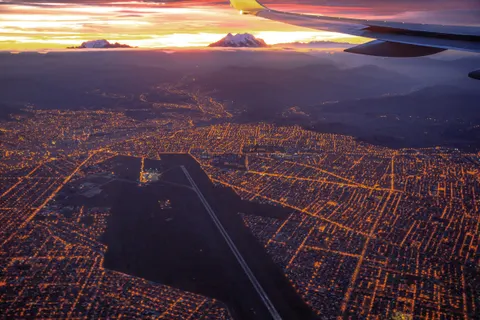
La Paz, Bolivia is the country’s seat of government (Sucre is the constitutional capital), built in a canyon that drops from El Alto (about 4,150 m) to Zona Sur (about 3,250 m). The historic center sits at about 3,640 m (11,940 ft), so every plan on this page starts with a slow first day.
Each of the 23 things to do below lists cost, time, place and our verdict, with prices checked on 30 September 2026 at about Bs 12 per US$1. The boliviano has floated since 26 June 2026, so any guide still dividing by 7 is out of date. For everything else, see our La Paz travel guide.
- Altitude
- about 3,640 m
- Cable car
- Bs 3 (+Bs 2 transfer)
- Days needed
- 3 to 4
- Best season
- May to October
- Exchange
- about Bs 12 per US$ (Sep 2026)
Current conditions (September 2026)
A state of exception has been in force since 20 June 2026 (the UK Foreign Office says 21 June) and now runs to about mid-December, with curfews possible if the government declares a state of siege. Blockades cut off La Paz for about 53 days in May and June, the US Embassy warned of calls for new fuel protests on 9 September, and diesel jumped from Bs 9.80 to Bs 17.95 a liter on 18 September, so expect higher taxi and tour prices. Keep a buffer day before international flights and check whether La Paz is safe right now. US citizens have needed no visa since 1 December 2025 (Bolivia visa rules).
Best things to do in La Paz, Bolivia by type of traveler
Which one is for you?
- If you have half a day: the Red Line to El Alto, then Plaza Murillo and the Witches’ Market (items 1, 2 and 4).
- If you want the classic photo: Killi Killi at sunset (10) and Valle de la Luna (16).
- If you’re after adrenaline: the Death Road, after two nights in the city (19).
- If you love culture: MUSEF (6), Sunday cholitas wrestling (15) and Tiwanaku (20).
- If you’re on a budget: items 1 to 4, 9 to 11 and 13 cost Bs 20 or less, and six of them are free.
- If you have kids: the cable cars, Valle de la Luna and the Pipiripi children’s museum (Bs 3.50, Wednesday to Sunday).
If you only have room for ten, make them the Red Line cable car, Plaza Murillo, the San Francisco rooftops, the Witches’ Market, MUSEF, sunset at Killi Killi, the Feria 16 de Julio, cholitas wrestling, Valle de la Luna and the Death Road.
| Tour | From | Best for | Check availability |
|---|---|---|---|
| City Tour plus Cable Car La PazFree cancellation | $10 | Best first-day intro with cable car | Check price |
| La Paz City Walking Tour Including Historical StreetsFree cancellation | $5 | Cheapest guided walk | Check price |
| Private City tour, Cable Car and Moon ValleyFree cancellation | $43 | Private half day with Valle de la Luna | Check price |
| La Paz Food and Beer TourFree cancellation | $37 | Best evening | Check price |
Prices in US$ per person from Viator as of Sep 30, 2026. They change; you see the final price before paying.
The historic center (items 1-9)
The old center tilts, from about 3,645 m at Plaza San Francisco to about 3,600 m at Plaza del Estudiante, so on day one walk downhill and take a taxi back up.


1. Ride Mi Teleférico’s Red Line to El Alto
- Cost
- Bs 3 (about US$0.25)
- Time
- 1 to 2 hours
- Where
- Estación Central, Red Line
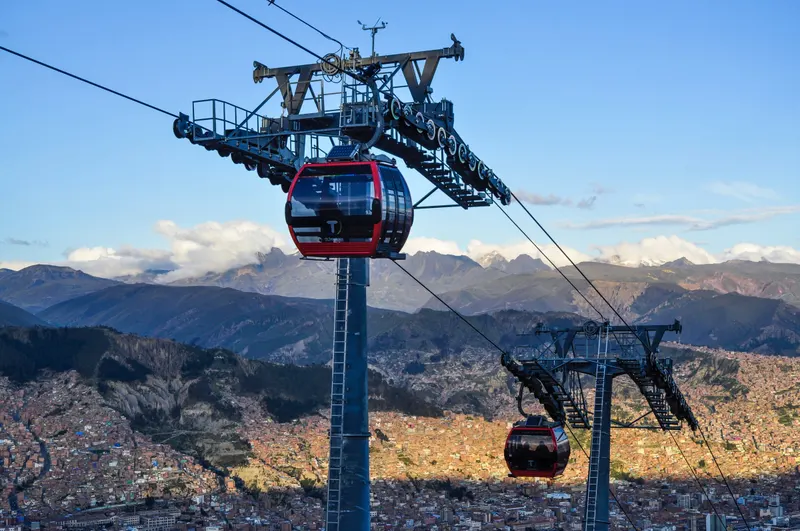
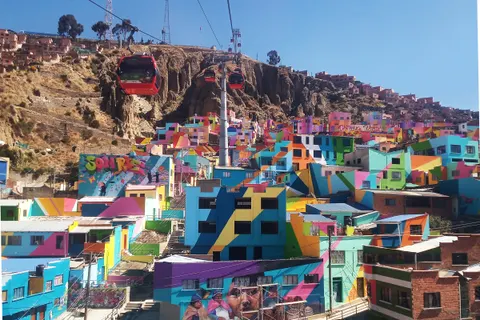
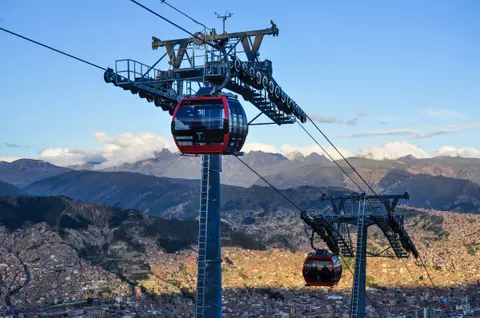
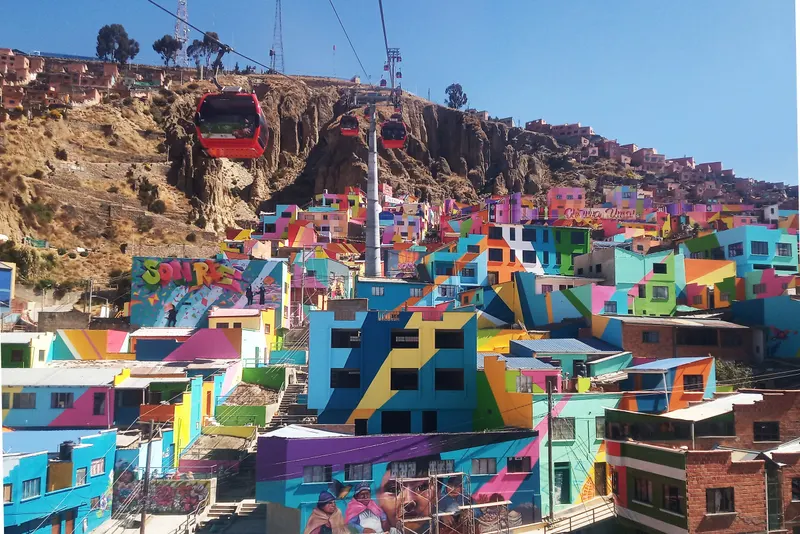
La Paz’s 10 cable-car lines, about 30.6 km in all, form what Wikipedia calls the longest aerial cable car system in the world. The Red Line (2014) climbs about 400 m in 11 minutes from Estación Central over Chualluma, where about 160 houses were painted with murals in 2019. At 16 de Julio, switch to the Silver Line along El Alto’s rim and then the Yellow Line down to Sopocachi, a loop of Bs 7 (about US$0.60) if you change lines without leaving the stations. Pay in coins or small notes; QR needs a Bolivian bank app. Cabins run 06:30 to 22:30 daily, Sundays included since 20 September 2026, and 07:00 to 21:00 on public holidays.
Verdict: Do it on day one, outside commuter hours. No other Bs 3 in Bolivia shows you as much.
2. Plaza Murillo and the clock that no longer runs backwards
- Cost
- Free
- Time
- 30 minutes
- Where
- Casco Viejo, the old town
The Palacio Quemado, the president’s office again since Rodrigo Paz took office in November 2025, faces the domed Legislative Palace (1905) and the Cathedral across a square named for Pedro Domingo Murillo, an independence leader hanged in 1810. We found no public visits to either palace, so you see them from the square. The clock on the Legislative Palace pediment ran backwards from 2014 until workers reset it around 6 November 2025, two days before Paz’s inauguration. The Museo Nacional de Arte stands on a corner of the plaza, and the Teatro Municipal (1845) is a short walk away.
Verdict: Thirty minutes for the buildings and the pigeons.
3. Climb the rooftops of the Basilica of San Francisco
- Cost
- Bs 20 suggested (about US$1.70)
- Time
- 1 hour
- Where
- Plaza San Francisco
Franciscans founded a convent here in 1548. The present church went up between 1743 and 1790 in a mestizo baroque that works Andean motifs into Spanish forms. The museum visit crosses the cloisters and climbs onto the roof among terracotta tiles, stone pinnacles and the dome. Foreigners pay a suggested Bs 20 (Bolivians Bs 10). It opens Monday to Saturday; listed hours vary (09:00 to 18:00 or 10:00 to 17:00), so arrive before 16:30.
Verdict: Worth the Bs 20 for the roof alone.
4. Browse the Witches’ Market and Calle Sagárnaga
- Cost
- Free to browse
- Time
- 45 minutes
- Where
- Calle Linares, Rosario
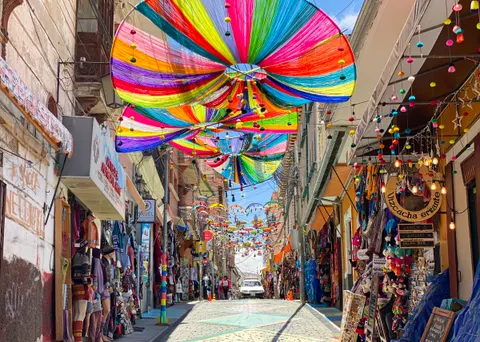
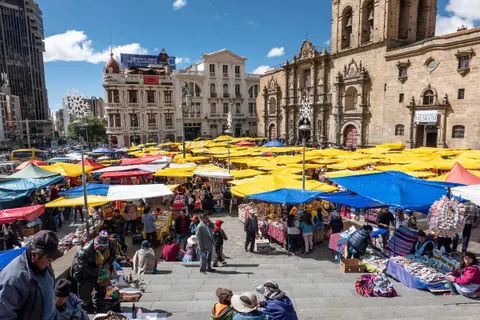
The stalls on Calle Linares sell ch’alla offerings, amulets, incense and dried llama fetuses (sullus), which paceños bury under new buildings as an offering to the Pachamama. Most sellers are Aymara women (chifleras) who supply local customers; one of them told the EFE news agency in 2024 that foreign tourists coined the “witches” name. Sagárnaga is the street for alpaca and weavings, and the Coca Museum (Linares 906) is on the same block. Ask before photographing a stall. Our Witches’ Market guide explains each object, and the cholitas of La Paz covers the women behind the stalls.
Verdict: Short and free. Pair it with San Francisco the same morning.
5. Walk colonial Calle Jaén
- Cost
- Bs 20 for foreigners (2024 figure)
- Time
- 1 to 2 hours
- Where
- Calle Jaén, Casco Viejo
This single pedestrian block of cobbles and colonial houses holds four municipal museums: the Costumbrista, the Casa de Murillo, the Museo de Metales Preciosos (pre-Columbian gold and silver) and the Museo del Litoral, about the coast Bolivia lost to Chile. Buy tickets at the Museo Costumbrista and ask whether one covers all four. The city’s last published fee for foreigners was Bs 20 (about US$1.70) in November 2024; under-18s and over-60s go free. The museums open Tuesday to Saturday. The private musical instruments museum on the same street charges separately.
Verdict: The prettiest street in the center, museums or not.
6. Spend a morning at MUSEF (and pick one more museum)
- Cost
- Bs 35 (about US$2.90)
- Time
- 1.5 hours
- Where
- Calle Ingavi 916
MUSEF, Bolivia’s national ethnography and folklore museum, fills the 1730 palace of the Marqueses de Villaverde, about 220 m from Plaza Murillo. Its 30,000 or so masks, textiles and featherwork pieces make a good primer for El Alto or a festival. The museum’s own site charges foreigners Bs 35, Bolivians Bs 5 and under-18s nothing, and opens weekdays 08:30 to 16:30 and weekends 09:00 to 13:00; the city’s tourism portal lists Bs 20 and different hours. For a second museum, the Museo Nacional de Arte on Plaza Murillo hangs colonial painting by Melchor Pérez de Holguín (Bs 20 for foreigners, Tuesday to Saturday, per the city).
Verdict: Of all the museums in La Paz, Bolivia, make MUSEF your first, on a weekday.
7. Eat your way through Mercado Lanza
- Cost
- Cash, small notes
- Time
- 1 hour
- Where
- Next to Plaza San Francisco
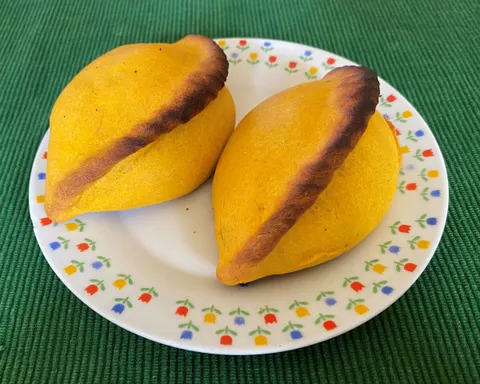
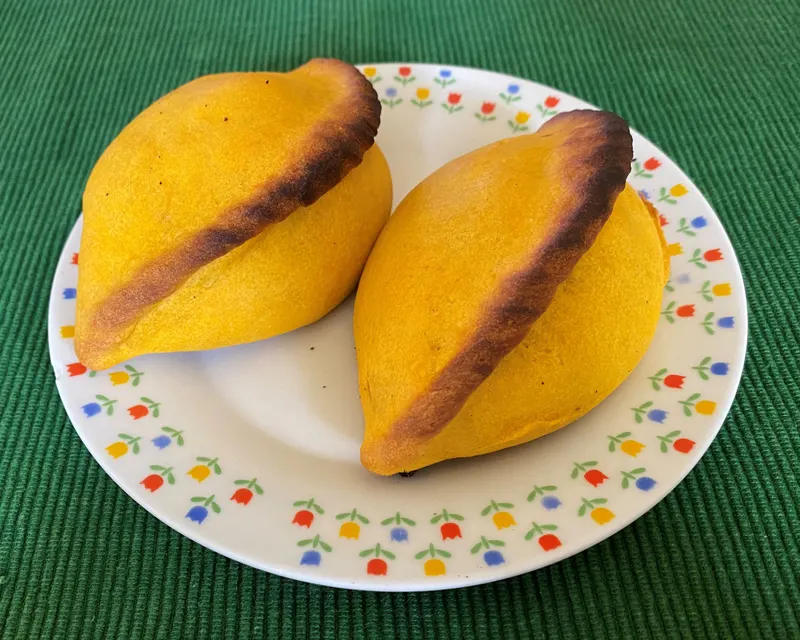
Mercado Lanza opens onto Plaza San Francisco, and the top floor of its 2010 building sells juices, salteñas and anticuchos (grilled beef heart). The salteña, a baked pastry around a soupy meat filling, is the city’s mid-morning snack; one chain sold them for Bs 8.50 (about US$0.70) in February 2025. The CDC tells travelers to eat food served steaming hot and to avoid ice, raw salsas and juice squeezed by others, so we’d leave the juice counters for later in the trip. Our guide to what to eat in La Paz covers the other markets.
Verdict: Come mid-morning, before the salteñas sell out.
8. Join a walking tour (from about US$5)
- Cost
- From about US$5
- Time
- 2.5 to 3 hours
- Where
- Plaza San Pedro or Plaza Murillo
The Red Cap walking tour meets in Plaza San Pedro and runs 2.5 hours from about US$5. The Be a Local tour is a private 2- to 3-hour walk from Plaza Murillo from about US$8, and on Thursdays and Sundays it adds the cable car, El Alto’s market and cholitas wrestling. Our La Paz tours guide compares the rest.
Verdict: Book one for your first afternoon, when a guide’s slow pace helps most.
9. Walk El Prado and meet the zebras
- Cost
- Free
- Time
- 45 minutes
- Where
- Av. 16 de Julio (El Prado)
El Prado, officially Avenida 16 de Julio (the date of the city’s 1809 revolution), runs half a kilometer of gardens and statues from the Simón Bolívar monument (1925) to Plaza del Estudiante. Walk it downhill from San Francisco; the 1.3 km loses about 40 m. At busy crossings you’ll meet the cebras, young people in zebra suits from a city road-safety program that began in 2001.
Verdict: An easy first-day walk, downhill all the way.
Viewpoints and neighborhoods (items 10-12)


10. Watch sunset from Mirador Killi Killi
- Cost
- Free
- Time
- 1 hour with the climb
- Where
- Villa Pabón, 1 km from Plaza Murillo
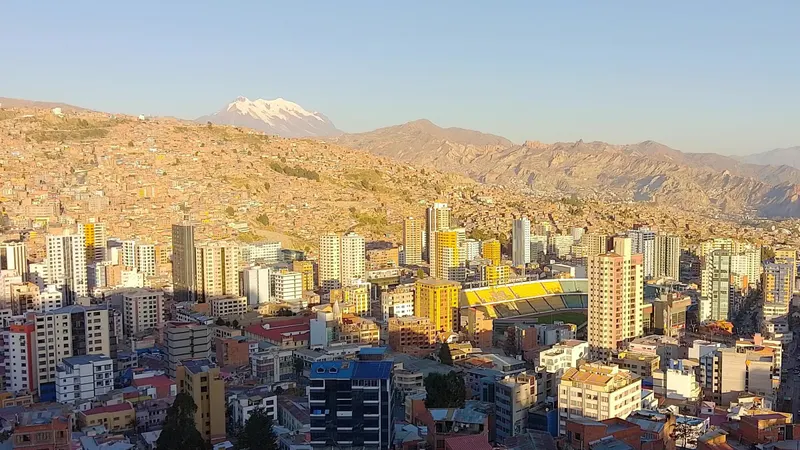
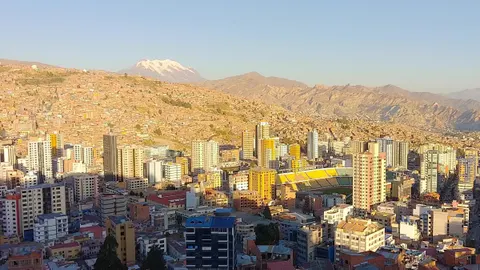
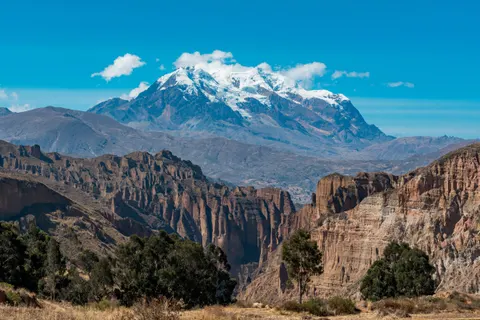
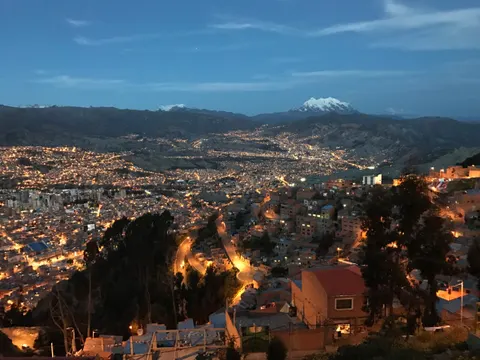
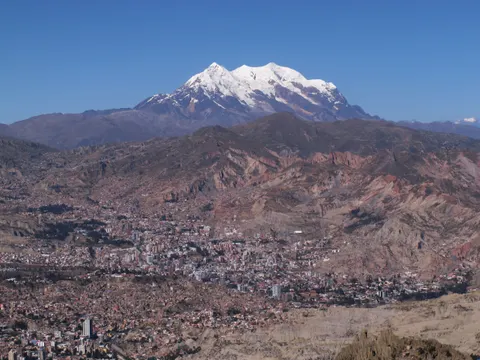
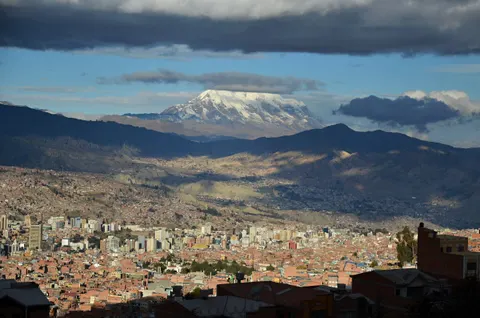
Killi Killi is a free municipal park on a hilltop in Villa Pabón, a 1 km walk from Plaza Murillo with about 80 m of climbing. From about 3,690 m you look down on the Hernando Siles stadium and downtown, with Illimani behind. Túpac Katari made the hill his headquarters during the 1781 siege of La Paz. Sunset falls around 18:10 in June and 19:05 in December, but from here the sun drops behind the El Alto rim about 30 minutes earlier. Walk up in daylight and take a radio or app taxi down. Our La Paz viewpoints guide covers the others.
Verdict: The best free view in La Paz. Arrive an hour before sunset.
11. Sopocachi and the Montículo
- Cost
- Free
- Time
- 1 to 2 hours
- Where
- Av. Ecuador, Sopocachi
The Montículo, a hilltop park on Avenida Ecuador, is entered through a carved stone gateway dated 1776 and sits about 500 m (a seven-minute walk) from the Yellow Line’s Sopocachi station, where the loop in item 1 ends. For coffee or dinner, head to the cafés around Plaza Abaroa. The UK Foreign Office lists Sopocachi among areas with reported express kidnappings by criminal taxis, so use radio taxis or apps at night.
Verdict: End the item 1 loop here and stay for dinner.
12. Street art at the Cementerio General
- Cost
- Tourist fee (amount unconfirmed)
- Time
- 1 hour
- Where
- Red Line, Cementerio station
In 2018 the Ñatinta festival brought 37 artists to paint murals on the niche walls of La Paz’s main cemetery. On 8 November, the Fiesta de las Ñatitas, families bring the skulls they keep at home (ñatitas) to be honored. Go by day, because the UK Foreign Office names the area in its express-kidnapping warnings. The cable car, cemetery and El Alto tour includes the cemetery entry and cable-car fares from about US$22.
Verdict: An hour’s stop on the Red Line.
El Alto: markets, cholets and cholitas (items 13-15)
El Alto, a separate city of about 885,000 people, sits on the altiplano at about 4,150 m, where July nights average about -4 °C. The US government tells its staff to take extra care there because of petty crime, so go by cable car, in daylight, with only the cash you need.


El Alto tours with the cable car
Book on Viator From $22Cable Car, Cementery, Shaman and El Alto Adventure in La PazFree cancellationCheck availability
 From $35Cholet Tour - Andean Architecture and Culture - El AltoFree cancellationCheck availability
Prices in US$ per person from Viator as of Sep 30, 2026. They change; you see the final price before paying.
13. Get lost in the Feria 16 de Julio (Thursdays and Sundays)
- Cost
- Free to browse
- Time
- 2 to 3 hours
- Where
- 16 de Julio station, El Alto
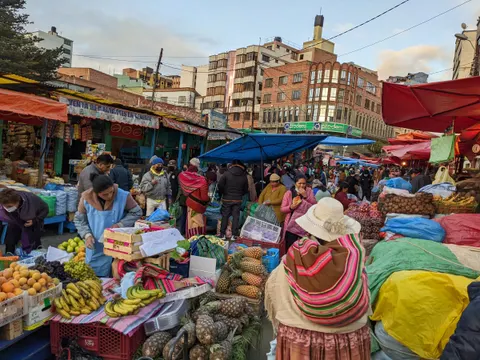
Every Thursday and Sunday the streets around the Red Line’s top station fill with a flea market that Spanish Wikipedia puts at around 200 blocks. The Red, Blue and Silver lines all stop at 16 de Julio, so ride up on the Red and leave along the rim on the Silver (a fresh Bs 3, since you’ve left the station). The day can shift for elections.
Verdict: Plan a Thursday or Sunday around it.
14. See the cholets of El Alto
- Cost
- Free, or about US$35 on a tour
- Time
- 1 to 3 hours
- Where
- El Alto
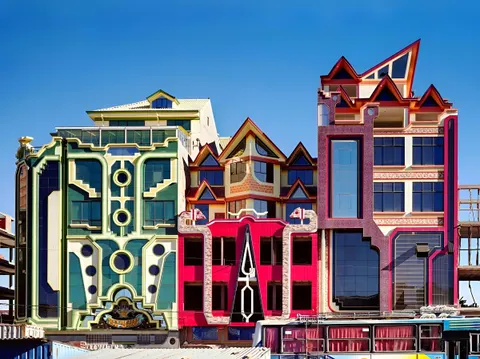
Cholets are El Alto’s neo-Andean buildings, façades in green, pink and red covered in geometric Andean motifs. Aymara merchants commission them, usually with shops at street level, an events hall above and the owner’s home on the roof. Freddy Mamani is the best-known architect, and El Alto has dozens of them. Interiors are private, but the Cholet tour takes you inside one, from about US$35 for 3 hours.
Verdict: Take the tour to see a party hall from the inside.
15. Watch cholitas wrestling on a Sunday
- Cost
- Under Bs 20 to about Bs 80 (US$7)
- Time
- Half a day with transport
- Where
- El Alto, venues vary
Cholitas in bowler hats and polleras have wrestled in El Alto since the early 2000s. The municipal show returned to the Multifuncional “Heriberto Gutiérrez” on 26 July 2026 and runs Sundays from 15:00 at “popular prices,” while private promoters sell tourist shows most afternoons around 17:00 at other venues. The Bolivian Life travel site (August 2026) puts door tickets under Bs 20 for locals and Bs 50 to 80 (about US$4 to US$7) for tourists. Viator’s most-reviewed cholitas wrestling package rates only 3.95, from about US$22 with transport. Our cholita wrestling guide compares the shows.
Verdict: Pick Sunday’s municipal show for the local crowd. A 17:00 show ends after dark, so plan your ride back.
Nature on the edge of the city (items 16-18)
Valle de la Luna sits about 340 m below the center; save the higher Valle de las Ánimas and Muela del Diablo for day three or later.


Half-day valley tours
Book on Viator From $85Valle de Las Animas, Moon Valley and Killi Killi half day tourFree cancellationCheck availability
 From $22.14Mystical Afternoon in the Valley of Souls half-day tourFree cancellationCheck availability
Prices in US$ per person from Viator as of Sep 30, 2026. They change; you see the final price before paying.
16. Walk the trails of Valle de la Luna
- Cost
- Bs 15 (about US$1.25)
- Time
- Half a day
- Where
- Mallasa, about 12 km south by road
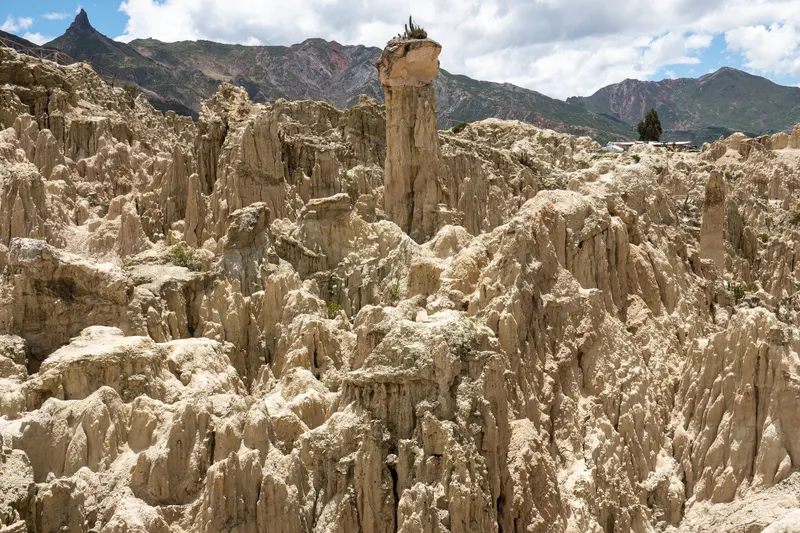
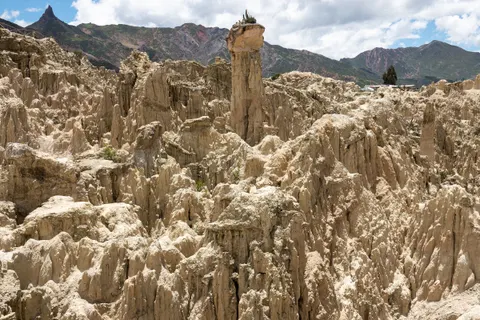
This municipal park of clay spires in Mallasa (Chile has another Valle de la Luna) has walkways on two loops of about 15 and 45 minutes. Foreigners pay Bs 15, Bolivians Bs 3 and children Bs 1. The city lists 09:00 to 18:00 and Google 09:00 to 17:00, so arrive by 16:30. Minibuses signed “Mallasa” charge Bs 3.50 (about US$0.30, the city fare since December 2025); a taxi cost Bs 45 to 55 in January 2025, before fuel went up.
Verdict: Half a day covers it. Go after lunch and finish at Killi Killi for sunset, as in day 2 of our plan below.
17. Hike Valle de las Ánimas
- Cost
- Free on your own, about US$22 guided
- Time
- 3 to 4 hours
- Where
- Ovejuyo, southeast La Paz
The Valle de las Ánimas (“valley of souls”) is a 2,538-hectare protected area of fluted rock needles above Ovejuyo, at about 3,965 m. A Chasquipampa minibus reaches the trailhead, and AllTrails lists a 7 km loop that takes 3 to 4 hours. We’d go with a guide or a group; the Valley of Souls afternoon tour includes transport and a bilingual guide from about US$22.
Verdict: Our pick for a real hike without leaving the city, from day three.
18. Hike to the Muela del Diablo
- Cost
- Free, plus Bs 3.50 minibus
- Time
- Half a day
- Where
- El Pedregal, Zona Sur
The Muela del Diablo (“devil’s molar”) is a volcanic neck about 150 m tall above Zona Sur, listed at anywhere from 3,825 m to about 3,900 m. Minibus 288, signed “Pedregal”, runs from Calle Murillo in about 40 minutes. From the cemetery at El Pedregal a zigzag road climbs about 330 m to the Aymara hamlet of Chiaraque and the base of the rock, 1 to 1.5 hours up. The tooth itself is roped climbing, so hikers stop at the base. The city asks visitors to be off the hill by 18:00. Watch for stray dogs in the village, and carry water, since the trail has none.
Verdict: For fit hikers after acclimatizing; others can admire it from Valle de la Luna.
Day trips worth the early alarm (items 19-22)
Most of these day trips bring you back to sleep in La Paz. The Death Road starts at 4,650 m and Chacaltaya tops 5,300 m, so we’d wait two nights before either.


19. Bike the Death Road
- Cost
- From about US$90 + Bs 50 fee
- Time
- Full day
- Where
- La Cumbre to Yolosa
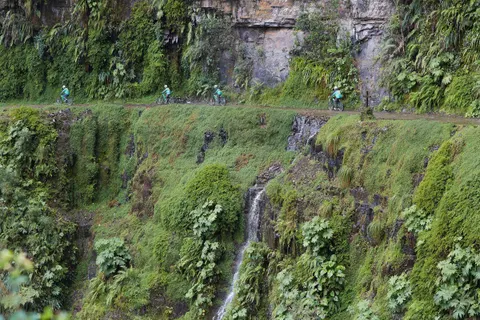
The North Yungas Road drops about 3,500 m over roughly 64 km, from La Cumbre (about 4,650 m) to Yolosa near Coroico. The Inter-American Development Bank called it the world’s most dangerous road in 1995; since a bypass opened in 2006, it carries mostly cyclists, about 25,000 a year. Viator tours run about US$90 to US$156, plus a Bs 50 route fee (about US$4) in cash; older reports say Bs 25. Bolivia sets no minimum standards for adventure operators, per the UK Foreign Office, so ask about brakes and insurance. See our Death Road guide and consider a night in Coroico.
Top-rated Death Road tours
Book on Viator From $156Death Road Bolivia Biking TourFree cancellationCheck availability
 From $145Death Road, Bolivia: Mountain Bike Tour on the World's Most Dangerous RoadFree cancellationCheck availability
 From $90The World's Most Dangerous Road - Barracuda Biking's Death Road RidingFree cancellationCheck availability
Prices in US$ per person from Viator as of Sep 30, 2026. They change; you see the final price before paying.
Verdict: Worth it with a top-rated operator, from day three.
20. Tiwanaku, Bolivia’s great pre-Inca site
- Cost
- Bs 100 (about US$8.30), cash
- Time
- Full day
- Where
- 70 km west, about 1.5 hours
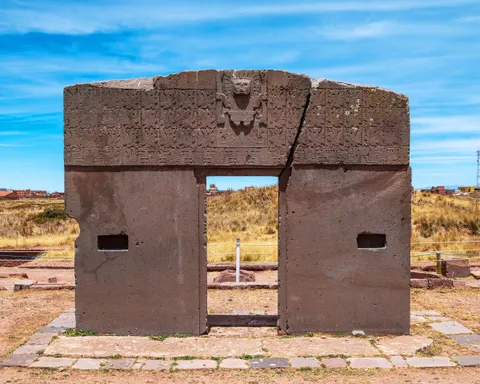
Tiwanaku, capital of a pre-Inca civilization and a UNESCO site since 2000, sits at 3,885 m on the altiplano. The official site lists 09:00 to 16:00 daily, Bs 100 for foreigners and Bs 15 for Bolivians, cash only. Minibuses leave about every 30 minutes from Calle José María Asín near the cemetery and take about 1.5 hours. What survives is mostly foundations, platforms, the Gate of the Sun and carved monoliths. Viator’s most-reviewed Tiwanaku tour rates 3.88 out of 5, so we list none here; our Tiwanaku and Puma Punku guide compares the options.
Verdict: Go with a guide or read up first; the ruins need context.
21. Hike above 5,300 m on Chacaltaya
- Cost
- From about US$35 on a tour
- Time
- 7 to 8 hours
- Where
- About 30 km north
Vans take 1.5 to 2 hours to reach the old ski lodge at about 5,300 m, then you walk 30 to 60 minutes up a loose ridge to a summit listed at 5,395 m or 5,421 m, either way above Everest’s South Base Camp (5,364 m). South America’s first ski lift, a 1939 rope tow, ran here; the glacier was gone by 2009. Shared tours with Valle de la Luna cost about US$35 to US$40, but the most-reviewed rate only 4.0 to 4.4, so compare the Chacaltaya tours listing. Foreigners pay a Bs 25 entry fee at the refuge, included on some tours and not others. See our Chacaltaya guide, or Huayna Potosí if you want to climb.
Verdict: Go after two or three nights in La Paz, and skip it if you’ve had altitude symptoms.
22. Lake Titicaca and Copacabana (sleep over if you can)
- Cost
- From about US$59 (day tour)
- Time
- 1 to 2 days
- Where
- 3 to 4 hours by bus
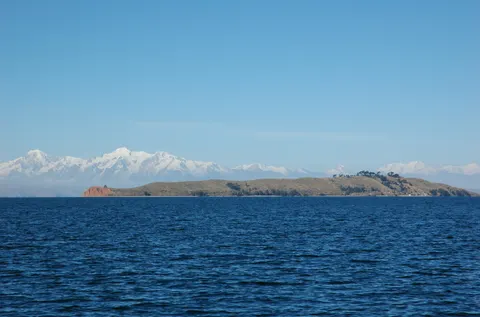
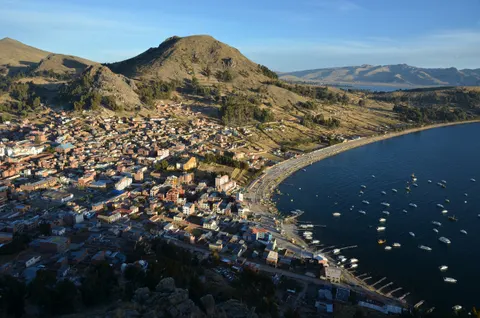
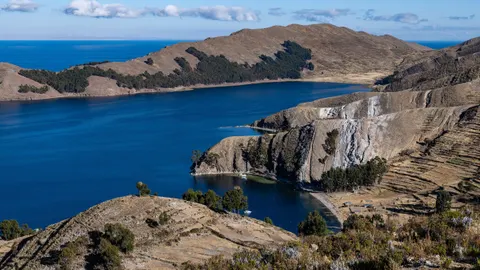
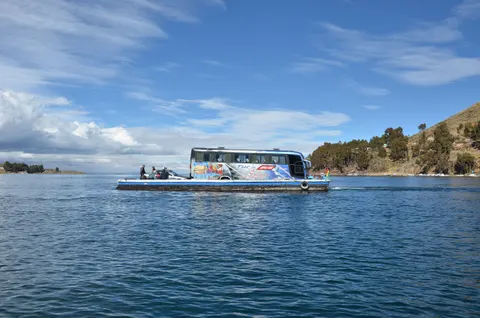
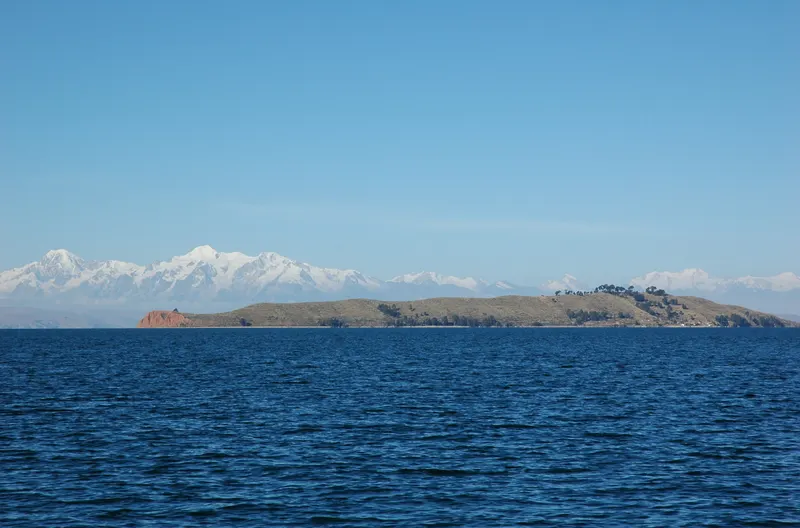
Copacabana, on Lake Titicaca’s Bolivian shore, is 3 to 4 hours away by bus; at the Strait of Tiquina the bus crosses on a barge while passengers take a small boat. Boats continue to Isla del Sol, where communities charge around Bs 10 and north-end access has been restricted on and off, so ask the day before. A same-day Copacabana and Isla del Sol tour from about US$59 lasts 16 hours. See our guides to Lake Titicaca, Copacabana and Isla del Sol.
Verdict: Sixteen hours of bus and boat is too much. Stay at least one night.
La Paz, Bolivia nightlife and evenings (item 23)
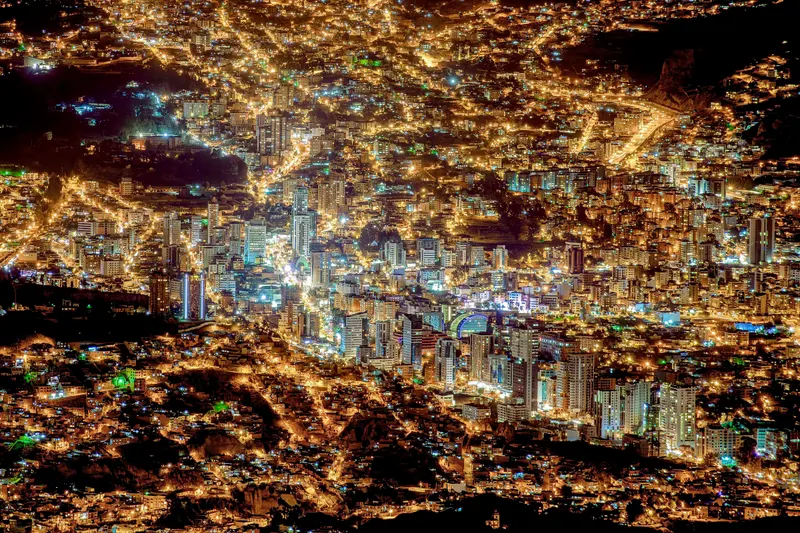
23. Eat, drink and catch a peña
- Cost
- From about US$37 (food tour)
- Time
- An evening
- Where
- Center, Sopocachi and Zona Sur
The La Paz food and beer tour meets at San Francisco church at 18:25 and runs 3 hours with food and drinks included, from about US$37. For a splurge, Gustu in Calacoto ranked No. 38 on Latin America’s 50 Best Restaurants list in 2024. Peñas (folk-music dinner shows) come and go, so ask your hotel which one is on. Legal bars close at 3 a.m. and police raid unlicensed ones (UK Foreign Office), and Spain’s foreign ministry warns of drinks spiked with burundanga, so keep your glass in sight and ride home in a radio taxi.
Verdict: Save the food tour for night three, after the CDC’s 48 hours without alcohol.
How many days in La Paz, Bolivia: 1-day and 3-day plans
Plan three to four days: two for the city, one for El Alto or Tiwanaku, and one for the Death Road, Chacaltaya or Titicaca. The CDC counts flying straight into La Paz (airport at 4,061 m) as a high-risk ascent and advises no alcohol for the first 48 hours.
If you only have one day
Ride the cable-car loop (item 1) in the morning, eat at Mercado Lanza, walk Plaza Murillo, San Francisco and the Witches’ Market (items 2 to 4), and end at Killi Killi for sunset. If you flew in that morning, stop after the Witches’ Market.
Three days, paced for the altitude
- Day 1 (arrival): Walk El Prado downhill, join an afternoon walking tour and ride the Red Line up and back if you feel fine (items 1, 8 and 9). No alcohol yet.
- Day 2: MUSEF or Calle Jaén in the morning, Valle de la Luna after lunch, Killi Killi at sunset.
- Day 3: The Feria 16 de Julio on a Thursday or Sunday (plus Sunday wrestling), otherwise Tiwanaku. Food tour in the evening.
- Day 4 and later: The Death Road, Chacaltaya or two days at Lake Titicaca.
With two days, do days 1 and 2. For longer routes, see our Bolivia itinerary and altitude sickness guide.
What’s on by day of the week
| Day | Open or happening | Closed or limited |
|---|---|---|
| Monday | MUSEF 08:30-16:30; San Francisco and Coca museums | Calle Jaén museums and Museo Nacional de Arte closed |
| Tuesday to Friday | MUSEF 08:30-16:30; Calle Jaén museums; Museo Nacional de Arte 09:00-17:00; San Francisco and Coca museums | |
| Thursday | Feria 16 de Julio in El Alto | |
| Saturday | Calle Jaén museums; San Francisco and Coca museums | MUSEF and Museo Nacional de Arte 09:00-13:00 only |
| Sunday | Feria 16 de Julio; municipal cholitas wrestling from 15:00; cable cars 06:30-22:30 | San Francisco, Coca, Calle Jaén and Museo Nacional de Arte closed; MUSEF 09:00-13:00 only |
How much things cost in La Paz (September 2026)
| Item | Bs | About US$ |
|---|---|---|
| Mi Teleférico, first line / each transfer | 3 / 2 | 0.25 / 0.17 |
| Valle de la Luna entry (foreigners) | 15 | 1.25 |
| San Francisco museum (suggested, foreigners) | 20 | 1.70 |
| MUSEF (foreigners) | 35 | 2.90 |
| Death Road route fee (usually not in the tour price) | 50 | 4.15 |
| Cholitas wrestling tourist show, door ticket | 50-80 | 4-7 |
| Tiwanaku (foreigners, cash only) | 100 | 8.30 |
After the 18 September diesel rise, taxis, tours and intercity buses are the prices most likely to climb; city minibuses had held their Bs 3 to 3.50 fares by late September. Cards rarely work at market stalls; see our guide to Bolivian currency and ATMs.
When to go, and festivals worth timing
May to October is dry, with cold nights. November to March brings rain, landslides that can cut roads, and snow on the Chacaltaya road.
The Alasitas fair of miniatures opens on 24 January (UNESCO-listed in 2017), and the Oruro Carnival parade follows on 6 February 2027. The Gran Poder dance parade (UNESCO-listed in 2019) is expected on 22 May 2027, unconfirmed. The Fiesta de las Ñatitas follows All Souls’ Day on 8 November. More in best time to visit Bolivia and La Paz weather.
What to skip
Skip these
- San Pedro prison “tours,” illegal per the UK Foreign Office.
- The backwards clock on Plaza Murillo, which has run clockwise since November 2025.
- Chacaltaya, the Death Road or Huayna Potosí in your first 48 hours (our call, from CDC guidance).
- The cheapest Death Road operator, unless you’ve checked the brakes.
- A same-day Copacabana and Isla del Sol return (16 hours).
- Street money changers, and taxis hailed on the street at night.
- Coca tea as altitude medicine (the CDC doesn’t list it), and coca leaves in your luggage home (illegal in Canada and many other countries).
Where to stay for sightseeing
Stay in the center (Rosario, around Sagárnaga) to walk to items 1 to 9, or in Sopocachi near the Yellow Line. Zona Sur sits about 400 m lower and feels milder, but it’s farther from the sights. Compare the areas in our guide to hotels in La Paz or check hotel prices in La Paz on Expedia, and read the El Alto airport guide for the ride into town.
Frequently asked questions
How many days should I spend in La Paz, Bolivia?
Three to four days. Keep day one easy, because you land at about 3,640 m in the center (4,061 m at the airport). Use days two and three for the city and El Alto, then add one day for each big trip: the Death Road, Tiwanaku or Chacaltaya. If La Paz is one stop on a longer route, our Bolivia itinerary shows how to fit it in with Uyuni and Lake Titicaca.
Is La Paz, Bolivia worth visiting?
Yes, for a few days. You can ride a cable car over a canyon of brick houses for Bs 3, walk a witches' market full of ritual offerings, and the next morning bike the Death Road or visit Tiwanaku. La Paz is also the practical base for Lake Titicaca and for flights to Uyuni, about an hour away on BoA. The altitude and the 2026 protests are the main drawbacks, so plan around both.
Is it safe to go to La Paz right now?
The US rates Bolivia Level 2, exercise increased caution (August 2026), and a state of exception runs to about mid-December 2026 after the May-June blockades. Day to day, the risks are petty theft, fake police and criminal taxis. Use radio or app taxis, never get into an unmarked car, and keep a buffer day before international flights. More in our guide to whether La Paz is safe.
Is La Paz expensive for tourists?
No. A cable-car ride costs Bs 3 (about US$0.25), Valle de la Luna Bs 15 and MUSEF Bs 35, at about Bs 12 per US$ (September 2026). Tours are the big expense, from about US$5 for a walking tour to US$90-156 for the Death Road. Expect taxi and tour prices to climb after the diesel increase of 18 September 2026; city minibus fares had held at Bs 3 to 3.50 by late September.
What is the best month to visit La Paz?
May to October, the dry season, gives the clearest skies. July gets about 5 mm of rain, but nights drop to about 3 °C in the city and below freezing in El Alto. November has the warmest days (average high about 20 °C), and January is the wettest month, with about 125 mm. Our guide to the best time to visit Bolivia covers Uyuni and Titicaca too.
Will I get altitude sickness in La Paz?
There's a real chance. The CDC classes flying straight into La Paz as a high-risk ascent, with altitude illness rates approaching 50% for people who go up that fast. The usual signs are a headache plus nausea, dizziness or fatigue. Rest, drink water, skip alcohol for 48 hours and never go higher with symptoms. See a travel-medicine doctor before you leave and read our altitude sickness guide.
What is La Paz, Bolivia known for?
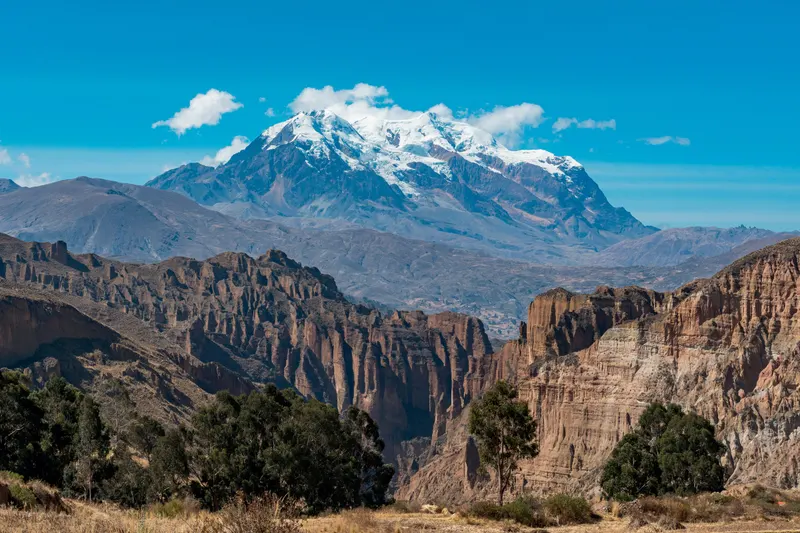
La Paz is the world's highest seat of government (Sucre is the constitutional capital), built in a canyon below the snow peaks of Illimani (6,438 m). Visitors know it for Mi Teleférico, the Witches' Market, cholitas in bowler hats and layered polleras, cholitas wrestling in El Alto, and as the starting point for the Death Road.
Keep planning