





















Quick answer
Bolivian food in La Paz is highland cooking built on potatoes, chuño (freeze-dried potato), corn, cheese, pork and lamb, with most of the heat on the side as llajwa. Start the day with api, a hot purple-corn drink, and a fried cheese pastel. Eat salteñas (soupy baked pastries) mid-morning, chairo soup or a plato paceño at lunch, and anticuchos after dark. The Paceña La Salteña chain lists salteñas at Bs 8.50 (about US$0.70). Gustu and Arami are the splurges.
On this page
- A day of Bolivian food in La Paz, from breakfast to dinner
- 20 traditional Bolivian dishes to try
- The 22 dishes La Paz declared heritage
- La Paz food markets and street food
- Best restaurants in La Paz, Bolivia, by budget
- Food tours and cooking classes in La Paz
- Bolivian drinks: api, singani, chuflay and Paceña beer
- Eating safely in La Paz: street food, water and altitude
- Frequently asked questions
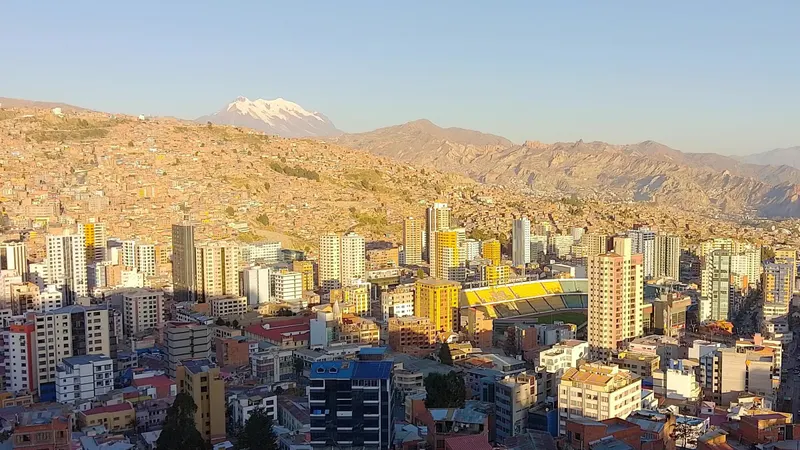
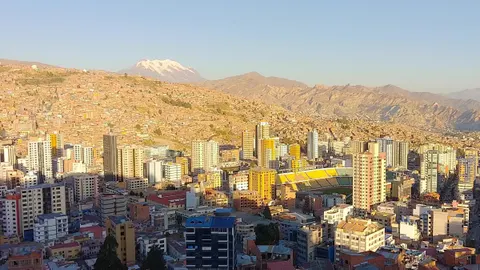
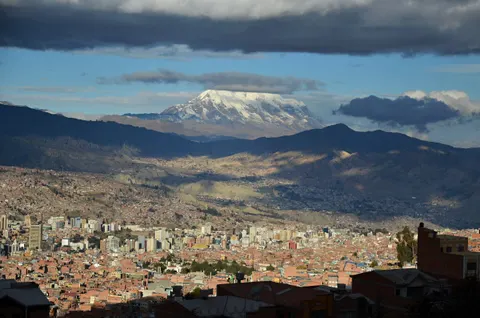
“Bolivian food” covers two cuisines. On the altiplano, in La Paz, Oruro and Potosí, cooks work with potatoes, chuño (potatoes freeze-dried by the frost), corn, cheese, lamb and pork. In Santa Cruz and the Amazon lowlands, meals are built on yuca, rice and plantain. This guide starts in La Paz, Bolivia, at about 3,640 m (11,940 ft), and ends with five dishes from the rest of the country.
We checked prices on September 30, 2026, and converted them at about Bs 12 per US dollar. The boliviano has floated since June 2026, so any guide still quoting Bs 7 to the dollar is out of date. For the rest of the city, see things to do in La Paz.
- Heritage dishes
- 22 (La Paz council, 2012)
- Salteñas
- Mornings, until sold out
- Salteña (chain menu)
- Bs 8.50, about US$0.70
- Food tour
- From about US$37, 3 h
- Exchange rate
- Bs 12.02 per US$ (Sep 30, 2026)
A day of Bolivian food in La Paz, from breakfast to dinner
| When | What to eat | Where |
|---|---|---|
| Breakfast | Api with a cheese pastel or buñuelos; a llaucha; marraqueta bread | Market cafés, street stalls |
| Mid-morning, the “sajra hora” | Salteñas or a macho Camacho | Salteñerías (salteña shops), Mercado Camacho |
| Lunch, the main meal | Soup first (chairo is the classic), then thimpu, sajta or a plato paceño | Market food floors, Popular Cocina Boliviana, La Rufina |
| Afternoon | Api again, or mocochinchi (a dried-peach drink) | Markets |
| 8 pm or later | Anticuchos, or something light | Street grills |
Lunch is the big meal and dinner comes late and light, so plan your sit-down Bolivian meal for midday. Salteñas won’t wait for you. Street vendors sell them from about 7 am, especially on Sundays, and many are sold out by mid-morning.
Which one is for you?
- If you have one morning: salteñas early, then the produce stalls of Mercado Rodríguez.
- If you landed today: api, hot soup and salteñas, and no alcohol for 48 hours.
- If you’re vegetarian or vegan: Ali Pacha’s vegan tasting menu, La Rufina’s plato paceño and quesumacha, and cheese llauchas at breakfast.
- If you want one big dinner: Arami (Best Restaurant in Bolivia 2025) or Gustu.
- If you’d rather be shown around: the evening Food and Beer Tour, from about US$37.
20 traditional Bolivian dishes to try
Numbers 1 to 15 are La Paz food. Numbers 16 to 20 belong to the rest of the country, mostly Cochabamba and the eastern lowlands; see our guide to things to do in Bolivia.
1. Salteñas
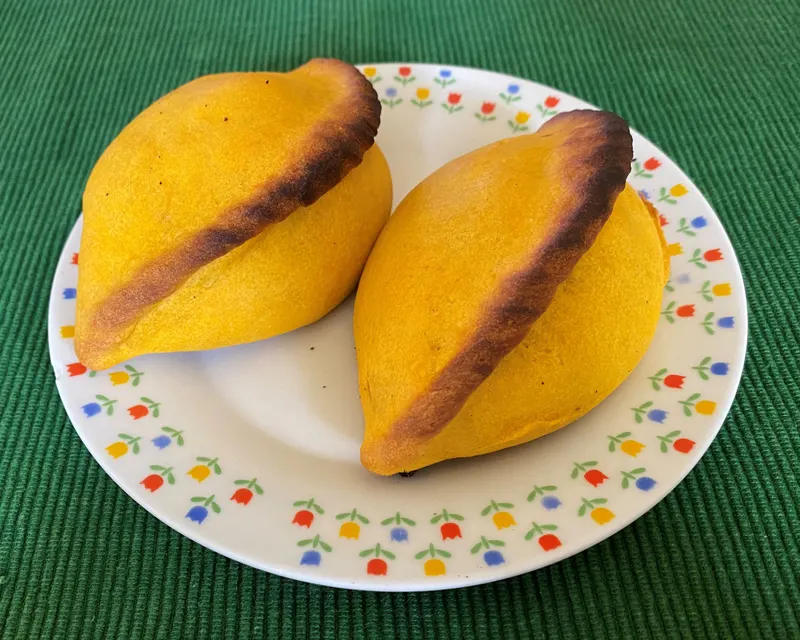
Bolivia’s baked empanada wraps a braided crust around beef or chicken, potato, peas and spices in a broth set with gelatin, which turns back into liquid as it bakes. Hold it upright, bite off a corner and drink the broth before it reaches your sleeve. The Paceña La Salteña chain lists beef, chicken, charque, vegetarian and even Hawaiian at Bs 8.50 (about US$0.70) on a website menu last updated in February 2025. A legend ties the name to a woman from Salta, Argentina, but the oldest known recipe is in a 1776 recipe book from Potosí. November 10 is World Salteña Day.
2. Api with a cheese pastel
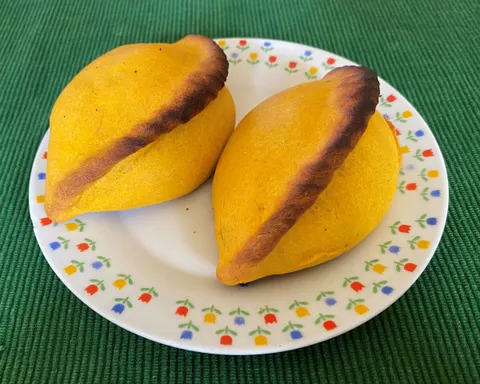
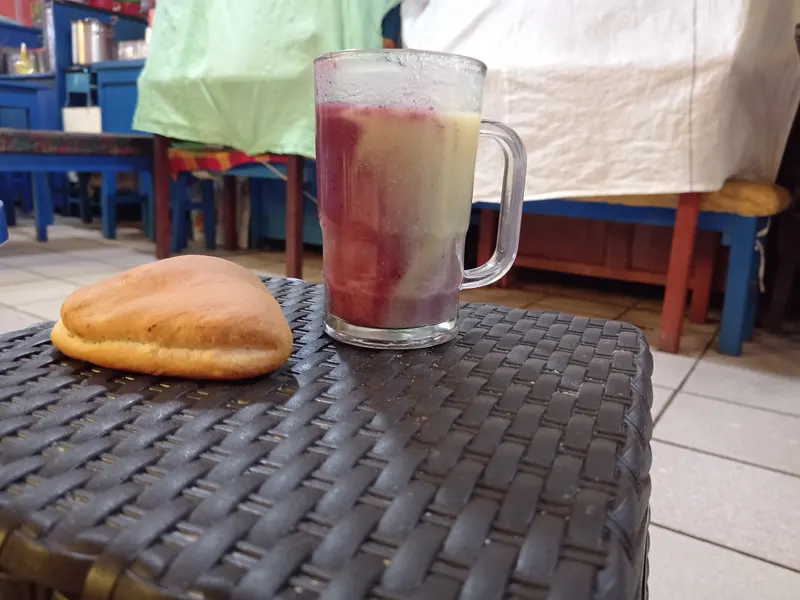
Api, a thick hot drink of purple corn and ground yellow corn with sugar, cinnamon and clove, predates the Spanish conquest. La Paz drinks it at breakfast or late afternoon with a pastel, a large thin cheese empanada fried and dusted with sugar, or with buñuelos. Served steaming, it’s one of the safer orders in your first days, and during the Alasita fair (from January 24) it’s everywhere.
3. Llaucha
La Paz’s baked cheese empanada, 15-20 cm across, holds a runny sauce of criollo cheese with ají amarillo or ulupica chili. Paceños (people from La Paz) eat it at breakfast with api, tea or coffee.
4. Plato paceño
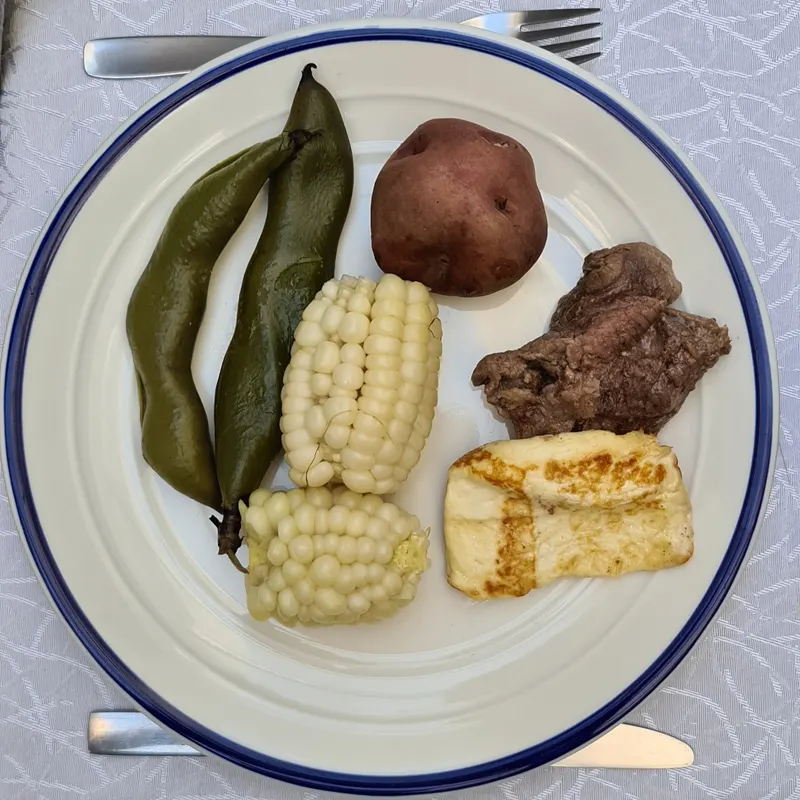
The plate named after the city holds corn on the cob, broad beans cooked in their pods, potatoes boiled in their skins and a slab of fried cheese, with llajwa on the side. Many plates add beef, a 19th-century addition that not everyone accepts. Tradition places its birth in the 1781 siege of La Paz, when it was made with sheep’s cheese; the historian Milton Eyzaguirre traces it instead to the aphtapi, an Aymara communal meal. Paceños eat it at Alasita and around July 16, the city’s civic holiday, and La Rufina serves it vegetarian.
5. Chairo
Order chairo, a thick highland soup, if you want to taste chuño. Farmers make chuño by leaving potatoes out in the June-July frosts, letting them thaw in the daytime sun and treading the water out, and the result keeps for years. Tunta, the white version, sells for more. The pot also holds dried meat (chalona or charque), lamb or beef, hominy, broad beans and herbs such as mint. AMUN, the city’s news agency, found it still sold in the markets, so look for it as the soup at a market lunch counter.
6. Fricasé
Paceños start New Year’s Day at dawn with fricasé, a spicy pork broth with chuño and mote (hominy), eaten with marraqueta bread. The rest of the year it sells as a hangover cure, and Paceña La Salteña bakes the flavor into a salteña on weekends.
7. Thimpu de cordero
Lamb, cooked and served over chuño and potatoes with rice and a yellow ají sauce. AMUN counts it among La Paz’s colonial dishes and says the first versions used oxtail.
8. Sajta de pollo
Sajta is chicken in a picante, a stew built on ají, with tunta, potato, chuño and peanut. It’s festive food for Todos Santos (November 2) and Carnival. The cooking class below teaches it alongside ají de lengua, a spicy beef-tongue stew.
9. Queso humacha
Queso humacha, fresh cheese melted into ají amarillo sauce with corn, broad beans, potato and huacataya (an Andean herb), is the vegetarian choice among La Paz’s chili dishes. The city cooks it for Holy Week, when many families avoid red meat. La Rufina spells it quesumacha.
10. Sándwich de chola
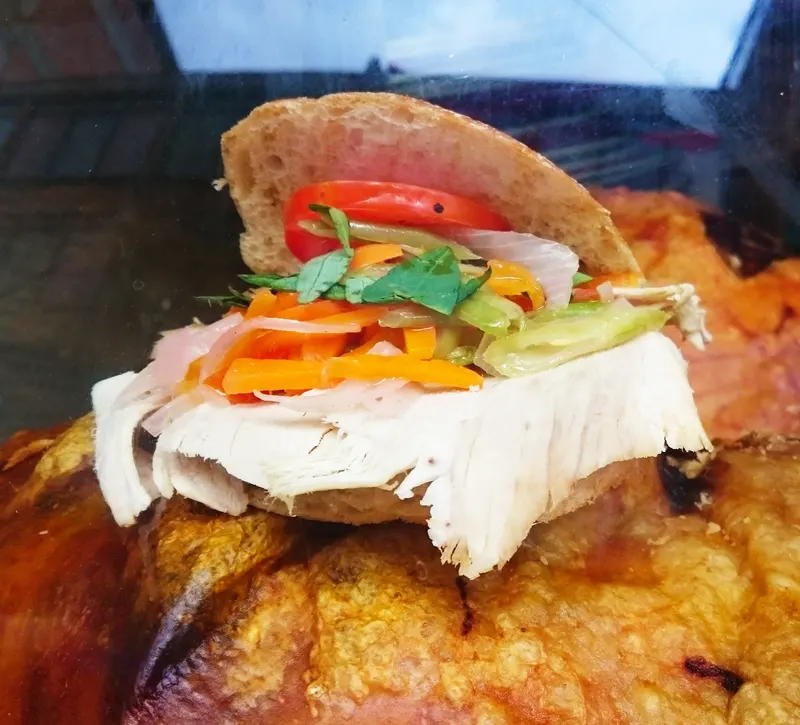
Paceños fill a round sarnita roll or a marraqueta with slow-roasted pork, crackling, pickled vegetables and ají amarillo sauce or llajwa. It’s named for the cholas who sell it, the women in pollera skirts profiled in our guide to the cholitas of La Paz. The classic kiosks, known as Las Cholas, stand on Avenida Luis Adolfo Siles Salinas beside Parque La Florida in Calacoto; we couldn’t verify their hours or prices.
11. Anticuchos
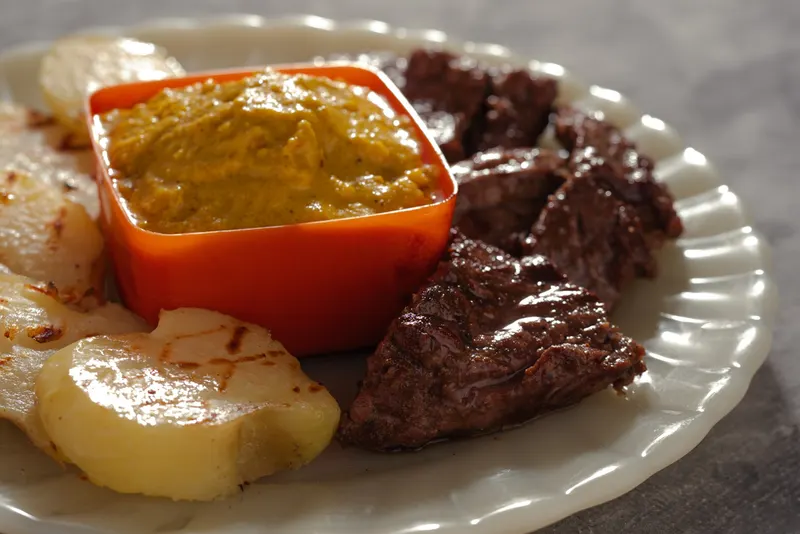
Anticucho vendors work at night, flaming skewers of beef heart with vinegar and spices and serving them with boiled potatoes and an ají-and-peanut sauce. The dish dates from colonial Peru. Straight off the coals, anticuchos pass the CDC’s street-food test of cooked and steaming hot; a bowl of raw llajwa on the side doesn’t.
12. Lake Titicaca trout and ispi
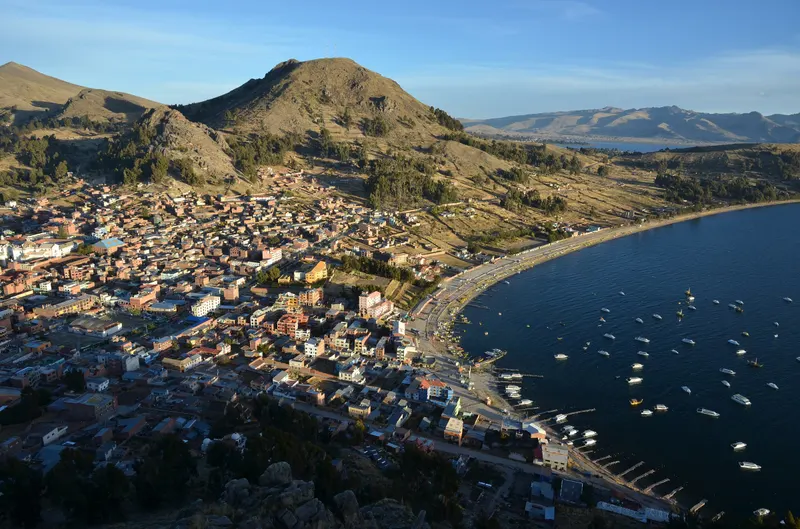
Rainbow trout is an introduced species in Lake Titicaca, and the lakefront restaurants of Copacabana serve it for Bs 30-60 (US$2.50-5) a plate. AMUN dates two older lake dishes to before the Spanish: ispi, 5 cm fish fried and served with mote, chuño and potato, and wallake, a karachi-fish soup with chuño and ají amarillo. In La Paz, Mercado Rodríguez sells Titicaca fish.
13. Macho Camacho
Café vendors at Mercado Camacho created it in 2010, when the market’s new building opened, from sausage, beef, egg, onion, tomato, bell pepper and plenty of locoto chili. It comes with marraqueta and a hot drink at the sajra hora, La Paz’s mid-morning snack break.
14. Buñuelos with honey
Rounds of fried dough, eaten in La Paz, Oruro and Potosí with a glass of api and often cane honey. They’re fiesta and fair food, and a standard order at Alasita.
15. Helado de canela and other desserts
Helado de canela, a cinnamon-flavored ice, made the city’s 2012 heritage list. Arroz con leche (rice pudding) belongs to Holy Week, when tradition sets 12 meatless dishes on the table, though few families cook all 12. For Todos Santos (November 2), families bake t’antawawas, bread “babies”.
16. Silpancho (Cochabamba)
Cochabamba’s silpancho comes in layers: rice and potatoes, a thin breaded beef cutlet as wide as the plate, a fried egg, and a raw salad of tomato, onion and locoto.
17. Pique macho
Beef, sausage and fries under onion, locoto and boiled egg, usually spicy.
18. Sopa de maní
A creamy peanut soup eaten all over Bolivia, sometimes with rice, chicken or macaroni, often topped with fries.
19. Majadito
Rice with charque (dried beef), a fried egg, yuca and fried plantain, from the lowland departments of Santa Cruz, Beni and Pando.
20. Cuñapé and sonso
Lowland cheese snacks. Cuñapé is a small bread of cassava starch and cheese eaten at teatime. Sonso de yuca, from Beni, Pando and Santa Cruz, mixes yuca and cheese and comes out crisp.
The 22 dishes La Paz declared heritage
In October 2012 La Paz’s municipal council declared 22 dishes and drinks city heritage as Gastronomía Tradicional Paceña. AMUN calls it Municipal Law 026; Spanish-language Wikipedia dates the law to 2014. Both published lists name only 20: anticucho, api, aphthapi, chairo paceño, chicha morada, chocolate, fricasé de cerdo, helado de canela, huminta, k’isitas, k’ispiña, llajwa, picana de Navidad, pito de cañahua, plato paceño, puchero de Carnaval, queso humacha, salteña, sándwich de chola and thimpu de cordero. The marraqueta, La Paz’s bread roll, isn’t on it because the departmental government had declared it heritage in 2006.
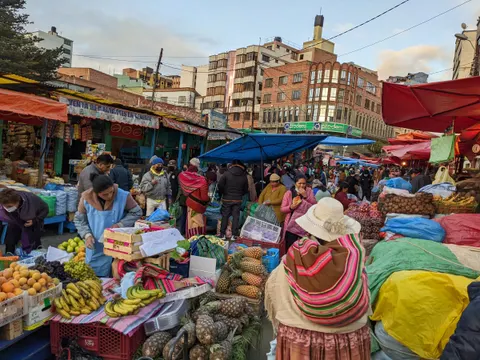
La Paz food markets and street food
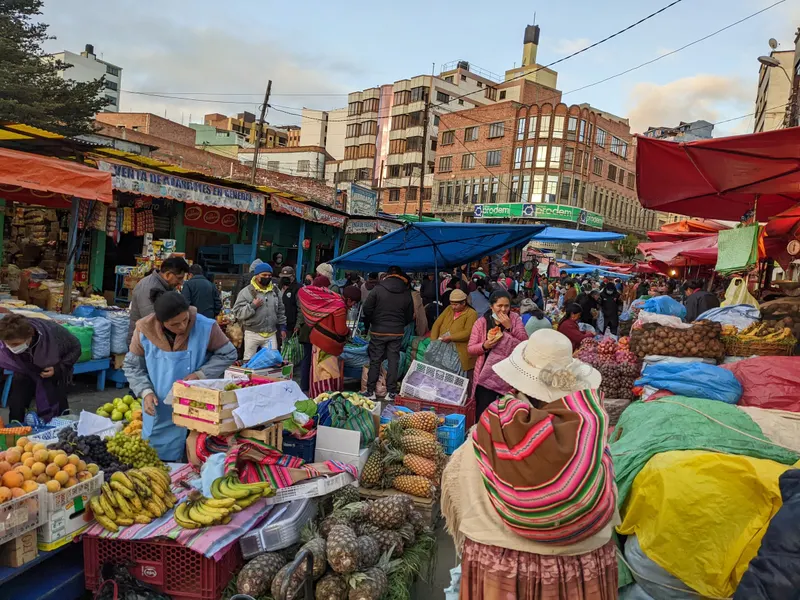
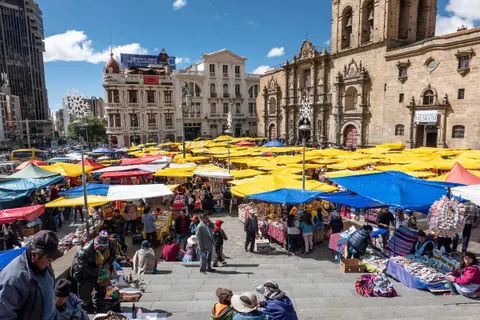
The three central markets are less than a kilometer apart in a straight line (Lanza to Rodríguez about 620 m, Rodríguez to Camacho about 830 m). The streets between them are steep and Plaza San Francisco sits at about 3,630 m, so walk slowly and carry small notes.
Mercado Rodríguez
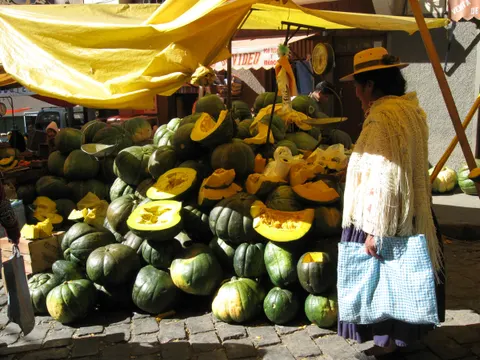
La Paz’s main food market fills Calle Pedro Rodríguez and the streets between El Rosario, Gran Poder and San Pedro, and dates from 1937. Saturday and Sunday are feria days, when stalls close the streets to traffic. Look for Titicaca fish, chuño and tunta, cheese, ulupica chilies and mocochinchi. The Witches’ Market is about 380 m away.


Mercado Lanza
Mercado Lanza opens onto Plaza San Francisco. Its 2010 building has four levels and 1,050 stalls, and the food is on the top floor, with juice counters, salteña sellers and anticucho cooks.
Go by day, straight to the top floor
A June 2022 report by Radio Integración found many lower-floor stalls shut, a confusing layout with 14 exits and robberies, especially at night; police made 17 arrests that month. We found no 2026 update. Go in daylight, head for the food floor and keep your phone out of sight.
Mercado Camacho
At Avenida Camacho and Calle Bueno. The new building opened on November 8, 2010, with an underground food court, and its café vendors invented the macho Camacho that year.
Best restaurants in La Paz, Bolivia, by budget
We checked every listing’s hours on September 30, 2026, on its own website or its Latin America’s 50 Best page. The dollar averages come from 50 Best and may predate the June 2026 float.
| Restaurant | Area | What to order | Price guide | Hours |
|---|---|---|---|---|
| Paceña La Salteña | Centro, Sopocachi, Miraflores, Calacoto | Salteñas | Bs 8.50, about US$0.70 | Daily 8 am-2 pm |
| Popular Cocina Boliviana | Centro, Calle Murillo 826 | Three-course set lunch | About US$12 (Bs 144) | Lunch Mon-Sat |
| La Rufina | Sopocachi, Belisario Salinas 572; also Calacoto | La Paz street food reworked, vegetarian plato paceño | No verified 2026 price | Sopocachi: Mon-Sat noon-10 pm |
| Ancestral | Achumani, Zona Sur | Wood-fired grill, Titicaca trout | About US$23 (Bs 275) | Dinner Wed-Fri, lunch Sat-Sun |
| Ali Pacha | Centro, Calle Colón 1306 | Vegan tasting menu | From about US$30 (Bs 360) | Lunch daily, dinner Wed-Sun |
| Gustu | Calacoto, Zona Sur | Tasting menu or à la carte | Average about US$31; tasting from about US$81 (Bs 975) | Tue-Sat |
| Arami | Achumani, Zona Sur | Amazon-and-Andes tasting menu | From about US$67 (Bs 805) | Lunch Wed-Sun, dinner Wed-Sat |
La Rufina is chef Dennis Llusco’s tribute to the city’s women street cooks. Llusco cooked at Gustu and Ali Pacha, and the restaurant takes walk-ins. Vegans should head to Ali Pacha, Bolivia’s first fine-dining vegan restaurant, which works quinoa into its tasting menus.
Gustu
Claus Meyer, a co-founder of Copenhagen’s Noma, opened Gustu in April 2012 as a restaurant and training project that cooks only Bolivian products; the name is Quechua for “flavor”. Kenzo Hirose and Jairo Michel have led the kitchen since October 2024. Gustu ranked No. 38 on Latin America’s 50 Best Restaurants 2024 and was named Best Restaurant in Bolivia that year. It’s on Calle 10 in Calacoto (the 50 Best guide gives a 2013 opening and an Avenida Costanera address). Viator’s private hosted Gustu dinner costs from about $160 and has one review.
Arami
Marsia Taha Mohamed ran Gustu’s kitchen until October 2024 and was Latin America’s Best Female Chef that year. In November 2024 she opened Arami (“little sky” in Guaraní) in Achumani with sommelier Andrea Moscoso Weise, pairing Amazon and Andean cooking with Bolivian wines. Arami was named Best Restaurant in Bolivia 2025 and ranked No. 48 on that year’s Latin America’s 50 Best list.
Getting to Zona Sur for dinner
Calacoto and Achumani are 9-10 km by road from the center and 250-350 m lower. The Sky Blue and Green lines of Mi Teleférico run from the Prado to Irpavi in about 26 minutes for Bs 5 (Bs 3 plus a Bs 2 transfer), and a taxi covers the rest. Cable cars stop at about 10:30 pm (9 pm on Sundays), so call a radio taxi after a late dinner. To walk to dinner instead, stay in Sopocachi; see where to stay in La Paz.
Food tours and cooking classes in La Paz
Viator lists nine La Paz food experiences with 136 reviews between them, and 114 of those belong to one tour.
La Paz food tours and cooking classes
Book on Viator From $37La Paz Food and Beer TourFree cancellationCheck availability
 From $40Learn Bolivian Cuisine/Cooking ClassFree cancellationCheck availability
 From $49Paceño Plates La Paz Food Tour with 12+ TastingsFree cancellationCheck availability
Prices in US$ per person from Viator as of Sep 30, 2026. They change; you see the final price before paying.
- Food and Beer Tour: meets at 6:25 pm at the doors of San Francisco church, stops 45 minutes in a central market, then at several local restaurants, and ends with a cocktail you mix yourself. Food and drinks are included, groups top out at 15, there’s no hotel pickup and vegetarian options are few. From about $37; its 4.47 average blends 4.3 from 44 Viator reviews and 4.6 from 70 on Tripadvisor.
- Cooking class: private, 4 hours, from about $40, meeting at Plaza Murillo at 4 pm. You cook and eat api con pastel, ají de lengua and sajta de pollo, with drinks included. Rated 5.0 from 17 reviews.
- Paceño Plates: a 4-hour evening tour with 12-plus tastings, from about $49. It’s new, with one review.
Our pick
Book the Food and Beer Tour for your third night or later, once the CDC’s 48 hours without alcohol are up. Compare it with other city tours in our La Paz tours guide.
Bolivian drinks: api, singani, chuflay and Paceña beer
| Drink | What it is |
|---|---|
| Api | Hot purple-corn drink with cinnamon and clove |
| Mocochinchi | Cold drink of dried peaches boiled with cinnamon and clove, sold at Mercado Rodríguez |
| Singani | Bolivia’s grape spirit, distilled from wine of Muscat of Alexandria grapes grown at 1,600 m or higher in Tarija and Chuquisaca, with its own denomination of origin |
| Chuflay | Singani with ginger ale, ice and a slice of lemon; tradition says the name comes from British railway workers’ “short fly” |
| Paceña | Pilsner from Cervecería Boliviana Nacional, which holds about 90% of Bolivia’s beer market, per Wikipedia |
The first 48 hours
The CDC advises no alcohol for the first 48 hours at high altitude, so save the singani for day three. Coca tea is legal in Bolivia, but the CDC’s altitude guidance doesn’t list it as prevention, and coca leaves are illegal to import into Canada. Our altitude sickness guide covers what helps.
Eating safely in La Paz: street food, water and altitude
The CDC’s food and water advice (updated January 2026) is written for every destination: eat street food cooked and steaming hot, and avoid raw vegetables, fresh salsas, ice and juice squeezed by others. In La Paz that puts api, a salteña from the oven and anticuchos off the grill at the low-risk end.
We found no official source that rates La Paz tap water safe for visitors, so drink bottled, filtered or boiled water. The CDC recommends the hepatitis A vaccine for unvaccinated travelers. More in our La Paz travel tips.
What we'd skip in your first days
- Llajwa and other raw salsas
- Juice squeezed at market stalls
- Ice, including the ice in a chuflay
- The raw salad on top of a silpancho
Before you go (September 2026)
The boliviano traded at Bs 12.02 per US dollar on September 30, 2026, and now moves daily; see Bolivian currency. Restaurant tips of about 10% are customary but optional, and some bills already add service. Blockades from May 1 to June 23, 2026, caused food and fuel shortages in La Paz and El Alto, and a state of exception runs to about mid-December 2026. Check is La Paz safe? before you travel.
Frequently asked questions
What is Bolivia's traditional food?
It depends on the altitude. In La Paz and the western highlands, traditional food means potatoes, chuño (freeze-dried potato), corn, cheese, lamb and pork, in dishes like salteñas, chairo soup, plato paceño, fricasé and anticuchos. Cochabamba adds silpancho and pique macho, and the eastern lowlands cook with yuca, rice and plantain, as in majadito and cuñapé. Sopa de maní, a peanut soup, turns up all over the country.
What is the national dish of Bolivia?
No single dish holds that title in the sources we checked. The salteña comes closest. Spanish-language Wikipedia reports that Law 485 of 2014 declared it national heritage, though we couldn't open the law itself. La Paz keeps its own list instead, 22 dishes and drinks declared city heritage in 2012, and the plato paceño (corn, broad beans, potato and fried cheese) carries the city's name.
What is a traditional breakfast in Bolivia?
In La Paz, a hot glass of api (a thick purple-corn drink with cinnamon and clove) with a fried cheese pastel or buñuelos, or a llaucha, a baked cheese empanada. Plenty of people keep it to coffee and marraqueta bread. Salteñas come a little later, as the mid-morning snack. In 2025, salteñas with api con pastel represented Bolivia in Spanish streamer Ibai Llanos's online breakfast world cup and reached the semifinal.
What time do Bolivians eat dinner?
Late and light, usually at 8 pm or later. Lunch (almuerzo) is the main meal of the day, often a soup followed by a main course. In La Paz the anticucho grills do their business after dark. If you want a full sit-down meal of Bolivian food, go at lunchtime. Popular Cocina Boliviana, for one, serves only lunch.
Why is there no McDonald's in Bolivia?
McDonald's opened in Bolivia on November 21, 1997, and closed all eight of its restaurants on November 30, 2002. Wikipedia's list of McDonald's markets puts it down to poor sales and high prices, and attempts to return haven't worked so far. In La Paz, the branch opposite the Hernando Siles stadium in Miraflores reopened in 2004 as a Pollos Copacabana, a Bolivian fried-chicken chain.
Is Bolivian food spicy?
Mostly on your terms. The heat usually sits on the table as llajwa, a raw sauce of locoto chili and tomato that you add yourself. Some dishes are hot by design: picantes such as sajta de pollo are cooked in ají, the macho Camacho carries plenty of locoto, and pique macho is usually spicy. Salteñas come plain or picante, so ask for “sin picante” if you want none.
Can you drink tap water in La Paz?
We wouldn't. We found no official source that rates La Paz tap water safe for visitors, so drink sealed bottled, filtered or boiled water, and skip ice in your first days. The CDC also recommends the hepatitis A vaccine for unvaccinated travelers to Bolivia. Api, tea and coffee are fine while they're steaming hot. More in our La Paz travel tips.
What time of day do people eat salteñas?
Mid-morning. In La Paz salteñas are a morning snack, especially on Sundays, sold from about 7 am until they run out, and many street vendors are done by mid-morning. The Paceña La Salteña chain opens 8 am to 2 pm daily at four branches (Centro, Sopocachi, Miraflores and Calacoto), and its website lists them at Bs 8.50 (about US$0.70).
Keep planning