








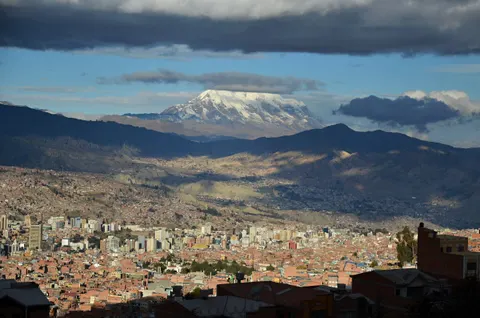

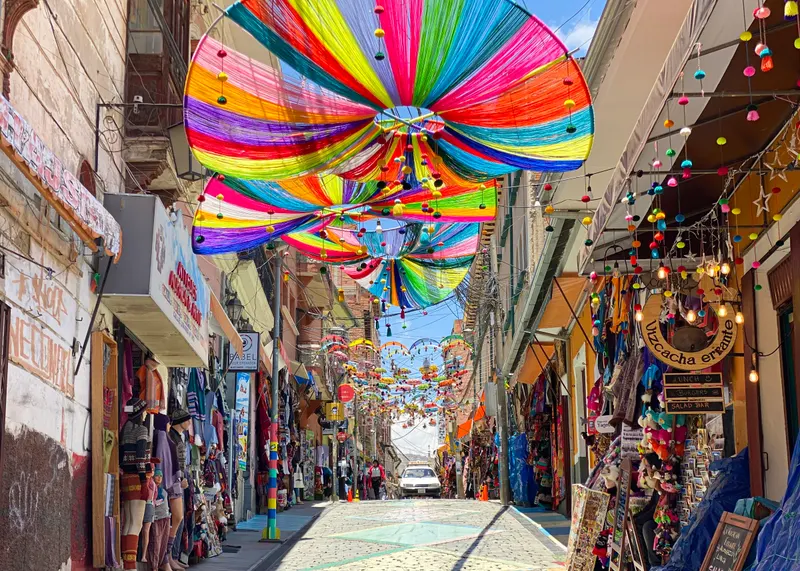
Quick answer
The Witches' Market (Mercado de las Brujas) in La Paz, Bolivia, is a few blocks of ritual-supply stalls on Calle Linares and the corners of Melchor Jiménez, Santa Cruz and Sagárnaga, about 150 m uphill from San Francisco church. Entry is free, most stalls open daily from about 10:00 to 18:00, and 30 to 60 minutes is enough. Vendors sell offerings to Pachamama, including dried llama fetuses (sullus), plus amulets, herbs and alpaca. Ask before taking photos.
On this page
- Where is the Witches’ Market in La Paz?
- What is the Witches’ Market known for?
- Yatiris, coca-leaf readings and who you’re buying from
- Witches’ Market hours and the best time to go
- What to buy at the Witches’ Market (and what to leave)
- Prices and haggling in 2026
- Can you take photos at the Witches’ Market?
- Witches’ Market tours: guided or on your own?
- Is the Witches’ Market safe?
- El Alto’s witches’ market and the Feria 16 de Julio
- Combine it with a downtown walk
- Frequently asked questions
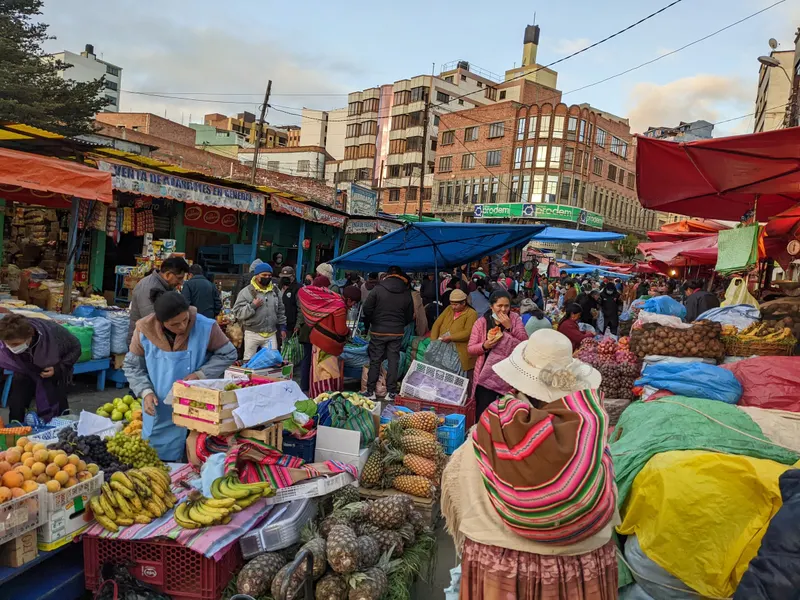
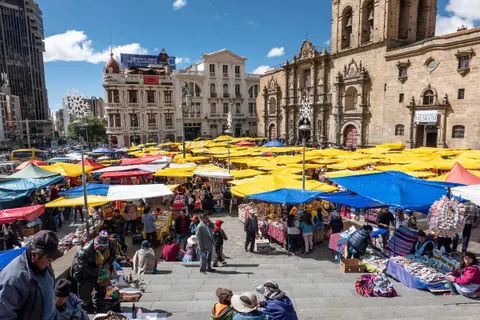
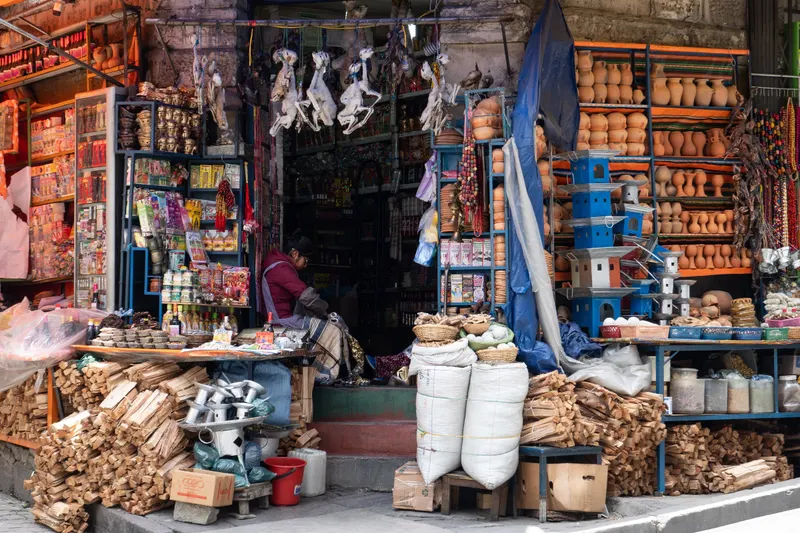
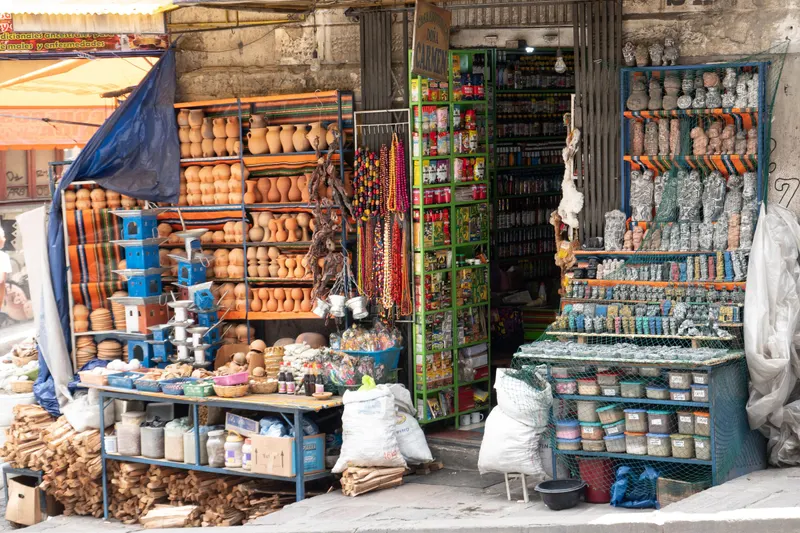
The Witches’ Market, or Mercado de las Brujas, is a few blocks of stalls in downtown La Paz, Bolivia, where Aymara women known as chifleras sell herbs, amulets and the makings of offerings to Pachamama, the Andean earth mother. The item every visitor photographs is the sullu, a dried llama fetus that paceños (people from La Paz) bury under the foundations of a new house. Locals come to buy for rituals, visitors mostly come to look, and the alpaca shops are one street over. The city council declared the market part of La Paz’s intangible cultural heritage in 2019.
It sits in the hotel and hostel zone around Calle Sagárnaga, at about 3,640 m (11,940 ft), so it makes a sensible first-day walk if you take the hills slowly.
- Where
- Calle Linares, off Sagárnaga
- Entry
- Free
- Hours
- About 10:00-18:00 daily
- Time needed
- 30-60 minutes
- Altitude
- About 3,640 m (11,940 ft)
Where is the Witches’ Market in La Paz?
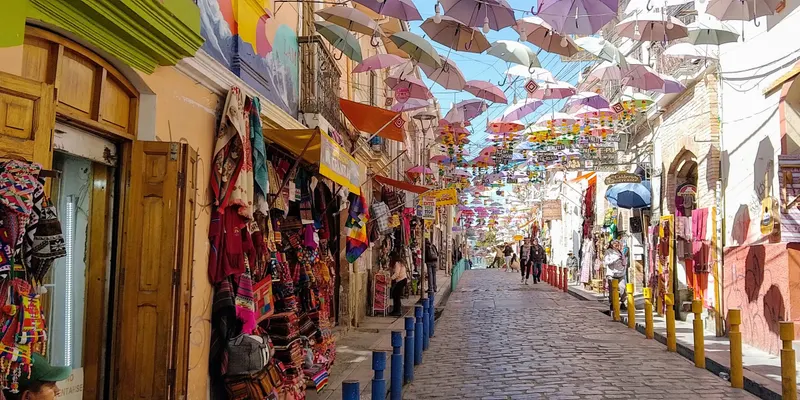
The stalls line Calle Linares and wrap around the corners onto Melchor Jiménez, Santa Cruz and Illampu, in the Rosario neighborhood. From Plaza San Francisco, walk one block up Calle Sagárnaga (about 80 m) and turn right onto Linares; you’re about 150 m from the Basílica de San Francisco. Google Maps pins the market at Melchor Jiménez 872, around the corner, and it’s the same place.
It’s small. The anthropologist Gerardo Fernández Juárez counted about thirty stalls on Santa Cruz and Linares in 2015, and La Paz Life (September 2026) says you can walk it end to end in ten minutes. Estación Central, the downtown station of the Red and Orange cable-car lines, is a 10-15 minute walk away. If you need a taxi, call a radio taxi (company name and phone number on a roof sign) instead of hailing one.
If you were looking for Mexico City’s witchcraft market, that’s the Mercado de Sonora; Peru’s largest medicinal-plant market is the Mercado Modelo in Chiclayo.
What is the Witches’ Market known for?
Ritual supplies, sold mostly to paceños. Regular customers have their own casera, the vendor who prepares their offering every year, according to Fernández Juárez.
| Item | What it is | What locals use it for |
|---|---|---|
| Sullu | Dried llama fetus | Buried under the foundations of a new house, or burned in a mesa, as an offering to Pachamama |
| Mesa | A made-up offering of coca, llama fat, colored wool, sweets, foil and miniatures | Burned for Pachamama; the ashes are buried |
| Misterios | Sugar tablets stamped as money, hearts, families and saints | Added to a mesa; the shape stands for the wish |
| Ekeko | Figure of abundance hung with miniature goods | Kept at home for prosperity; star of the Alasitas fair |
| Warmi munachi | Talisman showing a couple | Love |
| Aojo amulets | Charms against the evil eye | Protection for babies |
| Herbs, copal, incense | Medicinal plants such as retama, plus resins | Home remedies; copal and incense burn with the mesa |
| Coca leaves | Leaves of the coca bush, legal in Bolivia | Chewed, brewed as tea, read by yatiris, placed in mesas |
Are the llama fetuses real?
Yes. Where they come from is murkier than many blogs admit, since several claim every one is a natural miscarriage. Sara Shahriari, reporting for GlobalPost in 2010, wrote that most are miscarriages, the larger ones stillbirths, and some come from slaughtered llamas that happened to be pregnant. Fernández Juárez adds that the “llama fetus” in a mesa sold to a tourist is often a sheep’s.
In 2006 the city banned the sale of sacrificed animals other than llamas, to protect endangered species, BBC Mundo reported. Nine years later the newspaper La Razón still found at least seven species on the street, including vicuña fetuses, fox feet, birds and bats. We couldn’t find out whether the ban is enforced today.
Mesas: offerings to Pachamama
Fernández Juárez describes a mesa as a plate of ritual food for Pachamama; it’s burned, and the ashes are buried. His ingredient list runs to coca leaves, llama fat (untu), colored wool, miniatures, “gold bread” and “silver bread” (in practice, sheets of gold and silver foil), a llama fetus, sweets, incense, copal, candles, tobacco and alcohol. National Geographic adds dried starfish and lacquered frogs. In a rural community a mesa takes hours to prepare; a casera on Linares makes one in minutes.
What a ch'alla is
A ch’alla is sprinkling a drink on the ground, or on something new, as an offering to Pachamama for good fortune. The word also covers the bigger rite of burning a mesa and decorating a house, office or car, and Carnival Tuesday is called martes de ch’alla. If someone pours a splash of beer on the floor before the first sip, that’s a ch’alla.
Amulets, Ekeko and love charms
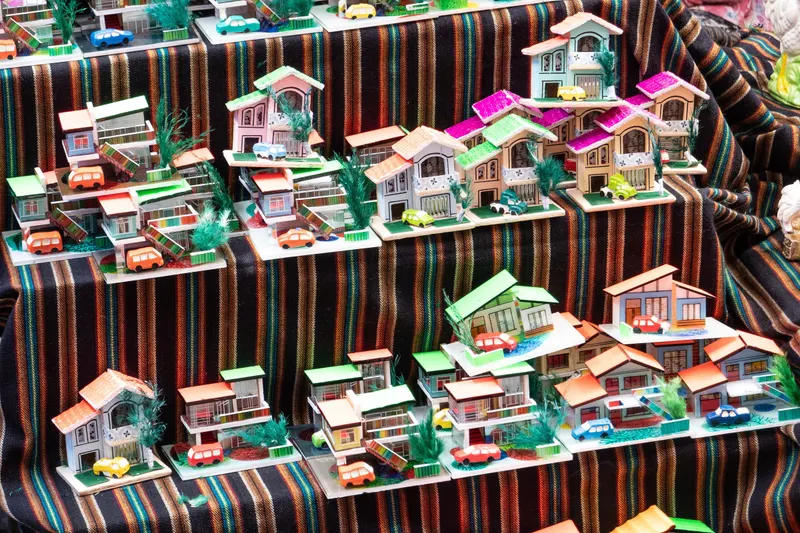
The Ekeko is a small figure of abundance hung with miniature money, food and houses. He’s the star of Alasitas, the miniature fair that opens every 24 January and has been on UNESCO’s intangible heritage list since 2017. Vendors quoted by Fernández Juárez advise giving him alcohol, coca and a cigarette every Tuesday and Friday. Love charms range from warmi munachi talismans to soaps and colognes with names like “7 Machos”.
Why is it called the Witches’ Market?
The vendors didn’t pick the name. Margarita Acho, a stallholder interviewed by the news agency EFE in 2024, said foreign tourists coined “calle de las brujas” (witches’ street) because they knew rituals and amarres, binding spells, were done here. Fernández Juárez notes that most stalls are run by Aymara women and hears in the label an echo of the colonial persecution of Indigenous women as keepers of old knowledge.
Yatiris, coca-leaf readings and who you’re buying from
The women behind the counters are chifleras, the La Paz word for sellers of herbs, remedies and ritual goods. Many wear the pollera skirt and bowler hat explained in our guide to the cholitas of La Paz.
Yatiris are a separate trade. A yatiri, from the Aymara yatiña (“to know”), is a healer and ritual specialist, a woman or a man, and in the side alleys around the market some read coca leaves for clients. Rural yatiris dismiss some of these city practitioners as paqpaqos, charlatans, Fernández Juárez notes. La Paz Life put a reading at Bs 50-150 (about US$4-12.50) in September 2026. Agree the price before anyone opens the coca, and don’t count on English. Red Cap’s cable car, cemetery and El Alto “shaman” tour visits a yatiri in El Alto, with a reading if time allows.
Kallawayas, traveling healer-herbalists from Bautista Saavedra province north of La Paz, also wait for clients here, Fernández Juárez notes. UNESCO lists their Andean cosmovision as intangible heritage.
Witches’ Market hours and the best time to go
There’s no official timetable, and sources disagree. Google and Apple Maps list 9:30 to 22:00 daily. La Paz Life (September 2026) says most stalls open between 9:00 and 10:00 and close around 18:00-19:00, with Sundays quieter and several shops shut. We suspect the late hours belong to the souvenir shops. Go Monday to Saturday between 10:00 and 17:00, and early if you want to see locals shopping.
Locals buy by the ritual calendar.
| When | What happens at the market |
|---|---|
| From 24 January | Alasitas, the miniature fair. Ekekos, tiny houses and banknotes sell everywhere. |
| 2 February and Carnival | The second sales peak. Carnival Tuesday (9 February in 2027) is martes de ch’alla. |
| August | The busiest month, when the earth is “opening its mouth” after the winter (EFE). Some caseras told Fernández Juárez it brings over 60% of their yearly mesa sales. |
| First Friday of each month | An offering day, GlobalPost reported in 2010. Next: 2 October, 6 November and 4 December 2026. |
| 1-2 November | Todos Santos (All Saints). Caseras sell an “alma despacho” mesa with skull motifs, per Fernández Juárez. |
What to buy at the Witches’ Market (and what to leave)
From the ritual side, buy small. An Ekeko, a warmi munachi charm or a few misterios pack flat and cost a few dollars. An aguayo, the striped handwoven cloth women use to carry babies and bundles, makes a good table runner. We’d skip a full mesa unless you plan to burn it, since most contain a fetus.
Alpaca and textiles on Calle Sagárnaga
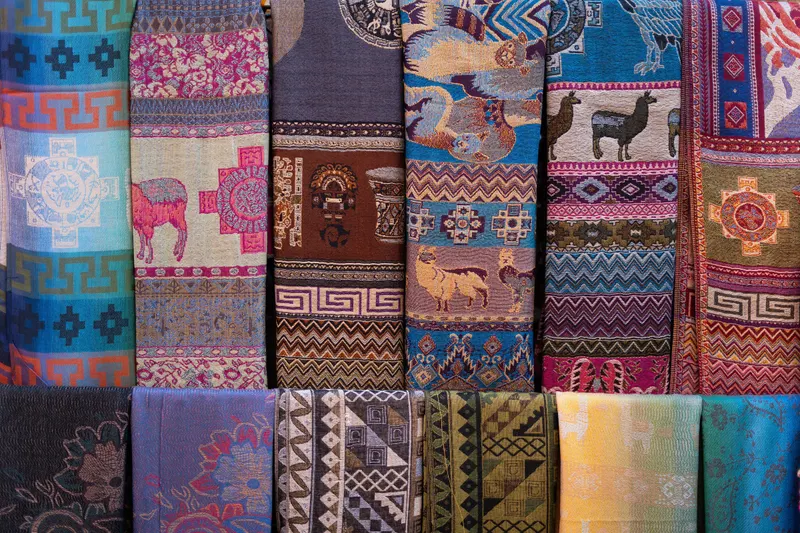
Most of the alpaca is one street over, in the craft shops of Calle Sagárnaga. Blending alpaca with sheep’s wool to cut the price is common, so read the label and ask “¿100% alpaca?” before paying pure-alpaca money. La Paz Life puts alpaca-blend sweaters at Bs 150-400 (about US$12.50-33) and pure alpaca considerably higher.
The street is named after Juan Bautista Sagárnaga, a leader of the 16 July 1809 uprising, who was hanged in La Paz in January 1810. After World War II, Jewish refugees kept shops here until the 1960s, according to Spanish Wikipedia.
Leave these on the shelf
- Sullus and wild-animal parts. US Customs says endangered wildlife and products made from them generally may not be imported, and every plant product must be declared.
- Coca leaves. Legal in Bolivia, illegal to import into Canada, and the UK Foreign Office says narcotics police search departing international passengers’ bags.
- Anything sold as antique. Canada’s travel advice says exporting pre-Columbian artifacts, colonial items or native textiles that Bolivia considers national heritage requires written permission from the Ministry of Culture. New weaving made for sale is fine in our reading.
Prices and haggling in 2026
The only 2026 price list we found is La Paz Life’s (September 2026), and we couldn’t confirm it stall by stall. Dollar conversions are ours, at Bs 12.02 per US dollar (Banco Central de Bolivia, 30 September 2026).
| Item | Price in Bs | About US$ |
|---|---|---|
| Simple mesa | 20-60 | 1.70-5 |
| Elaborate mesa | 100-200 and up | 8-17 and up |
| Ekeko figurine | 30-120 | 2.50-10 |
| Small bag of coca leaves | 10-20 | 0.80-1.70 |
| Alpaca-blend sweater | 150-400 | 12.50-33 |
| Coca-leaf reading | 50-150 | 4-12.50 |
Haggling is normal for souvenirs and alpaca. Ask “¿me hace un precio?” (can you give me a better price?), compare two or three stalls, and ask for a discount when you buy several pieces. We wouldn’t bargain over Bs 10, about 80 cents.
Pay in cash, in small notes. Street stalls rarely take cards, and QR payment needs a Bolivian banking app. Since the boliviano was floated on 26 June 2026, anyone converting at the old 6.96 rate is quoting the wrong price; our guide to Bolivian currency covers ATMs and exchange.
Can you take photos at the Witches’ Market?
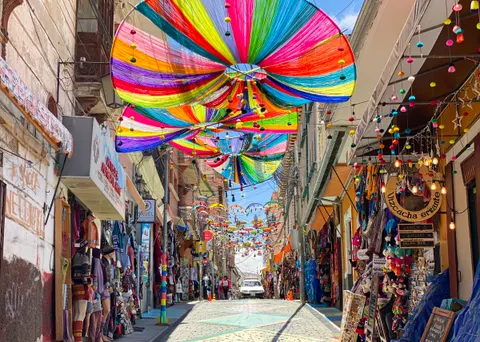
Wide shots of the street and its canopies need no permission. Vendors and their stalls do.
How to photograph the market
- Ask “¿Puedo tomar una foto?” before photographing a vendor or her stall, and take no for an answer.
- If you’ve spent ten minutes browsing and shooting, buy something small; a Bs 10-20 charm is a fair trade.
- Don’t photograph a coca-leaf reading or a ch’alla unless you’re invited.
Witches’ Market tours: guided or on your own?
No Viator tour covers the market alone. City walks stop here for 10 to 40 minutes, and that stop is where a guide earns the fee, because the objects mean little until someone explains them.
| Tour | From | Best for | Check availability |
|---|---|---|---|
| La Paz City Walking Tour Including Historical StreetsFree cancellation | $5 | Cheapest guided walk | Check price |
| City Tour plus Cable Car La PazFree cancellation | $10 | City walk plus five cable-car lines | Check price |
| Be a Local - La Paz Walking TourFree cancellation | $8 | Longest stop at the market | Check price |
| Cable Car, Cementery, Shaman and El Alto Adventure in La PazFree cancellation | $22 | Yatiri visit in El Alto | Check price |
| Private City tour, Cable Car and Moon ValleyFree cancellation | $43 | Half day with Moon Valley | Check price |
Prices in US$ per person from Viator as of Sep 30, 2026. They change; you see the final price before paying.
- Red Cap walk: 2.5 hours from Plaza San Pedro, with 25 minutes seated at the market. English only. Red Cap’s own site sells it daily at 10:00 and 14:00 for a $3 ticket plus a suggested $5-10 tip; Viator charges $5.
- Hanaqpacha city tour plus cable car: 3 hours at 11:00 or 15:00 from San Francisco church, in English or Spanish, adding five cable-car lines and El Alto’s witches’ market. The listing contradicts itself on tickets, so confirm cable-car fares are included.
- Be a Local: the longest market stop (40 minutes), from Plaza Murillo. The Thursday and Sunday version adds the cable car, El Alto’s flea market and a cholita wrestling show.
- Wonder Tours: sold as private, 4 to 5 hours with Valley of the Moon, ending with 25 minutes here; transport and cable-car tickets included.
Red Cap’s shaman tour skips the downtown market. We’d take the Red Cap walk for the cheapest context and Be a Local for the most time at the stalls; more options in our La Paz tours guide.
Is the Witches’ Market safe?
Canada’s travel advice says pickpockets and bag snatchers target La Paz’s tourist areas, sometimes spilling liquid on you and offering to clean it off while an accomplice works your bag. Wear your daypack on your front around Linares and Sagárnaga. Real police can’t search you on the street without a prosecutor’s order, the UK Foreign Office says, so never get into an unmarked car with someone who claims to be one.
Altitude is the likelier problem on day one. The CDC rates flying straight into La Paz as high risk for altitude illness and advises no alcohol for the first 48 hours, so take the uphill blocks slowly and read up on altitude sickness in La Paz.
Protests and the state of exception (as of September 2026)
The US rates Bolivia Level 2 (Exercise Increased Caution). A state of exception in force since 20 June 2026 (21 June, per the UK) runs to about mid-December, after road blockades cut off La Paz from 1 May to 23 June. On 9 September the US Embassy warned of protests over fuel prices, and diesel jumped from Bs 9.80 to 17.95 a liter on 18 September. Marches can close downtown streets, so check local news on the day. More in is La Paz safe?
El Alto’s witches’ market and the Feria 16 de Julio
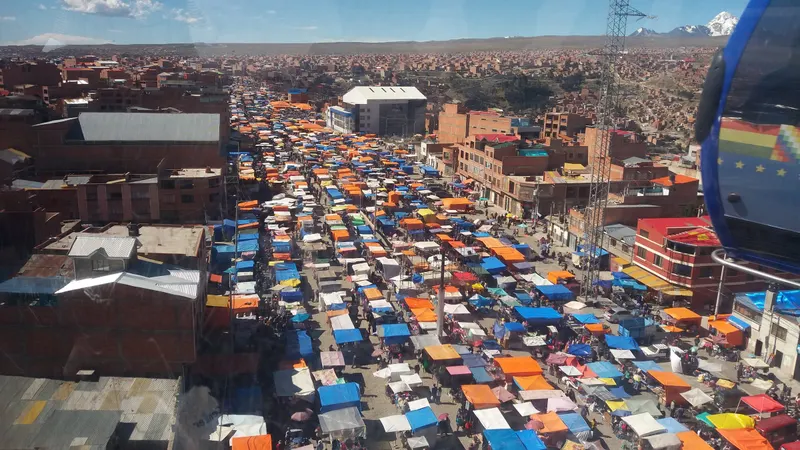
For a version with few tourists, go up to El Alto, the city on the rim above La Paz at about 4,150 m (13,620 ft). Its own herb and offering stalls line La Ceja, from the Sagrado Corazón area to Faro Murillo, and sell no souvenirs, according to Fernández Juárez; in 2006 BBC Mundo found protected species on open display there. On Thursdays and Sundays the Feria 16 de Julio spreads over about 200 blocks, one of the largest street markets in Bolivia.
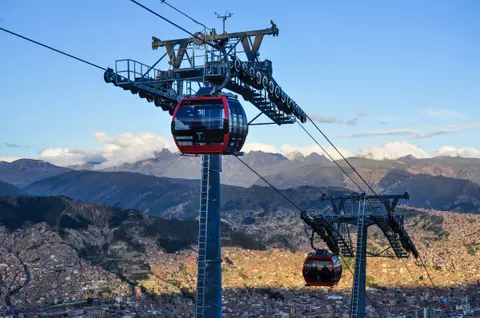
Take Mi Teleférico’s Red Line from Estación Central to 16 de Julio (11 minutes) for the fair, then the Silver Line one stop to Faro Murillo for La Ceja; a ride costs Bs 3 (about US$0.25) plus Bs 2 per transfer (September 2026). It’s colder up there, and the US State Department tells its employees to pay extra attention to their surroundings in El Alto. On a Sunday, add cholita wrestling. More in our El Alto guide and La Paz cable car guide.
Combine it with a downtown walk
The market fits a two-to-three-hour loop through the old center.
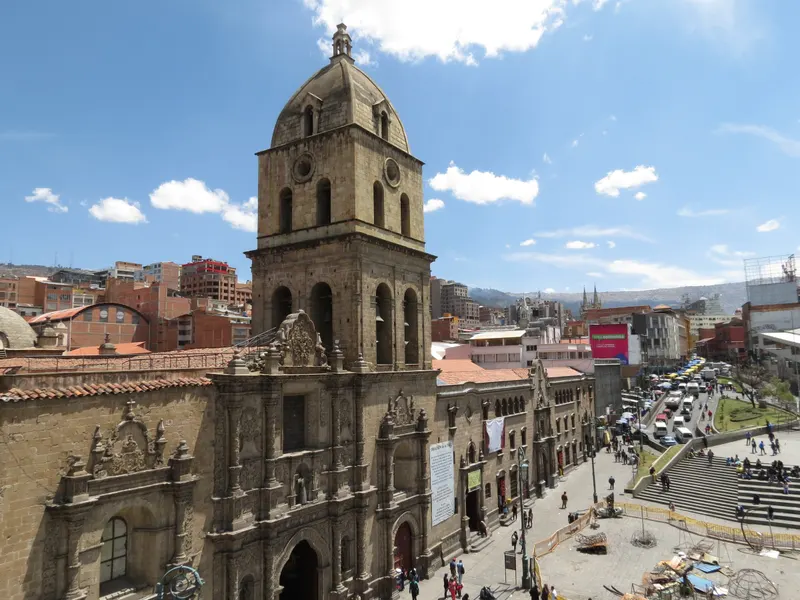
- Basílica de San Francisco. A mestizo baroque church consecrated in 1784.
- Sagárnaga and Linares. One block uphill, then right into the market.
- Coca Museum. Linares 906, about 120 m from the stalls; open Monday to Saturday (confirm hours).
- Mercado Rodríguez or Mercado Lanza. Lunch at the street market 400 m away or the four-floor market beside Plaza San Francisco; our guide to Bolivian food says what to order.
- Calle Jaén and Plaza Murillo. A colonial street of small museums, then the cathedral and government buildings.
Hotel Sagarnaga, at Sagárnaga 326, is around the corner from the market. Compare neighborhoods in our guide to hotels in La Paz or search La Paz hotels on Expedia.
Which one is for you?
- If you have one hour: walk up Sagárnaga, along Linares and Melchor Jiménez, and out along Santa Cruz.
- If you want the market locals use: go up to El Alto on a Thursday or Sunday.
- If it’s August or a first Friday: come early, when paceños buy their mesas.
Our verdict
Give it 30 to 60 minutes as part of a downtown walk. With context, from this page or a guide, it’s one of the most revealing stops in La Paz. Without it you’ll see a few blocks of strange shop windows and leave with an alpaca scarf.
For cable cars, Moon Valley and the rest of the city, see our list of things to do in La Paz.
Frequently asked questions
What is the Witches' Market in La Paz known for?
Ritual supplies. Aymara women called chifleras sell dried llama fetuses (sullus), which paceños bury under new houses as an offering to Pachamama, plus ready-made offerings called mesas, sugar tablets stamped with wishes, Ekeko figures, love charms, herbs and coca leaves. The market is on Calle Linares, one block up Calle Sagárnaga from Plaza San Francisco in downtown La Paz, Bolivia. The city council declared it part of La Paz's intangible cultural heritage in 2019.
What time does the Witches' Market in La Paz open?
There's no official timetable. Google and Apple Maps list 9:30 to 22:00 daily, while La Paz Life (September 2026) says most stalls open between 9:00 and 10:00 and close around 18:00-19:00, with Sundays quieter and several shops shut. To be safe, go Monday to Saturday between 10:00 and 17:00. La Paz Life also finds early mornings quieter and more local, and mid-afternoon the busiest.
Are the llama fetuses real, and where do they come from?
Yes, they're real dried llama fetuses, called sullus. Sara Shahriari's 2010 GlobalPost report says most come from miscarriages, the larger ones from stillbirths, and some from slaughtered llamas that were pregnant, so blog claims that all of them are natural miscarriages go further than the evidence. The anthropologist Gerardo Fernández Juárez adds that the fetus in a mesa sold to a tourist is often a sheep's.
What should I buy at the Witches' Market?
Small, new things. An Ekeko figure (Bs 30-120, about US$2.50-10, per La Paz Life in September 2026), a warmi munachi love charm, a few misterios sugar tablets as a curiosity, an aguayo cloth, or an alpaca-blend sweater on Calle Sagárnaga (Bs 150-400, about US$12.50-33). Check the label before paying pure-alpaca prices. Leave sullus, wild-animal parts, coca leaves and anything sold as antique.
Can I take a tour of the Witches' Market in La Paz?
Yes, as part of a city walk. No Viator product covers only the market, but several walks stop there for 10 to 40 minutes while a guide explains the stalls. The cheapest is Red Cap's English-language walk, daily at 10:00 and 14:00 from Plaza San Pedro, which costs a $3 ticket plus tip on its own site or $5 on Viator. Be a Local spends longest at the market. Compare them in our La Paz tours guide.
Can I take photos at the Witches' Market?
Wide shots of the street and its canopies are fine. Ask before photographing a vendor or her stall (“¿Puedo tomar una foto?”) and accept a no. If you've spent a while browsing and taking pictures, buy something small, such as a Bs 10-20 charm. Don't photograph a coca-leaf reading or a ch'alla offering unless you're invited.
Is Bolivia safe for tourists right now?
As of September 2026 the US rates Bolivia Level 2 (Exercise Increased Caution), Canada advises a high degree of caution, and the UK advises against all but essential travel only to the Chapare region. A state of exception runs to about mid-December 2026 after blockades cut off La Paz in May and June, and fuel-price protests can close streets. Downtown, the main risk is pickpockets. More in is La Paz safe?
Can I bring llama fetuses or coca leaves home?
We wouldn't. US Customs says endangered wildlife and products made from them generally may not be imported and every plant product must be declared, and La Razón found vicuña fetuses on sale here in 2015. Coca leaves are legal in Bolivia but illegal to import into Canada, and narcotics police search departing international passengers' bags. Check your own country's customs rules before buying anything animal- or plant-based.
Keep planning