







Quick answer
As of November 25, 2026, Bolivia is open to visitors and El Alto airport is working. Roads are the risk this week: diesel rose to Bs 20.57 on November 24, drivers blocked a road near Oruro and called strikes in Sucre and the Yungas, and the COB marches from El Alto to La Paz on November 27. Fly between cities where you can, leave early for the airport and check the ABC road map before any bus trip.
On this page
Last checked: November 25, 2026, 1:30 a.m. Bolivia time (UTC-4)
This page is a dated snapshot, not live news. Every point below says when it was reported and by whom. The diesel strikes announced for November 25 had only just begun when we checked, so look at the links in the last section before you travel by road this week.
Bolivia travel in late November 2026 comes down to one rule: the cities and flights are working, and the roads and protest days are the unknown. This Bolivia travel status page covers blockades, fuel, roads, El Alto airport and money, using official sources (Bolivia’s road authority, the US, UK and Canadian governments, the Central Bank, the hydrocarbons agency) and major news outlets, each with a date.
- US advisory
- Level 2 (Aug 18, 2026)
- State of exception
- to Dec 20, 2026
- Diesel
- Bs 20.57 a liter (from Nov 24, 2026)
- Next La Paz march
- COB, Fri Nov 27, 2026
- Official dollar
- Bs 11.83 (Nov 25, 2026)
- El Alto airport
- operating
Pre-booked rides to and from El Alto airport
Book on Viator From $28Private Transfer from El Alto Airport to La Paz, Bolivia Hotels
- Price
- From $28 per person
- Duration
- 0.5-1.1 h
- Rating
- Cancellation
- Free
 From $37.14Private Departure Transfer: La Paz Hotels to El Alto International Airport
- Price
- From $37.14 per person
- Duration
- Flexible
- Rating
- Cancellation
- Free
Prices in US$ per person from Viator as of Sep 30, 2026. They change; you see the final price before paying.
Bolivia travel status at a glance
| Topic | Status as of November 25, 2026 | Source |
|---|---|---|
| Government advice | US Level 2 in its August 18 advisory; Chapare Province Level 4; no new US Embassy alert since Sept 9. The UK advises against all but essential travel to Chapare and warns of fuel shortages and blockades. Canada says “exercise a high degree of caution” and avoid Chapare (Oct 14) | US State Dept, US Embassy, UK FCDO, Canada |
| Blockades and strikes | Drivers blocked the Oruro to Potosí and Chuquisaca road (Nov 24); Sucre drivers’ indefinite strike with blockades from Nov 25; Yungas Norte transport suspended departures to northern La Paz for 48 hours from Nov 25 | eju.tv (Unitel), Nov 24 |
| Next protests | National drivers’ meeting in La Paz, Thu Nov 26, 10:00; COB march from El Alto to central La Paz, Fri Nov 27, from 14:00 | eju.tv, Nov 23 and 24 |
| State of exception | Extended for 90 days, to December 20, 2026 | Red Uno, Sept 17 |
| Fuel | Diesel Bs 20.57 a liter from Nov 24 (was Bs 17.95); no diesel at Oruro filling stations on Nov 10 | ANH via eju.tv, Nov 24; eju.tv, Nov 11 |
| Weather | SENAMHI orange and yellow river-flood alerts Nov 22-28, mostly in the south and east; rain forecast from Nov 25 | eju.tv, Nov 22 |
| El Alto airport | Operating; last weather closure Aug 24 | ABI, Aug 24 |
| Money | Floating boliviano, Bs 11.83 per US$ official | Central Bank of Bolivia, Nov 25 |
Blockades and protests (bloqueos)
Road blockades are the main way people protest in Bolivia, and they hit travelers hardest. From May 1 to June 23, 2026, blockades cut La Paz and El Alto off by road for about 53 days, with shortages of food, fuel and medical oxygen. On June 20 the government declared a state of exception to clear the roads, and on September 17 the legislature extended it for 90 days, to December 20, 2026 (Red Uno, September 17; Los Tiempos, September 21). Some outlets reported December 17 instead. The UK says it lets police and the armed forces remove roadblocks and detain people who don’t comply for up to 8 hours without charge. Canada says it carries no curfew.
November 24: diesel price rise, strikes and a blockade near Oruro
From midnight on Tuesday, November 24, 2026, diesel costs Bs 20.57 a liter, up Bs 2.62 from Bs 17.95. The hydrocarbons agency (ANH) said the change applies Supreme Decree 5716, which ties the pump price to the cost of imports (eju.tv, November 24). The hydrocarbons minister said the price could come down again in the coming weeks, so it can move in either direction.
Transport unions reacted within hours, all on November 24 (eju.tv, citing Unitel):
- Oruro: drivers blocked the road that links Oruro with Potosí and Chuquisaca, also cutting traffic to Huanuni, Poopó and Challapata. This is the start of the road south toward Uyuni and Potosí.
- Sucre: the Chuquisaca drivers’ federation called an indefinite strike from 00:00 on November 25, with blockades on Sucre’s main streets, the four roads out of the city and rural checkpoints (eju.tv).
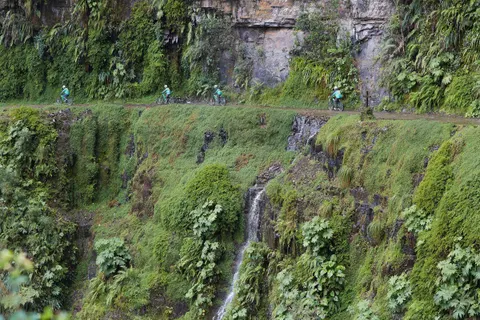
- Yungas: the Yungas Norte transport federation suspended departures from the Yungas to northern La Paz department for 48 hours from 00:00 on November 25 (eju.tv). That is the bus route toward Caranavi and Rurrenabaque, not the Death Road bike tours, but ask your operator.
- Nationwide: the Bolivian drivers’ confederation called an emergency meeting in La Paz for Thursday, November 26 at 10:00 to decide what to do next.
Expect bus fares to rise too: interdepartmental bus companies in Cochabamba said the increase will reach ticket prices (eju.tv, November 24).
Teachers and the COB march on Friday, November 27
Urban teachers ended an 18-day hunger strike in La Paz on November 20, the same day police dispersed their march near Plaza del Estudiante with tear gas; their leaders said they would step up protests with the COB labor federation (eju.tv, November 20). The COB has called a march for Friday, November 27: marchers gather at 14:00 at the Polifuncional de La Ceja in El Alto and walk down to the COB headquarters in central La Paz (eju.tv, November 23). La Ceja is where the highway from La Paz reaches El Alto, on the way to the airport, so on Friday afternoon leave for your flight early.
The November 10 blockade on the La Paz to El Alto highway
On Tuesday, November 10, 2026, the second day of a 48-hour teachers’ strike, staff and students from the Pedro Domingo Murillo technical institute blocked the La Paz to El Alto highway (the autopista) at Achachicala, near Avenida Chacaltaya (eju.tv, November 10). They used barricades and burning tires, and police cleared the road with tear gas. The La Paz police commander reported about 30 arrests (Bolivia.com, November 11). The autopista is the main road between central La Paz and El Alto airport. The strike ended, and teachers went back to class on November 11 (El Deber, November 10).
Earlier in November: teachers, miners and the Evo Morales march
- Teachers: the national urban teachers’ confederation (CTEUB) warned on November 11 of a 72-hour strike if the government does not open talks on handing technical institutes to the regional governments, and said it would set dates in the coming days (Panamericana, November 11). Its leaders have talked of road blockades and an open-ended strike (Prensa Mercosur, November 10).
- Miners: the COB labor federation, the mineworkers’ federation (FSTMB) and the La Paz labor council rejected the draft Mining Code, declared a state of emergency and threatened to block roads and march on La Paz (Visión 360, November 5). On November 9, cooperative miners occupied the venue in Potosí where the Mining Ministry planned to present the draft (Visión 360, November 9).
- Evo Morales march: groups allied with the former president called a march on La Paz for October 13, moved it to October 19, and it didn’t start either time. On November 6 they postponed it again in Patacamaya, in the face of a heavy police and military presence, and set no new date (ANF, November 6).
Since then the miners’ federation (FSTMB) has kept its state of emergency over the draft Mining Code (eju.tv, November 20), and the COB’s November 27 march also opposes the draft. If you are traveling overland, check the evening before and again that morning.
What the governments advise:
- Don’t cross a roadblock, even if it looks empty (Canada, US).
- Avoid protests, especially around Plaza Murillo and government buildings in central La Paz (Canada).
- Carry extra food, water, warm clothes and medication on road trips, in case you get stuck (Canada).
- Keep a buffer day before international flights if your plans involve overland travel.
Road status: what the ABC reports
The Bolivian Highway Administration (Administradora Boliviana de Carreteras, ABC) publishes the state of the main road network on its transitabilidad map. The US and UK note that it is in Spanish and only reachable from inside Bolivia.
On Sunday, November 8, 2026, the ABC’s 7:30 a.m. report listed no blockades. It showed restrictions and detours for roadworks in La Paz, Santa Cruz, Tarija and Chuquisaca (Red Uno, November 8). In La Paz department, the timed closures in the Yungas were still in place:
| Section (La Paz department) | Closed during these hours |
|---|---|
| Unduavi to Puente Chaco (Yerbani sector) | 7:00-11:00 and 15:00-19:00 |
| Puente Chaco to Puente Villa | Mon-Sat 8:00-12:00 and 13:30-18:00; Sundays and holidays 8:00-13:30 |
Source: ABC report of November 8, 2026, via Red Uno. The ABC takes road emergency calls on WhatsApp at +591 71219232.
The November 8 report listed no closures on the La Paz to Copacabana, La Paz to Oruro or Oruro to Uyuni roads. By November 24 drivers were blocking the road south of Oruro over the diesel price (see above), so check again on the day. The rainy season, November to March, adds landslides and floods that can close roads for days (UK, Canada); see La Paz weather.
Buses: in Bolivia a ticket sold condicionado (conditional) does not guarantee you will arrive, says the UK. Buy from the terminal or an established company and ask whether the route is open that day. Our Cusco and Puno to La Paz guide covers border routes.
Uyuni with fewer hours on the road
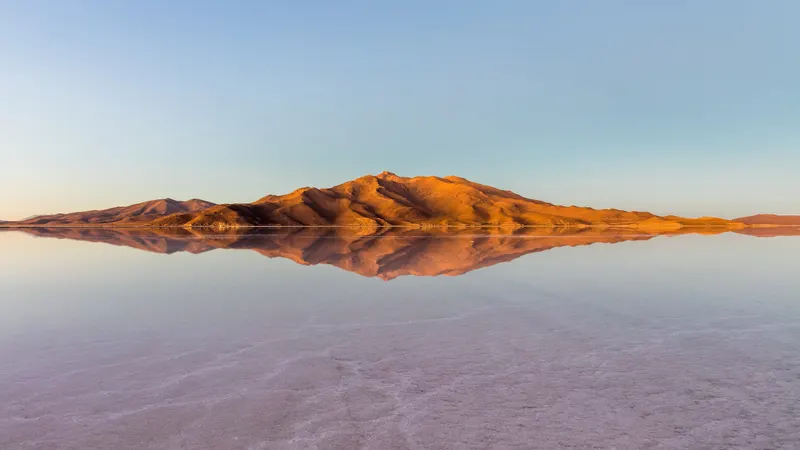
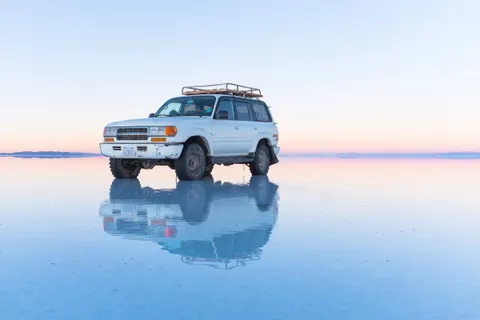
Book on Viator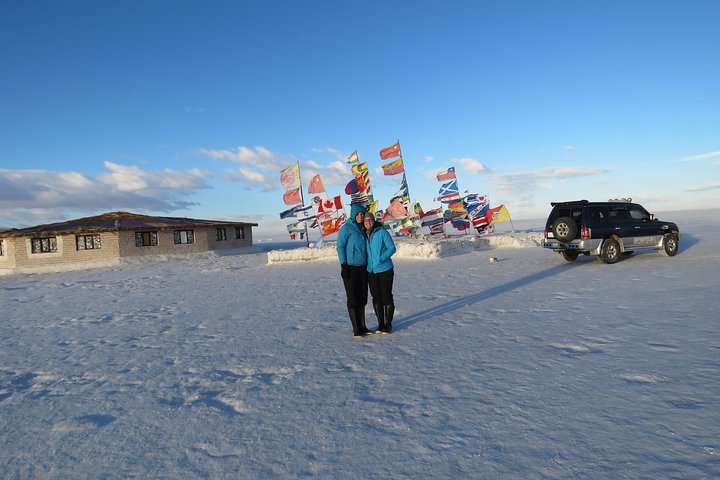 From $1,297Private 1D 1N Trip from La Paz to Uyuni Salt Flats by Air.
- Price
- From $1,297 per person
- Duration
- 15 h
- Rating
- Cancellation
- Free
 From $80Uyuni Salt Flat 1 Day Tour +Sunset in the Salt Water Region with Mirror Effect
- Price
- From $80 per person
- Duration
- 9 h
- Rating
- Cancellation
- Free
Prices in US$ per person from Viator as of Sep 30, 2026. They change; you see the final price before paying.
Fuel shortages: gasoline and diesel
On September 18, 2026, the government ended the diesel subsidy (Supreme Decree 5716), and the price went from Bs 9.80 to Bs 17.95 a liter (Infobae, September 28). Since then, distribution has been patchy. On October 5, El Deber reported that gasoline lines persisted in several regions even after YPFB said it had increased deliveries, and the national free-transport confederation reported lines for gasoline and diesel in Potosí, Oruro, Beni, Santa Cruz, Tarija, Sucre and the city of La Paz (CCB, October 5).
On November 24, diesel went up again, to Bs 20.57 a liter, and transport unions answered with the strikes and blockade described above. Supply problems continue in some cities. On November 10, truckers in Oruro found no diesel at any filling station in the city, and about 60 fuel tankers had waited for days to unload at the YPFB plant (eju.tv, November 11).
What it means for you:
- Uyuni: in September, diesel shortages halved tourist transport capacity in Uyuni for a time (eju.tv, September 18), and after four days without gasoline local operators said they were cancelling tours sold months earlier (Radio Kollasuyo, September 24). Ask your operator how they will handle it, or compare La Paz to Uyuni flights. Which operators have the most reviews, what the 1-day and 3-day tours cost and which park fees are cash-only: Uyuni salt flats tours from La Paz.
- Prices: intercity bus fares rose after the September diesel increase, and bus companies say the November 24 rise will push them up again; city minibuses in La Paz still charged Bs 3 in late September.
- Self-drive: don’t count on filling up wherever you are. The US also warns that poor-quality fuel can damage engines.
Airport access: El Alto International (LPB)
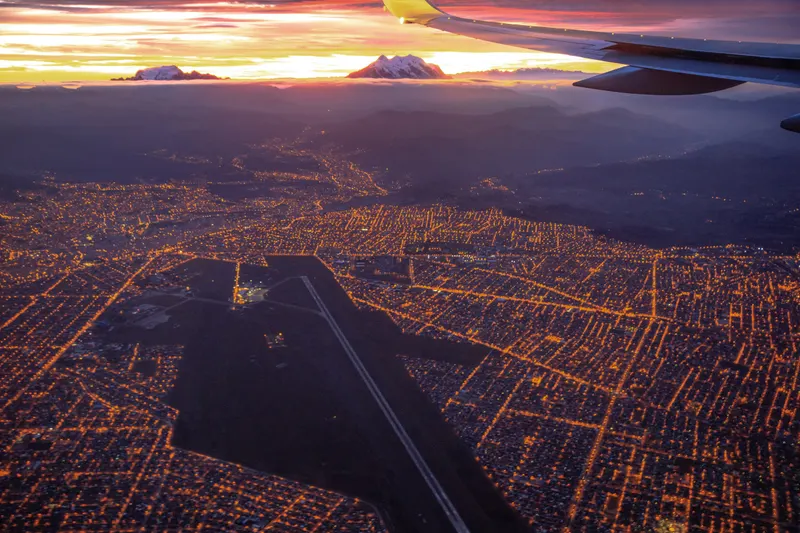
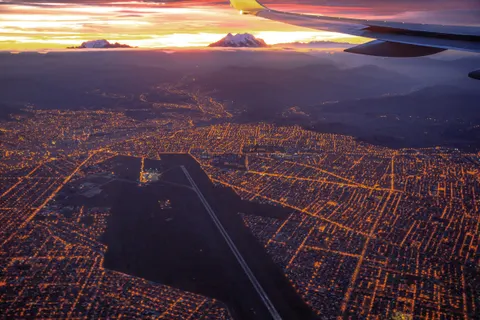
El Alto International Airport is operating. In the news we checked through November 25, 2026, the last closure was on August 24, when snow and low visibility stopped flights for several hours; the operator NAABOL reopened it later that day (ABI). During the May and June blockades, the US Embassy reported on June 2 that air travel was operating normally, even as roads were cut.
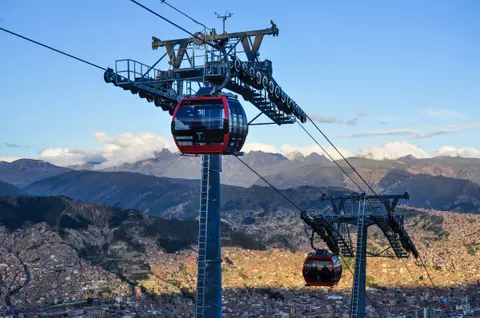
The weak point is the road. On November 10, the teachers’ blockade at Achachicala cut the La Paz to El Alto highway until police arrived (eju.tv). Canada lists roads to airports among those most exposed to blockades and advises checking with your airline before you set out. The COB march on Friday, November 27 gathers at La Ceja in El Alto at 14:00. On a protest day, leave early or book a private transfer, use the teleférico (cable car) to El Alto where it fits your route, and keep your airline’s app handy. Snow can also close the airport in August and September. Full details on transfers are in our El Alto airport guide.
Money and exchange rate
Bolivia’s currency changed more in 2026 than in the previous decade. The Central Bank of Bolivia (BCB) let the boliviano float in June 2026, ending the fixed Bs 6.96 rate. On November 25, 2026, the BCB’s official rate was Bs 11.83 per US dollar (Bs 11.71 on November 11), and in late September the street rate sat within 1% of the official one. The rate moves every day.
- Cash: bring clean, undamaged US dollars as a backup. The US State Department says banks and exchange houses often reject folded, marked or worn notes.
- ATMs: they work with foreign cards, but the US warns that they are often out of order and can charge high fees. Withdraw in cities, since cash machines are scarce in rural areas.
- Cards: Canada says they are not widely accepted outside urban centers, so carry small notes for taxis, snacks and tips.
Full exchange tables and tips are in our Bolivia currency guide.
How to check the current status yourself
Bookmark these before you travel. All are official, except where noted.
- Roads: ABC transitabilidad map (Spanish; from Bolivia only). Bolivian news sites such as Red Uno publish the ABC’s daily summary.
- Weather alerts: SENAMHI for snow, frost and storm warnings.
- Airport: your airline’s app, and NAABOL, the airport operator, at naabol.gob.bo.
- Exchange rate: Banco Central de Bolivia, updated every night for the next day.
- US citizens: US Embassy alerts and the STEP alert service.
- UK citizens: FCDO Bolivia travel advice, with email updates.
- Canadians: Bolivia travel advice and the ROCA registration service.
- Cable car: same-day closures appear on the operator’s Facebook page, @miteleferico.
- Bus trips: call the company or ask at the terminal on the morning you travel.
Ask your hotel too. Staff in La Paz usually know within minutes when a road closes. For the city itself, read La Paz travel tips and is La Paz safe?.
Frequently asked questions
Is it safe to travel to Bolivia right now?
For most visitors, yes, with planning. The US rated Bolivia Level 2 (exercise increased caution) in its August 18, 2026 advisory and puts only Chapare Province at Level 4; the US Embassy had posted no new alert since September 9 when we checked on November 25. The UK and Canada single out Chapare too. The risks for a traveler right now are road blockades, transport strikes and protest days, not attacks on tourists. Our La Paz safety guide covers crime and scams.
Are there road blockades in Bolivia today?
Some, and more are announced. On November 24, 2026, drivers blocked the road from Oruro to Potosí and Chuquisaca over the diesel price rise, and Sucre's drivers called an indefinite strike with blockades from midnight on November 25, including the four roads out of the city (eju.tv, November 24). The national drivers' confederation meets in La Paz on Thursday, November 26 to decide on wider action. The state of exception formally bans blockades, but they happen anyway. Check the ABC map, which works only from Bolivian connections, or ask your hotel or bus company.
Is there a fuel shortage in Bolivia?
On and off, and diesel just got more expensive. From November 24, 2026, diesel costs Bs 20.57 a liter, up from Bs 17.95, under the September decree that ties the price to import costs (ANH, via eju.tv). On November 10 truckers in Oruro found no diesel at any filling station (eju.tv, November 11). For travelers it means higher bus and tour prices, possible transport strikes and occasional cancellations.
Is El Alto airport open?
Yes. In the news we checked through November 25, 2026, the last closure was on August 24, when snow suspended flights for several hours; the airport operator NAABOL reopened it the same day. The road is the weak point: on November 10 a blockade cut the La Paz to El Alto highway, and the COB's march on Friday, November 27 starts at La Ceja in El Alto at 14:00. Confirm with your airline and leave early on protest days.
Can I use dollars and ATMs in Bolivia now?
Yes. The boliviano has floated since June 2026, and on November 25 the Central Bank's official rate was Bs 11.83 per dollar, up from Bs 11.71 on November 11. In late September the street rate was within 1% of the official one, so there is no longer a big gain from bringing cash to change on the street. Bring clean, undamaged US dollars as a backup and expect some ATMs to be out of service.
Should I cancel my trip to Uyuni?
Not by default, but build in slack. In September 2026 fuel shortages in Uyuni halved tourist transport capacity for a time (eju.tv, September 18) and operators cancelled some tours (Radio Kollasuyo, September 24). Book with an established operator, ask how they are sourcing fuel, keep a spare day and consider flying to Uyuni rather than taking a long bus. See our Uyuni salt flats guide.
Keep planning