









Quick answer
Huayna Potosí (6,088 m) is a glaciated peak about 25 km north of La Paz, Bolivia, and one of the easiest 6,000-meter summits to reach. It is still a roped glacier climb on crampons, so you need a guide, good fitness and 3-4 days acclimatizing first. Most people book the 3-day program (from about US$210 on Viator, plus a Bs 50 fee) and climb between May and September.
On this page
- Huayna Potosí at a glance: height, location and history
- How hard is it to climb Huayna Potosí?
- 2-day or 3-day Huayna Potosí climb: which one to book
- The Huayna Potosí climb, day by day
- How much does it cost to climb Huayna Potosí? (2026)
- Which Huayna Potosí tour to book
- How to acclimatize for Huayna Potosí
- Best time to climb Huayna Potosí
- Gear: what’s included and what to bring
- Death rate and risks: how dangerous is Huayna Potosí?
- Current conditions in 2026: blockades, fuel and the state of exception
- Other mountains to climb in Bolivia
- Frequently asked questions
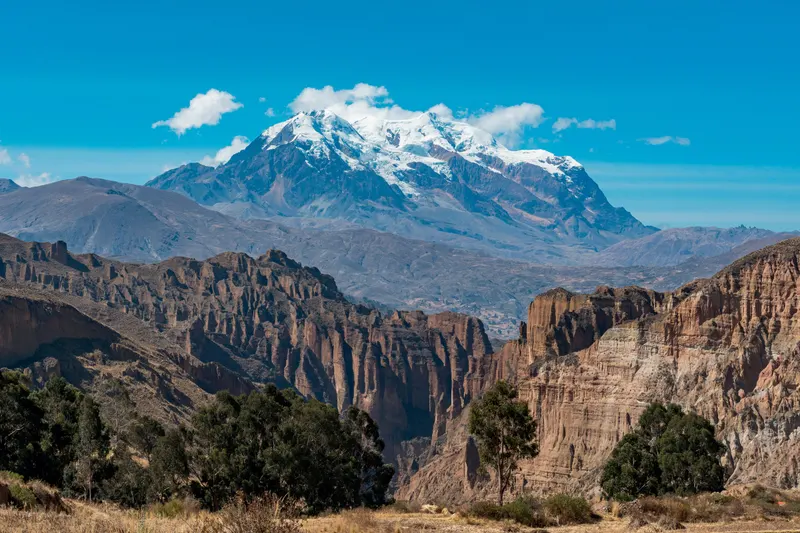
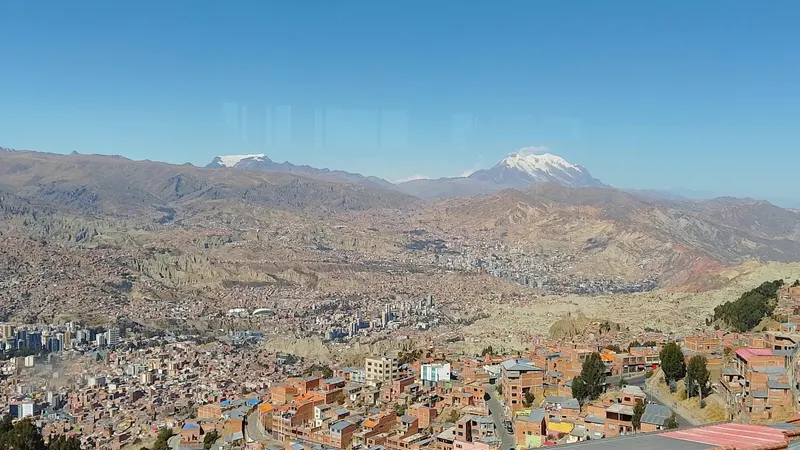
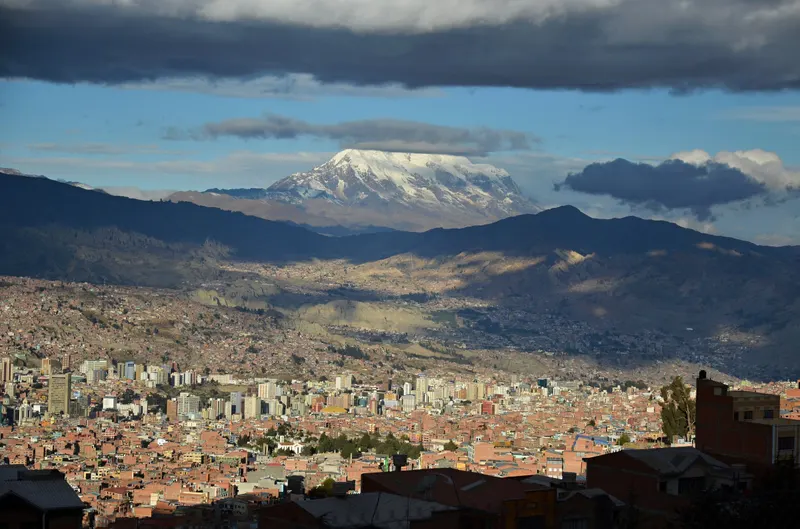
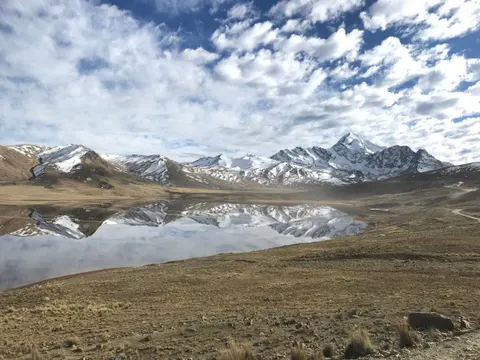
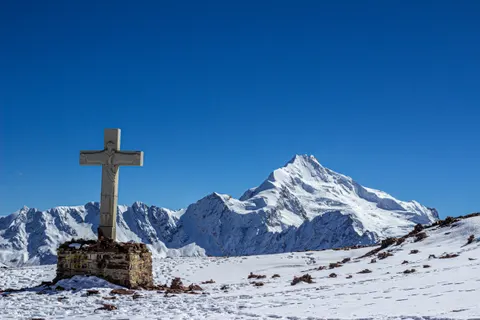
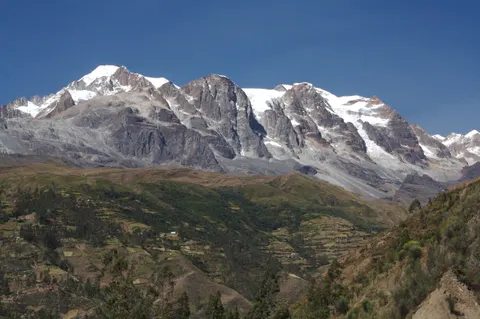
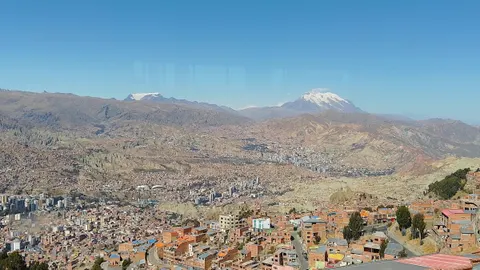
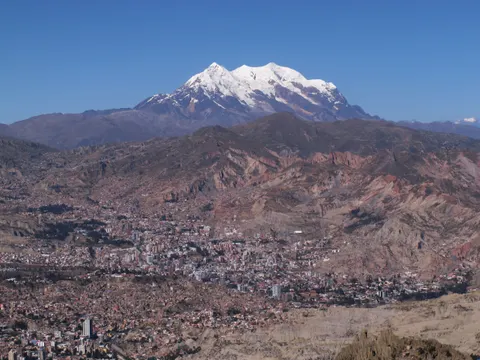
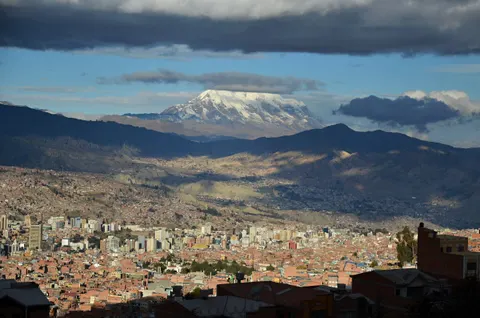
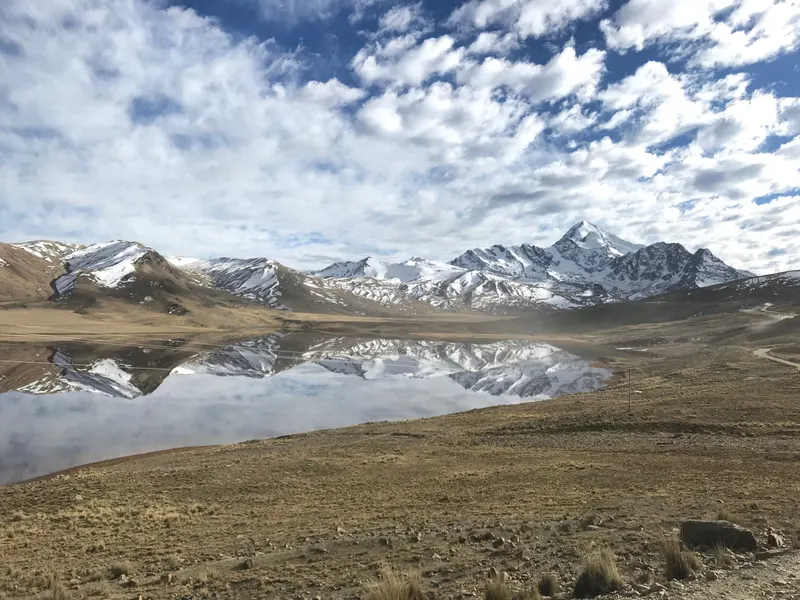
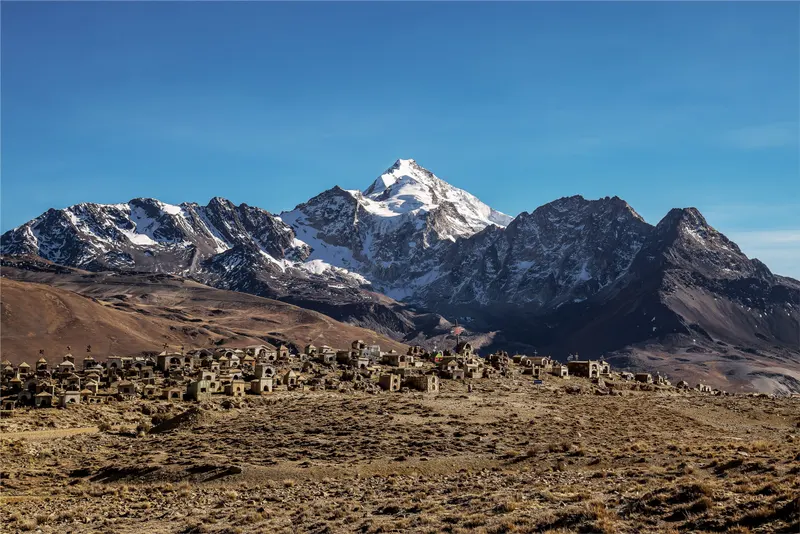
Huayna Potosí rises to 6,088 m (19,974 ft) in Bolivia’s Cordillera Real, about 25 km north of La Paz, and its glacier is visible from El Alto and much of the city’s north side. Its reputation as the easiest 6,000 m peak in the world comes mostly from the road, which reaches base camp at Paso Zongo (about 4,700 m) and leaves less than 1,400 m of climbing to the summit. Summit day still means 4-7 hours up a roped glacier in crampons, starting around 1 a.m.
The CDC rates flying straight into La Paz as high risk for altitude illness. If you arrived this week, read our La Paz altitude sickness guide before you book anything with a 6 in front of it.
- Summit
- 6,088 m (19,974 ft)
- From La Paz
- 25 km north; 1 h 45 to 3 h drive
- Program
- 2 or 3 days, guided
- Best season
- May to September
- Fee
- Bs 50, about US$4 (Sep 2026)
- Guide ratio
- 1 guide per 2 climbers
Best-rated Huayna Potosí climbs
Book on Viator From $210Huayna potosi 6088m. 3 day ClimbFree cancellationCheck availability
 From $327Huayna Potosí (3 days)Free cancellationCheck availability
 From $170Huayna potosi 6088m. 2 day ClimbFree cancellationCheck availability
Prices in US$ per person from Viator as of Sep 30, 2026. They change; you see the final price before paying.
Huayna Potosí at a glance: height, location and history
Wikipedia and Wikidata give the summit as 6,088 m; some Bolivian operators and the Spanish-language Wikipedia say 6,094 m. Huayna means “young” in Aymara, and you’ll also see the name spelled Wayna Potosí. The first recorded ascent came in May 1919, when the German climber Rudolf Dienst reached the top with O. Lohse, the manager of a local tin mine. Plenty of guides credit Adolf Schulze, but the Alpine Journal says Schulze joined Dienst a month later, for the first ascent of Ancohuma.
The drive to base camp crosses El Alto and passes the Milluni valley. Zongo Glacier, on the mountain’s south side, has thinned by more than 7 m since monitoring began in 1991 and pulled back 220 m between 1994 and 2014, according to glaciologist Mauri Pelto. Crevasses and route sections shift every season, so a trip report from a few years back may describe terrain that no longer exists.
How hard is it to climb Huayna Potosí?
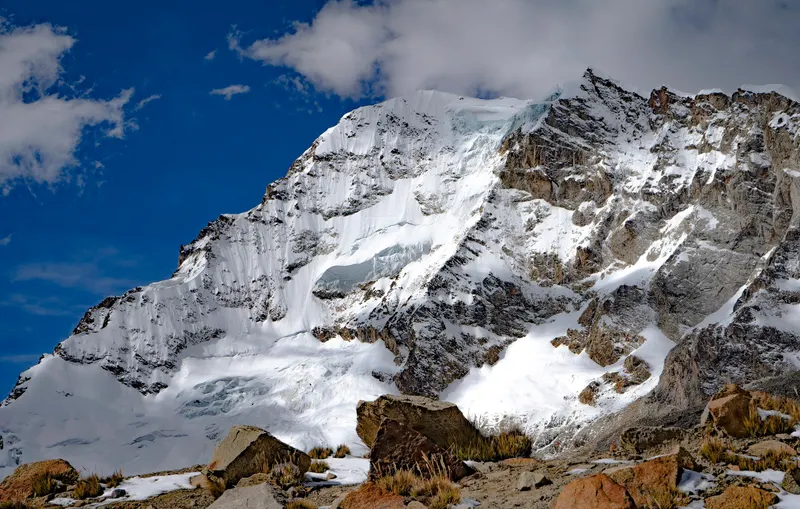
The normal route is graded PD (“slightly difficult”) on the French alpine scale, and the Alpine Institute rates it PD to AD-. You walk uphill on a glacier in crampons, roped to your guide, with an ice axe in your hand. Most slopes run 35-40°. Operators describe one or two short sections of 45-60° between about 5,500 and 5,800 m (accounts differ, and the ice changes yearly), then a narrow, exposed summit ridge.
From high camp the summit push takes 4-7 hours, and the full day back to base camp 8-12. The 1 a.m. start gets you off the upper slopes before the sun softens the snow. The Spanish-language Wikipedia puts the rise in avalanche risk from about 8 a.m., and a 2016 report on Andeshandbook describes heavy rockfall after 8 a.m. from a rock band about 100 m below the summit. Altitude is the crux. You start on a few hours of broken sleep at 5,130-5,300 m and gain the last 800-950 m in the cold and dark.
Can a beginner climb Huayna Potosí?
Yes. Agencies take people who have never worn crampons and teach the basics on the first afternoon of the 3-day program. Fitness counts for more than experience, since you haul a 50-60 liter pack to high camp and then climb for up to seven hours on little sleep. Skip it if you have heart problems or a strong fear of heights (Jiwaki’s Viator listing warns against both), or if you’re still sleeping badly after three or four nights in La Paz.
Huayna Potosí vs Kilimanjaro
| Huayna Potosí | Kilimanjaro | |
|---|---|---|
| Summit | 6,088 m | 5,895 m |
| Terrain | Roped glacier climb, crampons and ice axe | Hiking trail on the normal routes |
| Typical trip | 2-3 days from La Paz | 6-7 days or more |
| Acclimatization | Done before you start | Built into the trek |
Can you climb Huayna Potosí without a guide?
Beyond the access fee, we found no permit system or guide requirement, so a team with its own gear and crevasse-rescue skills can go alone. Everyone else should hire a guide. In November 2024, La Paz firefighters needed 12 hours to recover the body of a 28-year-old climber who had died on the glacier at about 5,400 m more than a year earlier, and press reports said he had climbed without proper safety equipment.
“Easiest 6,000er” still means a glacier at 6,088 m
Guides turn the rope around for altitude symptoms, exhaustion, numb hands and feet, or a pace too slow to get off the upper slopes before the sun warms them. With one guide per two climbers, one struggling climber can end the summit bid for their partner too, so ask before you book how the operator handles that.
2-day or 3-day Huayna Potosí climb: which one to book
| 2 days / 1 night | 3 days / 2 nights | |
|---|---|---|
| Where you sleep | High camp, about 5,130-5,300 m | Base camp (4,700 m), then high camp (5,130-5,300 m) |
| Sleeping-altitude jump from La Paz (3,640 m) | +1,490-1,660 m in one day | +1,060 m, then +430-600 m |
| Glacier practice | Short or none | Afternoon of day one |
| Viator price (Sep 2026) | From about US$170 (Bs 2,045) | From about US$210 (Bs 2,525) |
| Best for | Climbers already acclimatized | Most people, and first-timers on crampons |
The CDC’s altitude guidance says that above 3,000 m you should raise your sleeping altitude by no more than 500 m a night and add a rest night for every 1,000 m gained. Both programs break that rule. The 3-day program breaks it by less and adds an afternoon on the practice glacier.
Our verdict
Book the 3-day climb unless you’ve summited another 5,000 m peak or slept above 4,500 m in the past week. The extra night at base camp costs about US$40 more on Viator and splits the altitude jump in two. If you landed in La Paz less than four days ago, do an acclimatization hike before either program.
The Huayna Potosí climb, day by day
On the 2-day program you skip the base-camp night and reach high camp around 3 p.m. on the first day.
Day 1: La Paz to base camp (4,700 m) and glacier practice
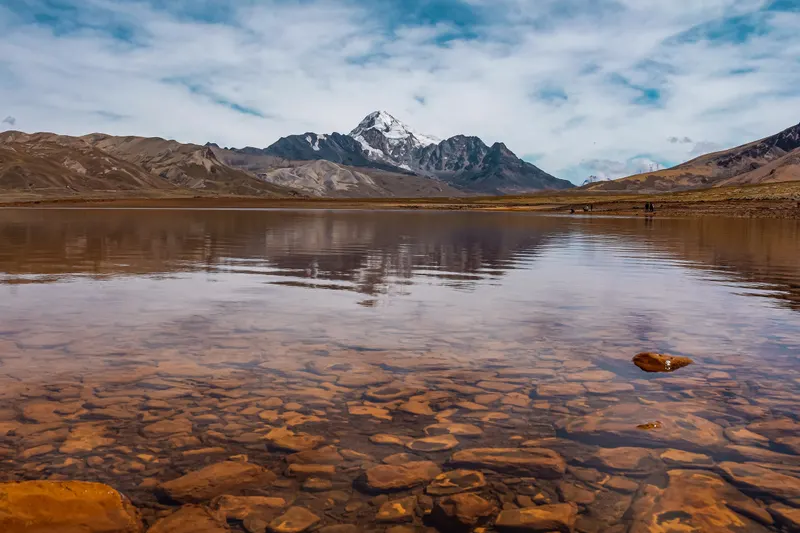
Groups leave central La Paz at 8:30-9 a.m. (Jiwaki from its office at Calle Sagarnaga 342). The road climbs through El Alto, passes Laguna Milluni and the abandoned Milluni mine, and reaches the Paso Zongo refuges in 1 hour 45 minutes to about 3 hours. After lunch you practice crampon, ice-axe and rope skills on the old glacier at about 4,900 m. You sleep at 4,700 m.
Day 2: carry to high camp (5,130-5,300 m)
After a slow morning and lunch, you walk 3-4 hours uphill with a 50-60 liter pack. Huts vary by operator, from about 5,130 m (Campo Alto, or Campo Roca) to 5,200 m (Campo Argentino) and higher. Dinner is around 5:30-6 p.m. Some operators offer a porter for this stretch (Bs 150 in one 2025 trip report, before the currency float; ask the current rate).
Day 3: summit day
Wake-up comes between midnight and 1 a.m., and you leave by headlamp around 1:00-1:30, aiming for the top around sunrise. Your guide sets the turnaround time. The descent takes about 2 hours to high camp and 1.5 more to base camp, and you’re back in La Paz around 1-2 p.m. Plan nothing more demanding than a shower and a long lunch.
How much does it cost to climb Huayna Potosí? (2026)
Prices are, at about Bs 12 per US$ after the June float (see our Bolivia currency guide).
| Item | US$ | Bs | Notes |
|---|---|---|---|
| 3-day climb on Viator | From about 210 | From about 2,525 | Private from about US$327 (Bs 3,930) |
| 2-day climb on Viator | From about 170 | From about 2,045 | Acclimatized climbers only |
| 3-day climb booked direct | 150-180 | About 1,800-2,165 | One agency’s posted price |
| Mountain entrance fee | About 4 | 50 (one operator lists 20) | Cash, at the access point |
| Porter to high camp | About 12 | 150 (2025 price) | Optional; confirm the current rate |
| Sleeping bag rental | About 2.50-4 | 30-50 | Jiwaki’s price (2- or 3-day climb) |
| Tips | About 5-15 per guide | - | Custom, not a rule; sources disagree |
| Acclimatization day hike | 40-105 | About 480-1,260 | Charquini or Pico Austria on Viator |
Booking direct is cheaper. Jiwaki, which runs the most-reviewed shared 3-day climb on Viator (from about US$210), lists the same climb on jiwaki.com at US$180, or US$150 with the 17% discount it showed in September 2026. Viator fixes your date before you fly, shows you the reviews and offers free cancellation up to 24 hours before on the four climbs we recommend.
Ignore older quotes in bolivianos, such as a 2025 trip report’s Bs 850-1,000 for three days; they predate the float. Diesel also jumped from Bs 9.80 to Bs 17.95 per liter on 18 September 2026, so get your price confirmed in writing.
Which Huayna Potosí tour to book
| Tour | From | Best for | Check availability |
|---|---|---|---|
| Huayna potosi 6088m. 3 day ClimbFree cancellation | $210 | Best value, shared group | Check price |
| Huayna Potosí (3 days)Free cancellation | $327 | Most reviews, private | Check price |
| Huayna potosi 6088m. 2 day ClimbFree cancellation | $170 | Already acclimatized only | Check price |
| HUAYNA POTOSI 6.088 m.(the most popular mountain in Bolivia)Free cancellation | $485 | Premium private | Check price |
Prices in US$ per person from Viator as of Sep 30, 2026. They change; you see the final price before paying.
In September 2026 only five Huayna climbs on Viator had more than 25 reviews, and we left out one whose listing talks up deaths without citing a source. Check these details before you pay:
- Jiwaki 3-day: gear, meals and huts are included, the sleeping bag isn’t (rent one from Jiwaki or bring one rated to about -5 °C). The booking form only takes ages 18-49, so older climbers should message the operator or book SouthTreks.
- SouthTreks 3-day private: you bring the sleeping bag and headlamp and pay a Bs 20 ticket. The listing offers cooking only for three or more climbers, so ask about meals if you’re one or two. The operator can cancel for bad weather.
- Premium private 3-day: we couldn’t check its inclusions, so read the listing first.
How to choose a Huayna Potosí operator
- Certified guide: ask whether your guide holds AGMTB certification; the association is Bolivia’s member of the international federation IFMGA/UIAGM.
- Ratio in writing: one guide per two climbers is standard; a private one-to-one guide costs extra.
- Your own checks: the UK Foreign Office says Bolivia has no official minimum standards for tour operators, so inspect the gear and ask about insurance.
What we'd skip
- The cheapest walk-in quote from an agency that won’t put the guide ratio in writing.
- Listings that get basic facts wrong. One on Viator gives the summit as 6,008 m.
- A 2-day climb booked for the day after you land.
For other trips run from the city, see our La Paz tours guide.
How to acclimatize for Huayna Potosí
Flying in, you land at 4,061 m in El Alto (the city sits at about 4,150 m), then drop to central La Paz at about 3,640 m. Since neither Huayna program follows the CDC’s pace, you do the adapting in La Paz beforehand.
Our minimum is three or four nights in La Paz plus one day hike to 5,000-5,400 m a day or two before the climb. A week at Altiplano altitude is better, and nights at Lake Titicaca or on an Uyuni tour count. Jiwaki asks for at least seven days in La Paz or another high area. Skip alcohol for the first 48 hours, as the CDC advises.
| Hike | High point | Walking | Good to know |
|---|---|---|---|
| Chacaltaya | 5,395 m or 5,421 m (sources differ) | 30-60 minutes up from the old ski lodge (about 5,300 m) | 1.5-2 hours’ drive; often combined with the Valley of the Moon |
| Charquini and Laguna Esmeralda | 5,024 m at the lagoon | About 1 hour up from a trailhead at about 4,800 m | Views of Huayna Potosí; sold as a pre-climb warm-up |
| Pico Austria | About 5,350 m | About 3 hours up from Laguna Chiar Khota (4,700 m) | Condoriri area; the hardest of the three |
Acclimatization hikes from La Paz
Book on Viator From $55Full day Tour Charquini and Laguna EsmeraldaFree cancellationCheck availability
 From $40Hike through Bolivian Altiplano and Nevado Charquini from La PazFree cancellationCheck availability
 From $105Austria Trekking PeakFree cancellationCheck availability
Prices in US$ per person from Viator as of Sep 30, 2026. They change; you see the final price before paying.
When to turn around
A headache with nausea, dizziness or fatigue is acute mountain sickness; don’t go higher until it clears. Confusion, loss of coordination (HACE) or breathlessness at rest (HAPE) are emergencies, so descend at once (the CDC notes that dropping 300 m or more brings rapid improvement). Acetazolamide needs a prescription from a travel-medicine doctor. Coca tea is a local custom, and the CDC doesn’t list it as prevention.
Best time to climb Huayna Potosí
May to September
Dry seasonClear, stable weather and the coldest nights. The El Alto airport weather station averages -4.1 °C for July minimums, and climbers report around -20 °C on the summit before dawn. June and July are the driest months.
Verdict: the best window for a first 6,000 m peak.
April, October and November
Shoulder monthsOperators still run climbs (Jiwaki May to November, Andes Brothers April to October), with more cloud and fresh snow. Canadian and UK travel advice count November as rainy season.
Verdict: worth it if you keep a spare day.
December to March
Rainy seasonFresh snow, poor visibility and wind, and landslides can block roads around La Paz. Some climbs still go ahead, but fewer days work.
Verdict: only with flexible dates and an operator that confirms it’s running.
For the rest of your trip, see the best time to visit Bolivia and our La Paz weather guide.
Gear: what’s included and what to bring
| Usually included | You bring | Often not included, so ask |
|---|---|---|
| Mountaineering boots | 50-60 liter backpack | Sleeping bag rated to about -5 °C |
| Crampons, ice axe, helmet and roping gear | Headlamp and spare batteries | Down jacket |
| Windproof jacket and pants | Glacier sunglasses and sunscreen | Accident and medical insurance |
| Gloves, gaiters, balaclava | 2 liters of water and summit snacks | Mountain fee (Bs 50, cash) |
| Transport, hut nights, meals | Fleece or thermal layers, thick socks | Tips |
Death rate and risks: how dangerous is Huayna Potosí?
No one publishes a death rate or a summit success rate for Huayna Potosí. We found none from Bolivian authorities, rescuers or academic studies, and the percentages on blogs cite no data. The main hazards are altitude illness, cold injuries on a pre-dawn summit day, crevasses, avalanches and rockfall once the sun reaches the slopes, and the exposed summit ridge.
In October 2025, a 66-year-old US climber died near the summit after an apparent cardiac arrest, and volunteers from the Socorro Andino Boliviano lowered his body 200-300 m in an operation of more than five hours. The group, set up by Bolivian mountain guides, has about 50 volunteer rescuers and lists +591 72061471 and +591 73542550. For police, call 110; for an ambulance, 118.
Canada’s travel advice warns that some air-ambulance providers can’t fly into high-altitude La Paz. Before you book, check that your policy covers mountaineering with ropes and crampons, that its altitude limit reaches at least 6,100 m, and that it pays for search, rescue and helicopter evacuation. For wider safety advice, see is La Paz safe?
Current conditions in 2026: blockades, fuel and the state of exception
Updated September 2026
Blockades from 1 May to 23 June 2026 (about 53 days) cut off La Paz and El Alto, and the road to Huayna Potosí runs through El Alto. In mid-September the Legislative Assembly extended the state of exception (in force since 20 June) by 90 days, to about mid-December, and the extension allows for curfews. The US Embassy warned on 9 September of protests over fuel. On 18 September diesel went from Bs 9.80 to Bs 17.95 per liter, and fuel shortages keep disrupting transport.
Leave one or two spare days between the climb and your flight out, book a climb with free cancellation, and check the US Embassy’s alerts and the UK’s Bolivia travel advice in the week you travel.
Other mountains to climb in Bolivia
Illimani (6,438 m)
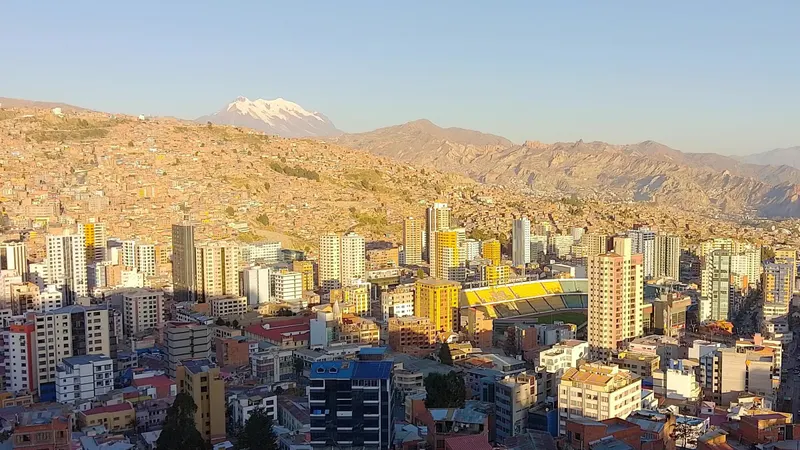
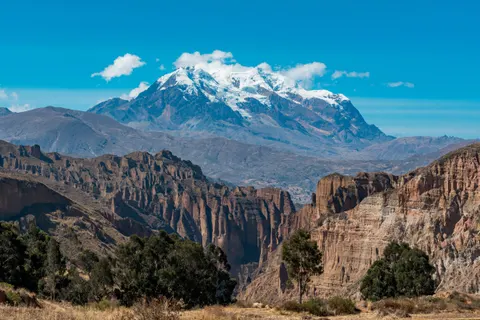
Illimani is the snow massif on La Paz’s skyline, first climbed by W. M. Conway’s party in 1898. The normal route (PD+ to AD-) usually takes four days. Viator lists one Illimani 4-day climb, from about US$950 with six reviews and no free cancellation (September 2026).
Sajama (6,542 m)
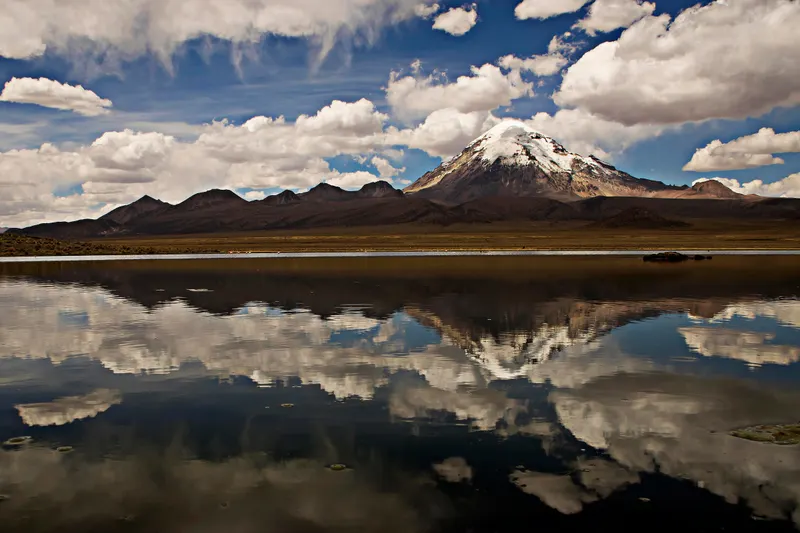
Bolivia’s highest mountain (an older survey gave 6,572 m) is a snow-capped volcano in Sajama National Park, about 450 m higher than Huayna and farther from La Paz.
Pequeño Alpamayo and Condoriri
Pequeño Alpamayo (5,370 m or 5,410 m, by source) rises in the Condoriri massif, about two hours by road from La Paz plus the walk to base camp at Laguna Chiar Khota. It’s lower than Huayna but steeper and more technical. Neither it nor Condoriri (about 5,648 m) has a well-reviewed Viator product, so book through a La Paz agency with an AGMTB-certified guide.


Which one is for you?
- If you want a 6,000 m summit and have a week: Huayna Potosí on the 3-day program.
- If you want glacier views without ropes: Charquini, or Chacaltaya, where the van drives you to about 5,300 m.
- If you’ve already summited Huayna: Pequeño Alpamayo, then Illimani.
- If you’d rather trek than climb: base yourself in Sorata, below Illampu, or pick from our day trips from La Paz.
Frequently asked questions
Can I climb Huayna Potosí with no mountaineering experience?
Yes, if you are fit and acclimatized. Agencies in La Paz take climbers who have never worn crampons, and the 3-day program spends its first afternoon teaching crampon, ice-axe and rope technique on a practice glacier at about 4,900 m. You need to carry a 50-60 liter pack uphill for 3-4 hours above 4,700 m, then climb for up to 7 hours from about 1 a.m. Skip it if you have heart problems or a strong fear of heights.
What does a Huayna Potosí climb cost in 2026?
As of September 2026, 3-day climbs on Viator start at about US$210 (Bs 2,525) and 2-day climbs at about US$170 (Bs 2,045); private climbs run about US$327-485. Booking direct with a La Paz agency costs less, and Jiwaki's own website lists its 3-day climb at US$150-180. Add the Bs 50 mountain fee in cash, tips, and a sleeping bag if the operator doesn't provide one.
What is the death rate on Huayna Potosí?
Nobody publishes one. We found no death-rate figures from Bolivian authorities, the Socorro Andino Boliviano rescue group or academic studies, and the percentages on blogs cite no data. Deaths do happen. A 66-year-old US climber died near the summit after an apparent cardiac arrest in October 2025, and in November 2024 firefighters recovered the body of a climber who had died on the glacier at about 5,400 m more than a year earlier.
What is the success rate on Huayna Potosí?
No published success rate exists, so treat any percentage you read online as a guess. Your odds improve with three or four nights or more in La Paz before you start, an acclimatization hike to 5,000 m or higher, the 3-day program instead of the 2-day, a dry-season date between May and September, and a guide who ropes up with no more than two climbers.
When can you climb Huayna Potosí?
The best window is the dry season, May to September, and June and July are the driest months. Operators run climbs from about April or May into November. From December to March, fresh snow, cloud and wind cut the number of good summit days, and landslides can block roads around La Paz. Off-season climbs do happen, but build spare days into your plan.
How many days should I acclimatize in La Paz before climbing Huayna Potosí?
At least three or four nights at La Paz altitude (about 3,640 m), plus one day hike to 5,000-5,400 m, such as Charquini or Pico Austria, a day or two before the climb. Jiwaki asks for at least seven days in La Paz or another high area, so nights at Lake Titicaca or on an Uyuni tour count. See our La Paz altitude sickness guide.
Is Huayna Potosí harder than Kilimanjaro?
Technically, yes. Huayna Potosí (6,088 m) is about 190 m higher than Kilimanjaro (5,895 m) and needs crampons, an ice axe and a rope, while Kilimanjaro's normal routes are hiking trails. Kilimanjaro treks also take 6-7 days or more, which builds acclimatization into the trip. Huayna's 2-3 day program doesn't, so you have to arrive already adapted to the altitude.
Do I need travel insurance to climb Huayna Potosí?
Yes, and read the fine print. Jiwaki's website lists accident and medical insurance as not included, and Canada's travel advice warns that some air-ambulance providers can't fly into high-altitude La Paz. Buy a policy that names mountaineering with ropes and crampons, covers you to at least 6,100 m, and pays for search, rescue and helicopter evacuation.
Keep planning