

Quick answer
US citizens don't need a visa for Bolivia. Since 1 December 2025, Americans get a free entry stamp for tourism or business and can stay up to 90 days in a one-year period; the old US$160 fee is gone. Bring a passport valid six months past arrival, your first night's address and proof of onward travel. UK, Canadian, Australian, most EU and South American passports are visa-exempt too. Chinese, Indian and Cuban travelers need a consular visa.
On this page
- Do US citizens need a visa for Bolivia?
- Bolivia visa requirements by nationality (2026 table)
- How long can you stay in Bolivia?
- Bolivia entry requirements at the border (checklist)
- Arriving by air at El Alto (LPB)
- Crossing overland from Peru, Chile or Argentina
- Do you need a yellow fever vaccine for Bolivia?
- Customs: Form 250, cash and medicines
- Bolivian embassy and consulates in the US
- Is it safe to travel to Bolivia right now? (September 2026)
- Frequently asked questions
Bolivia dropped its visa requirement for US citizens on 1 December 2025. Supreme Decree 5497 moved the United States and Israel from Group III, the strictest tier, into Group I, which needs only a free entry stamp. That ended a Bolivia visa rule Americans had lived with since 2007, along with its US$160 fee. Several first-page Google results for this search still describe the old rule, and so does part of Bolivia’s own immigration website. This guide follows Bolivia’s post-decree country list and the US, UK, Canadian and Spanish government pages, all checked on 30 September 2026.
Last verified: 9 October 2026, when we rechecked the Cancillería’s visa page for Groups I to III. It still says Group I needs no tourist visa and lists the same documents for Groups II and III.
- US citizens
- No visa since 1 Dec 2025
- Stay (US)
- Up to 90 days a year
- Passport
- Valid 6+ months on arrival
- Old US fee
- US$160 (scrapped)
- Visa fee (Group I)
- None
Search hotels and flights
Compare Expedia prices without leaving the guide.
Do US citizens need a visa for Bolivia?
US citizens no longer need a Bolivian visa for tourism or business. The US Embassy in La Paz confirmed the change on 3 December 2025, two weeks after telling Americans that visas were “still required” until further notice. President Rodrigo Paz announced the decree on 1 December, and his government put the old policy’s cost at about US$900 million in lost tourism.
The old visa covered 30 days per trip. Under the new rules, the embassy says Americans:
- can stay up to 90 days in a one-year period
- need a passport valid at least six months from the date of entry
- must declare the address where they’ll stay
- may be asked for a yellow fever certificate, especially if heading to tropical areas
Study, paid work, volunteering and residency still need a visa from a consulate. To stay beyond 90 days, ask a Bolivian consulate or Bolivian immigration.
Pages that are out of date (as of September 2026)
The US Embassy’s 2024 entry-requirements page still describes the US$160 visa. Bolivia’s immigration service, DIGEMIG, still lists a US$160 “entry authorization” for Americans on its procedures portal, last edited in June 2025, and at least one visa agency on Google’s first page sells a US$165 Bolivia visa. Don’t pay anyone for a tourist visa on a US passport, and ignore pages that ask for a COVID test; none of the official sources we checked mentions one.
Bolivia visa requirements by nationality (2026 table)
Group I travelers enter with a stamp and no visa. Group II needs a consular visa, or an entry authorization from DIGEMIG, before travel. Group III gets a visa only after the consulate consults DIGEMIG. The table follows the list on DIGEMIG’s home page (read 30 September 2026); stay lengths come from each government’s advice where we found it.
| Passport | Tourist visa? | Document at the border | Stay, per the source |
|---|---|---|---|
| United States | No, since 1 Dec 2025 | Passport | 90 days a year (US Embassy) |
| Canada | No | Passport | 30 days, extendable to 90 a year (Canada) |
| United Kingdom | No | Passport with 2 blank pages | 90 days a year (FCDO) |
| EU, except Cyprus | No | Passport | 90 days (Spain); 90 a year (Wikipedia) |
| Cyprus | Yes (Group II) | Passport and consular visa | Set by the visa |
| Australia, New Zealand, Japan, Switzerland, Norway | No | Passport | 90 days a year (Wikipedia; not confirmed with Smartraveller) |
| Israel, South Korea, South Africa, UAE | No, since 1 Dec 2025 | Passport | 90 days a year (Wikipedia) |
| Mexico | No | Passport | 30 days extendable to 90 (Bolivian Embassy in Mexico) or 180 (Mexico’s 2021 guide) |
| Argentina, Brazil, Chile, Paraguay, Uruguay | No | National ID card or passport | 60 days for Chile (its consulate); 90 a year for the others (Wikipedia) |
| Colombia, Ecuador, Peru | No | National ID card or passport | Andean migration card; 90 days, extendable, for Colombians (El Tiempo) |
| China, India, Cuba, Haiti, Thailand, Vietnam, Singapore, Ukraine | Yes (Group II) | Passport and consular visa | Set by the visa |
| Pakistan, Nigeria, Indonesia and 16 others | Yes (Group III), after DIGEMIG approval | Passport and visa | Set by the visa |
Russia, Turkey, the Philippines and Venezuela are also Group I; Guatemala, Nicaragua, Malaysia and Morocco are Group II.
Group II and III: how to apply
- Fill in the form on the foreign ministry’s visa portal.
- Book an appointment at a Bolivian consulate, which issues the visa.
- Bring the documents below to the appointment.
- Group III only: the consulate consults DIGEMIG before it issues the visa (see below).
The online form is as close as Bolivia gets to an e-visa. The Cancillería’s document list:
- passport valid six months or more, plus the sworn application form
- itinerary or return ticket
- hotel booking, or an invitation from a host registered with DIGEMIG
- proof of funds (bank statement or credit card)
- a 4 x 4 cm photo (red background per the ministry, white per the London embassy)
- a yellow fever certificate if you’ll visit endemic zones
Group III applicants also need a DIGEMIG entry resolution. Allow at least 15 days, the lead time Bolivia’s embassy in Mexico asks for. No consulate we checked publishes a fee (London lists “TBA”), and Wikipedia reports that Group II visa on arrival ended on 25 July 2025, so get the visa before you fly.
How long can you stay in Bolivia?
Official sources describe the limit four different ways:
- US Embassy: Up to 90 days in a one-year period.
- UK Foreign Office: 90 days a year; officers issue 30-day stamps, but you can stay the full 90 without a new one.
- Canada: 30 days, plus two free 30-day extensions at DIGEMIG requested before each period ends; 90 days per calendar year.
- Spain: 90 days, with a stamp from Migración needed for stays over a month.
Read your stamp
Check the number of days written in your passport before you leave the immigration counter. If it says 30 and you’re staying longer, extend at a DIGEMIG office before it runs out. Canada warns that overstays are fined on departure; DIGEMIG doesn’t publish the amount.
Extending your stay in La Paz
DIGEMIG’s main La Paz office is at Av. Camacho 1468, between calles Loayza and Bueno in the city center, open Monday to Friday 7:30 a.m. to 3:30 p.m. (phone +591 2 2110960). DIGEMIG also has offices in Uyuni and Rurrenabaque, handy if your 30 days run out mid-trip. Canada says extensions are free for Canadians; we couldn’t confirm the fee for other passports.
Bolivia entry requirements at the border (checklist)
- Passport: Valid six months past arrival, with two blank pages (the FCDO’s rule).
- First-night address: The FCDO says you may need proof of accommodation for at least your first night.
- Onward ticket: Canada says officials may ask for one, plus proof of funds (no minimum is published).
- SIGEMIG address declaration: Decree 4574 requires foreigners to file a sworn statement of their address on DIGEMIG’s SIGEMIG system.
- Customs Form 250: Required on entry and exit; flying in, fill it online and keep the QR code on your phone or on paper.
- Yellow fever card: If your route calls for one (see below).
Sources disagree on when to file SIGEMIG and what skipping it costs. Canada says before you arrive, or officers register you and you pay a fine on departure. Spain says within 48 hours of entry, with a fine of about Bs 300 (about US$25). File it before you fly, using your first hotel’s address.
Leave the counter with an entry stamp, or you’ll pay a fine when you exit. Overland, get stamped out of the country you’re leaving and into Bolivia. On the Argentina border, the FCDO says Bolivia no longer stamps passports, so register your exit on Argentina’s migration site, which passes the data to Bolivia. Carry a copy of your passport photo page and entry stamp for police ID checks.
Children and dual citizens
The FCDO says a child traveling with one parent or guardian can’t stay beyond 90 days without a judicial permit to leave (three months, per Spain). US-Bolivian dual citizens may be asked for a Bolivian ID card (US Embassy, 2024).
If you haven’t booked a bed yet, compare La Paz hotels on Expedia or read our guide to where to stay in La Paz first.
Arriving by air at El Alto (LPB)
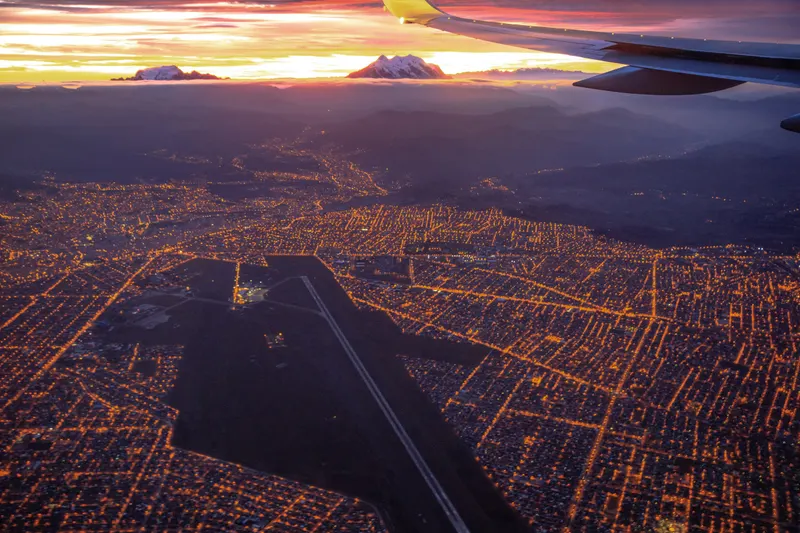
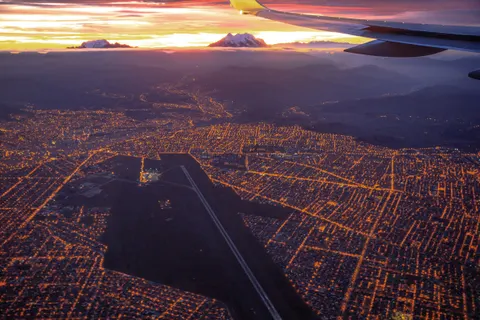
El Alto International Airport sits 13 km west of central La Paz, Bolivia, at 4,061.5 m (13,325 ft), about 400 m above downtown. Walk slowly from the gate. After passport control every bag is X-rayed, and Canada’s advice says to have your Form 250 QR code ready for that check. We found no nonstop flights to LPB from North America or Europe, so connect through Lima, Bogotá or Santiago (flights to La Paz). Read about altitude sickness in La Paz before you fly, and see our El Alto airport guide for taxi fares and the cable car.
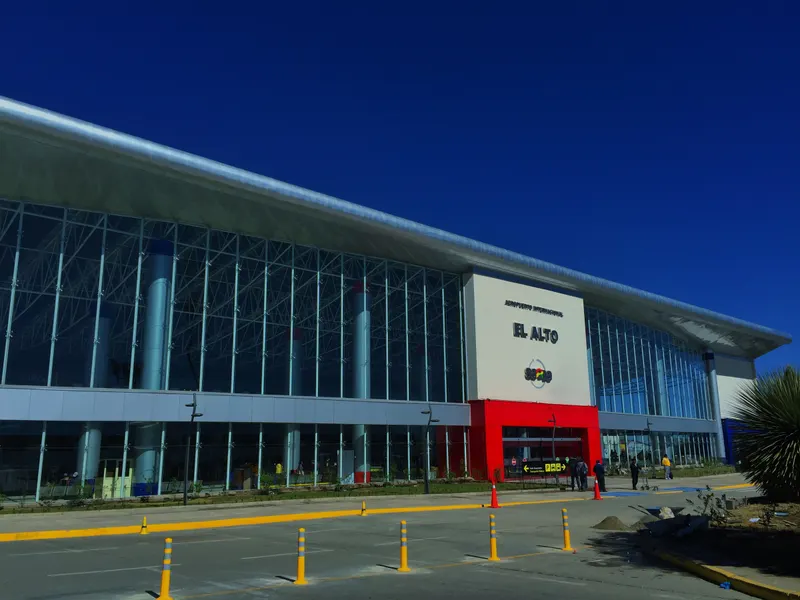
A pre-booked driver spares you haggling over a taxi fare at 4,061 m. Few operators list airport rides on Viator, and only these two have reviews.
Pre-booked airport rides
Book on Viator From $28Private Transfer from El Alto Airport to La Paz, Bolivia HotelsFree cancellationCheck availability
 From $37.14Private Departure Transfer: La Paz Hotels to El Alto International AirportFree cancellationCheck availability
Prices in US$ per person from Viator as of Sep 30, 2026. They change; you see the final price before paying.
Crossing overland from Peru, Chile or Argentina
In 2025, 68.6% of Bolivia’s foreign visitors arrived by road, according to the national statistics institute (INE). The main posts are Desaguadero and Kasani (for Copacabana) from Peru; Charaña, Tambo Quemado, Pisiga and Hito Cajones (the San Pedro de Atacama-Uyuni route) from Chile; and Villazón from Argentina. DIGEMIG doesn’t publish their opening hours, and Canada advises against crossing at night, when officials may be absent.
The FCDO reports express kidnappings at overland border points with Peru, Chile and Argentina; from Copacabana, take a direct bus to La Paz. Blockades are the other overland risk. They cut La Paz and El Alto off by road from 1 May to 23 June 2026, and on 9 September 2026 the US Embassy warned of new blockade calls over fuel prices. If blockades are announced for your dates, fly in.
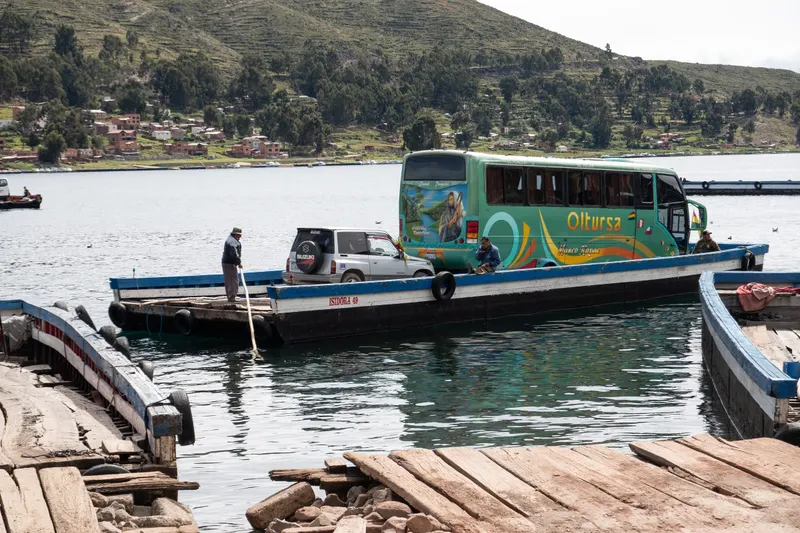
Route guides: Cusco to La Paz by bus, Copacabana, the Uyuni salt flats and La Paz to Uyuni.
Do you need a yellow fever vaccine for Bolivia?
Official sources disagree on who must show a certificate on arrival.
| Source | What it says | Updated |
|---|---|---|
| CDC (US) | Certificate required for all arrivals aged 1+; vaccine recommended below 2,300 m east of the Andes, not for La Paz | Apr 2025 (reviewed Sep 2026) |
| UK FCDO | Required if you arrive from a country with transmission risk | Sep 2026 |
| Canada | Required if you come from a country where yellow fever occurs | Sep 2026 |
| Bolivia’s Ministry of Health | Vaccinate at least 10 days before visiting endemic zones; one dose protects for life | Feb 2025 |
| Chile’s consulate in La Paz | Required for the Yungas, Coroico, Rurrenabaque and Amazon rivers | Undated |
Our call
For La Paz, Lake Titicaca and Uyuni, all far above 2,300 m, the CDC doesn’t recommend the shot and neither do we. For Rurrenabaque and Madidi, Coroico and the Yungas valleys, Santa Cruz, Beni or Pando, get vaccinated at least 10 days before and carry the physical yellow card. If you’re already vaccinated, pack the card whatever your route, since the CDC’s wording covers all arrivals, and Peru, Brazil and Argentina are all on the risk list behind the UK’s arrivals rule.


The CDC also has a Level 2 chikungunya notice for Santa Cruz and Cochabamba departments (February 2026) and reports no malaria in La Paz city. Our guides to Rurrenabaque and Madidi and Coroico cover those lowland trips.
Customs: Form 250, cash and medicines
The Aduana Nacional, Bolivia’s customs agency, requires Form 250, a sworn baggage and currency declaration, from travelers entering and leaving. Duty-free on arrival:
- used personal effects plus one each of camera, laptop, video camera and phone, sports gear and a portable instrument
- new goods worth up to US$1,000
- 3 liters of alcohol, and 400 cigarettes, 50 cigars or 500 g of tobacco
- prescription medicines for personal use, up to 3 boxes or bottles
Declare cash between US$10,000 and US$50,000 on arrival, or US$10,000 to US$20,000 on departure; larger sums must go through regulated banks, and undeclared money draws a 30% penalty. For ATMs and the floating boliviano (about Bs 12 per US dollar in September 2026), see money in Bolivia.
The UK and Canada warn that some prescription medicines are scarce in Bolivia, so bring enough for the trip; above three boxes, we’d carry the prescription and declare the extra. Canada bans importing coca leaves or products, so check your own country’s rules before packing coca tea.
Bolivian embassy and consulates in the US
Americans visit these offices only for study, work, volunteering or residency visas; US residents with Group II or III passports apply there for tourist visas. The Bolivian embassy is in Washington, DC. Bolivia also has consulates general in Washington, New York, Miami, Los Angeles and Houston, listed on the Cancillería consulates site. In Bolivia, the US Embassy in La Paz answers on +591 2 216-8000 (after hours +591 2 216-8500).
Is it safe to travel to Bolivia right now? (September 2026)
The US State Department rates Bolivia Level 2, “Exercise Increased Caution”, for crime, unrest and health (updated 17 August 2026), with Level 4 for the Chapare region. A state of exception in force since 20 June 2026 lets police and the army clear roadblocks, and lawmakers extended it in mid-September to about the second week of December. Canada reported no curfew, though the extension allows one. Our guides to whether La Paz is safe and La Paz travel tips cover the city. Dial 110 for police and 118 for an ambulance, and if you’re American, enroll in the State Department’s STEP program for embassy alerts.
Frequently asked questions
How much does a Bolivia visa cost?
Nothing for Group I passports, which include the US, Canada, the UK, Australia and every EU country except Cyprus. They get a free entry stamp. Americans paid US$160 until 1 December 2025. For Group II and III nationalities, Bolivian consulates don't publish one uniform fee (the London embassy lists it as "TBA"), so ask the consulate where you apply and ignore agencies quoting a visa price for Americans.
Can a U.S. citizen get a visa on arrival in Bolivia?
A US citizen doesn't need one. Since 1 December 2025 Americans receive a free entry stamp at the airport or a land border for tourism or business, valid for up to 90 days in a one-year period. Travelers from Group II countries such as India or China shouldn't count on a visa at the border. Wikipedia says visa on arrival for that group ended in July 2025, so apply at a consulate before you fly.
Can I apply for a Bolivian e-visa online?
Partly. You fill in the application on visas.cancilleria.gob.bo, the foreign ministry's portal, then attend an appointment at a Bolivian consulate, which issues the visa. No fully electronic visa arrives by email. Only Group II and III nationalities go through this. US, Canadian, UK, Australian and most EU citizens don't apply for anything.
Is a yellow fever vaccine required for Bolivia?
Official sources disagree. The CDC lists a certificate as required for all arrivals aged one and over, while the UK and Canada say only travelers coming from a yellow fever risk country need proof. For La Paz, Lake Titicaca and Uyuni the CDC doesn't recommend the vaccine. For Rurrenabaque, Madidi, the Yungas lowlands, Santa Cruz, Beni or Pando, get it at least 10 days before you go and carry the card.
Do I need a return ticket to enter Bolivia?
Canada's travel advice says Bolivian officials may ask for a return or onward ticket and for proof of sufficient funds. Bolivia publishes no minimum amount of money. Keep a copy of your onward flight or bus ticket and your first night's booking on your phone, with an offline or printed backup, so you can show both at the immigration counter.
Do I need travel insurance for Bolivia?
None of the official sources we checked in September 2026 lists travel insurance as an entry requirement for tourists. Buy a policy anyway and check that it covers medical evacuation. Canada's travel advice notes that some air-ambulance providers can't fly into high-altitude places such as La Paz, whose airport sits at 4,061 m.
Do I need a visa for a business trip to Bolivia?
Not with a US passport. The US Embassy says the exemption covers tourism and business. Other governments tell their citizens otherwise. Canada's travel advice says Canadians need a business visa, and the UK's FCDO says business travel must meet separate Bolivian requirements. Paid work always needs a visa from a consulate. If you're traveling for meetings on a non-US passport, confirm with a Bolivian consulate before you book.
Do Indian citizens need a visa for Bolivia?
Yes. India is in Bolivia's Group II, so Indian passport holders need a consular visa, or an entry authorization from Bolivian immigration, before they travel. Fill in the form at visas.cancilleria.gob.bo, then attend a Bolivian consulate with a passport valid six months, a return ticket, a hotel booking, bank statements and a photo. Consulates don't publish a standard fee.
Keep planning